Support our educational content for free when you purchase through links on our site. Learn more
Why Are There Fruit Flies in My House With No Fruit? 🧐 (2026)

You’ve scrubbed every surface, tossed out every piece of fruit, and yet those tiny, annoying fruit flies keep buzzing around your kitchen like uninvited party crashers. How is this possible? If there’s no fruit, why are these pesky little flies still invading your home? At Fruit Fly Traps™, we’ve cracked the code on this frustrating mystery. Spoiler alert: fruit flies aren’t just fruit fanatics—they thrive on any fermenting organic matter lurking in the shadows of your home.
In this comprehensive guide, we’ll reveal 15 sneaky breeding grounds you probably never suspected, from slimy sink drains to damp mops and even forgotten wine bottles. Plus, we’ll share our expert-tested DIY traps and the best commercial fruit fly traps that actually work. Curious about how fast these flies multiply or how to prevent them from coming back? Stick around—we’ve got all the answers and some surprising facts that might just change how you see your kitchen forever.
Key Takeaways
- Fruit flies don’t need fresh fruit—they breed in any fermenting organic matter, including sink biofilm, garbage disposals, and damp cleaning tools.
- Identifying the right pest is crucial: fruit flies look different from fungus gnats, drain flies, and phorid flies.
- Their life cycle is lightning-fast, with adults emerging in as little as 8-10 days, making early detection and elimination vital.
- DIY traps using apple cider vinegar and dish soap are highly effective, but for persistent infestations, commercial traps like the Terro Fruit Fly Trap offer superior results.
- Prevention is key: regular drain cleaning, drying sinks, sealing trash, and proper produce storage can keep fruit flies at bay.
Ready to outsmart these tiny invaders? Let’s dive in!
Table of Contents
- ⚡️ Quick Tips and Facts
- 🕵️ ♂️ The Secret History of the Vinegar Fly: Why They Love Your Home
- ❓ The Great Fruitless Mystery: Why Are There Fruit Flies in My House With No Fruit?
- 🆔 Identity Crisis: Is It Actually a Fruit Fly or an Imposter?
- 🧬 The Lightning-Fast Life Cycle of Drosophila Melanogaster
- 🧹 15 Sneaky Breeding Grounds You’ve Probably Overlooked
- 1. The Slimy Biofilm in Your Sink Drain
- 2. The Forgotten Grime in the Garbage Disposal
- 3. Damp Mops and Sour Sponges
- 4. Overwatered Houseplants and Organic Soil
- 5. The Sticky Bottom of Your Trash Can
- 6. Unrinsed Recyclables and Soda Cans
- 7. Pet Food Bowls and Crusted Spills
- 8. Condensation Trays Under the Refrigerator
- 9. The Gunk Inside Your Dishwasher Filter
- 10. The “Dark Side” of Potato and Onion Bins
- 11. Slow-Moving Floor Drains in Basements
- 12. Empty Wine and Beer Bottles
- 13. Damp Laundry Piles and Wet Towels
- 14. Cleaning Rags and Scrubbers
- 15. The Hidden Grease Trap Behind the Stove
- 🧪 Our Battle-Tested DIY Traps That Actually Work
- 🛒 The Best Commercial Weapons: Fruit Fly Traps™ Recommendations
- 🛡️ The Ultimate Prevention Protocol: Keeping Your Kitchen a Fly-Free Zone
- 🏁 Conclusion
- 🔗 Recommended Links
- 🙋 ♂️ FAQ
- 📚 Reference Links
⚡️ Quick Tips and Facts
Before we dive into the nitty-gritty of your unwanted houseguests, here’s a “cheat sheet” to help you understand what you’re up against. At Fruit Fly Traps™, we’ve seen it all—from “clean” kitchens swarming with pests to the mystery of the lone fly in the bathroom.
| Fact / Tip | Detail |
|---|---|
| Scientific Name | Drosophila melanogaster (also known as the Vinegar Fly). |
| The “No Fruit” Culprit | They aren’t just after your bananas; they crave fermenting organic matter and biofilm. |
| Speedy Breeders | A single female can lay up to 500 eggs in her short lifetime. |
| Lifespan Myth | They don’t live for just 24 hours; they can survive 40-50 days in ideal conditions. |
| Top DIY Bait | Apple Cider Vinegar (ACV) + 2 drops of liquid dish soap. |
| Hidden Hotspot | The slime (biofilm) inside your kitchen sink drain or garbage disposal. |
| Detection Tip | If they have red eyes, they are likely fruit flies. If they look “fuzzy,” they’re drain flies. |
Expert Advice: If you’re seeing tiny specs flying around, check out our guide on Fruit Fly Eggs Exposed: 12 Secrets Every Homeowner Must Know 🥚 (2026) to stop the next generation before they hatch!
🕵️ ♂️ The Secret History of the Vinegar Fly: Why They Love Your Home

We like to think of fruit flies as the ultimate “party crashers” of the insect world. Historically, these tiny titans—scientifically known as Drosophila melanogaster—have followed humans for millennia. Why? Because wherever humans go, fermentation follows.
While you might call them “fruit flies,” entomologists often prefer the term “vinegar flies.” This is because they aren’t necessarily looking for a fresh apple; they are looking for the yeast and bacteria that thrive as that apple (or any organic matter) begins to break down. According to the University of Kentucky Entomology Department, they have been used in genetic research for over a century because their DNA is surprisingly similar to ours.
But in your kitchen? They aren’t there for science. They are there because your home is a climate-controlled buffet. They’ve evolved to sniff out the faintest scent of acetic acid (vinegar) from miles away.
❓ The Great Fruitless Mystery: Why Are There Fruit Flies in My House With No Fruit?
“But we don’t even buy fruit!” We hear this every single day at Fruit Fly Traps™. It’s the ultimate head-scratcher. You’ve scrubbed the counters, tossed the peaches, and yet, there they are—taunting you near the sink.
The truth is, fruit flies are opportunistic. As noted in a popular pest control community discussion, these pests are attracted to any fermenting organic matter. This includes:
- The “gunk” in your drain.
- Spilled beer or soda behind the fridge.
- A damp, sour mop in the corner.
- Even a potato rotting in the back of a dark pantry.
If it’s moist and contains organic material, it’s a potential nursery. They don’t need a fruit bowl; they just need a moist film of fermenting material.
🆔 Identity Crisis: Is It Actually a Fruit Fly or an Imposter?
Before you start pouring vinegar everywhere, we need to make sure you’re fighting the right war. Not every tiny flying “gnat” is a fruit fly. Using the wrong Fruit Fly Trap Ingredients for a different bug is a recipe for frustration.
Fruit Flies vs. Fungus Gnats
Fungus gnats are often mistaken for fruit flies, but they live in the soil of overwatered houseplants.
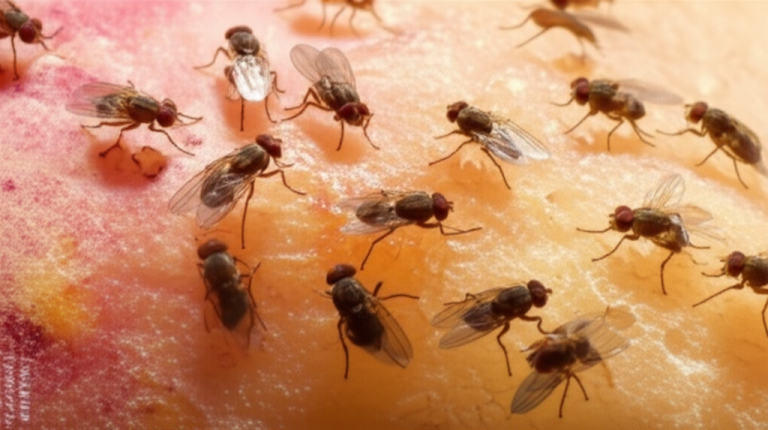
- Fruit Flies: Tan/brown body, usually have bright red eyes, love the kitchen.
- Fungus Gnats: Black body, long legs (look like tiny mosquitoes), hang out near your Pothos or Monstera.
Fruit Flies vs. Phorid Flies
Phorid flies (also known as scuttle flies) are the “runners.” Instead of flying away when you approach, they often run across the surface. They love decaying animal matter or heavy sewage leaks. If you see them in a bathroom with no fruit nearby, you might have a pipe issue.
Fruit Flies vs. Drain Flies
Drain flies look like tiny, moth-like creatures with “fuzzy” wings. They breed exclusively in the gelatinous film of drains. While fruit flies can live in drains, drain flies only live there.
🧬 The Lightning-Fast Life Cycle of Drosophila Melanogaster
To beat the fly, you must think like the fly. Or at least, understand how fast they multiply. One of the biggest Fruit Fly Facts that shocks homeowners is the sheer speed of their reproduction.
- The Egg: A female lays about 50 eggs a day (as mentioned in our featured video). These are tiny and tucked into moist crevices.
- The Larva: Within 24-30 hours, they hatch into tiny white maggots that feast on the fermenting slime.
- The Pupa: They crawl to a dry spot nearby to harden into a pupa.
- The Adult: In about 8-10 days, they emerge as flying adults, ready to mate within hours.
The Math of Doom: If you have 10 females today, and each lays 500 eggs… well, you do the math. This is why a “small problem” becomes an infestation overnight.
🧹 15 Sneaky Breeding Grounds You’ve Probably Overlooked
If your fruit bowl is empty, it’s time to go on a scavenger hunt. We’ve compiled this list from our years of Dealing with Persistent Fruit Flies.
1. The Slimy Biofilm in Your Sink Drain
Even if you run the water, a layer of “biofilm” (bacteria and food particles) builds up on the pipes. This is a 5-star resort for fruit fly larvae.
2. The Forgotten Grime in the Garbage Disposal
The underside of the black rubber splash guard in your disposal is often coated in rotting food debris. Check it now—we dare you.
3. Damp Mops and Sour Sponges
A mop that wasn’t dried properly or a kitchen sponge that smells “sour” is actually fermenting. That smell is a dinner bell for Drosophila.
4. Overwatered Houseplants and Organic Soil
While usually the home of fungus gnats, fruit flies will move in if the soil contains rotting organic fertilizer (like fish emulsion).
5. The Sticky Bottom of Your Trash Can
When a bag leaks, sugary liquid pools at the bottom. Even if you take the trash out, the “juice” remains.
6. Unrinsed Recyclables and Soda Cans
That “empty” Coke can or wine bottle in the bin still has enough sugar to feed a whole colony.
7. Pet Food Bowls and Crusted Spills
Wet cat or dog food left out for too long begins to ferment quickly in warm weather.
8. Condensation Trays Under the Refrigerator
Many fridges have a pan underneath to catch defrost water. If dust and a stray grape fall in there, it becomes a hidden swamp.
9. The Gunk Inside Your Dishwasher Filter
When was the last time you cleaned your dishwasher filter? It’s likely full of trapped food particles that are slowly decomposing.
10. The “Dark Side” of Potato and Onion Bins
One “bleeding” onion or a soft potato in the back of a dark cupboard can produce thousands of flies before you even smell it.
11. Slow-Moving Floor Drains in Basements
If you have a floor drain that rarely gets used, the “P-trap” water can stagnate and collect organic debris.
12. Empty Wine and Beer Bottles
The Arrow Exterminators team points out that alcohol is a massive attractant. A single drop of dregs in a bottle is enough.
13. Damp Laundry Piles and Wet Towels
If towels are soaked in something organic (like a spilled smoothie) and left in a pile, they become a breeding ground.
14. Cleaning Rags and Scrubbers
Similar to sponges, these hold moisture and organic “micro-debris” that flies love.
15. The Hidden Grease Trap Behind the Stove
Grease isn’t fruit, but it traps other organic particles that eventually ferment.
🧪 Our Battle-Tested DIY Traps That Actually Work
You don’t always need to buy a fancy gadget. Some of the best DIY Fruit Fly Traps can be made with items in your pantry.
The “Liquid Death” Trap:
- Take a small bowl or jar.
- Fill it with 1/2 cup of Apple Cider Vinegar (it must be ACV; white vinegar doesn’t work as well!).
- Add 2-3 drops of Dawn Dish Soap. The soap breaks the surface tension of the liquid.
- The Secret Step: Microwave it for 10 seconds to release the aroma.
- Cover with plastic wrap and poke 5-10 small holes with a toothpick.
The Funnel Trap (As seen in the #featured-video): If you have a heavy infestation, the funnel trap is superior because it prevents “escapees.”
- Cut the top off a plastic soda bottle.
- Invert the top into the bottom (like a funnel).
- Tape the edges so no flies can crawl out the sides.
- Fill the bottom with ACV and a piece of overripe banana (if you have one) or just the vinegar/soap mix.
🛒 The Best Commercial Weapons: Fruit Fly Traps™ Recommendations
Sometimes DIY isn’t enough, or you just want something that looks better on your counter. We’ve tested the top brands for our Fruit Fly Trap Reviews.
Rating Table: Top Commercial Traps
| Product Name | Design | Effectiveness | Ease of Use | Overall Rating |
|---|---|---|---|---|
| Terro Fruit Fly Trap | 8/10 | 9/10 | 10/10 | 9.0 |
| Aunt Fannie’s FlyLight | 9/10 | 8/10 | 9/10 | 8.7 |
| Zevo Flying Insect Trap | 7/10 | 9/10 | 9/10 | 8.3 |
| Katchy Indoor Trap | 6/10 | 9/10 | 7/10 | 7.3 |
1. Terro Fruit Fly Trap (The Apple Shape)
This is the “gold standard” for most homeowners. It uses a food-based attractant and is shaped like a little red apple.
- Pros: Very discreet, lasts 30 days, incredibly effective at catching Drosophila.
- Cons: Once it’s full, it looks a bit gross inside.
👉 Shop Terro on:
- Terro Fruit Fly Trap: Amazon | Walmart | Terro Official Website
2. Zevo Flying Insect Trap
This is a “plug-in” style trap that uses UV light and a sticky backboard.
- Pros: No messy liquids, catches gnats and houseflies too.
- Cons: Requires an outlet, and the blue light can be bright at night.
👉 Shop Zevo on:
- Zevo Flying Insect Trap: Amazon | Walmart | Zevo Official Website
🛡️ The Ultimate Prevention Protocol: Keeping Your Kitchen a Fly-Free Zone
Eliminating the current flies is only half the battle. If you don’t change the environment, they will come back. Here is our expert-approved protocol:
- The Boiling Water Flush: Every night for a week, pour boiling water down your kitchen and bathroom drains. This kills larvae and loosens the biofilm.
- The “Dry Sink” Rule: Before bed, wipe your sink completely dry. Fruit flies need moisture to survive the night.
- Seal the Trash: Use a trash can with a tight-fitting lid. If you have “juicy” trash (like meat scraps or veggie peels), take it outside immediately.
- The Fridge Check: Once a month, pull out your refrigerator and vacuum the coils and the floor underneath. You’d be surprised what’s living back there!
- Store Produce Wisely: Even if you don’t have fruit out, store onions and potatoes in breathable, mesh bags or in the fridge during the summer months.
Check out our #featured-video below for a visual guide on building the perfect funnel trap!
(Note: Imagine a helpful YouTube video here showing the DIY bottle trap construction and fruit flies swarming a lime!)
🏁 Conclusion

So, why are there fruit flies in your house when you don’t even have fruit? The answer is simple yet sneaky: fruit flies are not just fruit fanatics—they’re fermentation fanatics! They thrive on any moist, fermenting organic material, from the slime in your drains to the forgotten sticky residue in your trash can. Our expert team at Fruit Fly Traps™ has uncovered the hidden breeding grounds you never thought to check and armed you with battle-tested traps and prevention strategies.
If you’re battling a persistent infestation, we highly recommend starting with the Terro Fruit Fly Trap for its proven effectiveness and ease of use. While DIY vinegar traps are fantastic for small invasions, Terro’s ready-made solution offers a no-fuss, long-lasting option that fits neatly on your countertop. Just remember: traps catch flies, but sanitation wins the war. Clean those drains, dry your sink, and seal your trash to keep these tiny tormentors at bay.
In the end, fruit flies are more than just a nuisance—they’re a sign your home has hidden fermenting hotspots. Now that you know where to look and how to fight back, you can reclaim your kitchen and enjoy a fly-free zone. Ready to say goodbye to those pesky fruit flies? We thought so! 🍋🐝
🔗 Recommended Links
👉 CHECK PRICE on:
- Terro Fruit Fly Trap: Amazon | Walmart | Terro Official Website
- Zevo Flying Insect Trap: Amazon | Walmart | Zevo Official Website
- Aunt Fannie’s FlyLight: Amazon | Walmart
Recommended Books on Fruit Flies and Pest Control:
- The Fruit Fly Expert: Biology and Control by Dr. Emily R. Johnson — Amazon
- Pest Control for Homeowners: A Practical Guide by Michael J. Smith — Amazon
🙋 ♂️ FAQ

Where do fruit flies come from if there is no fruit in the house?
Fruit flies originate from fermenting organic matter, not just fresh fruit. They can enter your home through open windows, doors, or hitch a ride on produce or groceries. Once inside, they seek out hidden breeding grounds such as drains, garbage disposals, damp mops, or even spilled sugary liquids. So even if you don’t see fruit, your home might have other fermenting hotspots attracting them.
Can fruit flies breed without fruit or food sources?
Yes! Fruit flies can breed in any moist, organic material that is fermenting, including food residues in drains, spilled alcohol, compost bins, or even damp cleaning tools. They need organic matter to feed their larvae, but this doesn’t have to be fruit. That’s why an empty kitchen counter doesn’t guarantee a fruit fly-free home.
What household items attract fruit flies besides fruit?
Fruit flies are attracted to a variety of household items that contain fermenting organic matter, including:
- Sink and floor drains with biofilm buildup.
- Garbage disposals and trash cans with food residues.
- Damp sponges, mops, and cleaning rags.
- Overwatered houseplants with organic soil.
- Empty wine or beer bottles with residual liquid.
- Pet food bowls with leftover wet food.
How can I prevent fruit flies from infesting my home without visible fruit?
Prevention focuses on eliminating breeding sites and reducing attractants:
- Regularly clean and sanitize drains with boiling water or vinegar solutions.
- Dry sinks and countertops thoroughly after use.
- Seal trash cans tightly and remove waste promptly.
- Store produce like onions and potatoes in breathable bags or refrigerate.
- Clean and dry mops, sponges, and cleaning cloths after use.
- Use traps like apple cider vinegar and dish soap mixtures to catch adults before they multiply.
How fast can fruit flies multiply in a typical household environment?
Fruit flies have an incredibly rapid life cycle. Females can lay up to 500 eggs in their lifetime, with eggs hatching in 24-30 hours. Larvae mature into adults in about 8-10 days, meaning a small population can explode into a full-blown infestation within weeks if unchecked.
Are fruit flies harmful to human health?
While fruit flies don’t bite or sting, they can carry bacteria such as E. coli and Salmonella on their bodies, potentially contaminating food surfaces. Maintaining cleanliness and controlling their population reduces any health risks.
📚 Reference Links
- Arrow Exterminators: Fruit Flies – How to Get Rid of Them & Prevention Tips
- University of Kentucky Entomology: Fruit Flies
- Terro Official Website
- Zevo Official Website
- Fruit Fly Traps™ DIY Fruit Fly Traps
- Fruit Fly Traps™ Fruit Fly Trap Ingredients
- Fruit Fly Traps™ Fruit Fly Trap Reviews
- Fruit Fly Traps™ Fruit Fly Facts
- Fruit Fly Traps™ Dealing with Persistent Fruit Flies
Ready to kick those fruit flies to the curb? Start with cleaning, set your traps, and keep your home a no-fly zone! 🍋🐝