Support our educational content for free when you purchase through links on our site. Learn more
Cleaning a Garbage Disposal for Fruit Flies 🪰

Cleaning a garbage disposal for fruit flies means scrubbing away food residue beneath the rubber splash guard and around the drain—not just adding a scented rinse. Turn off power before cleaning, use a long-handled brush, flush the disposal according to its manual, and check nearby drains and food waste for other breeding sources.
At Fruit Fly Traps™, we’ve seen a familiar kitchen mystery: the disposal smells fresh after a citrus rinse, yet tiny flies return the next day. Often, the missed clue is tucked into the folds of the splash guard—or hiding in a sticky recycling bottle beside the sink.
Fruit flies and drain flies can look similar, but they don’t always come from the same place. Identify the insect, remove the breeding source, and use a trap to catch and monitor the adults while you keep the kitchen clean.
Key Takeaways
- Scrub the splash guard and accessible drain surfaces to remove food film where flies may feed or breed.
- Disconnect power before hands-on cleaning. Never put your fingers into the disposal.
- Check the sink overflow, nearby drains, trash, recycling, produce, and damp dishcloths if flies persist.
- Use fruit fly traps to catch adults and monitor activity, but don’t rely on traps alone to remove the source.
- Avoid mixing cleaners or using bleach and chemical drain openers as a shortcut; follow your disposal’s manual.
Table of Contents
- ⚡️ Quick Tips and Facts
- 🪰 Fruit Flies or Drain Flies? Identify the Pest Before You Clean
- How to Tell Fruit Flies, Drain Flies, and Fungus Gnats Apart
- Why Flies Gather Around Garbage Disposals
- 🔍 How to Find the Source of Flies in Your Sink
- Check the Disposal, Sink Drain, and Overflow
- Test Whether Flies Are Breding in the Drain
- 🧽 How to Clean a Garbage Disposal to Get Rid of Fruit Flies
- What You’ll Need to Clean the Disposal Safely
- 1. Turn Off Power and Inspect the Disposal
- 2. Remove Food Debris from the Splash Guard
- 3. Scrub the Disposal’s Rubber Baffle
- 4. Flush the Grinding Chamber and Drain
- 5. Clean the Sink Drain and Nearby Surfaces
- 6. Deodorize the Disposal Without Harming It
- 7. Repeat and Check for Remaining Fly Activity
- ⚠️ Garbage Disposal Cleaning Mistakes to Avoid
- Why Bleach, Boiling Water, and Chemical Drain Cleaners Can Cause Problems
- Safe Ways to Clean Disposal Blades and the Splash Guard
- 🪤 Fruit Fly Traps for the Kitchen and Sink Area
- Make a Simple Apple Cider Vinegar Trap
- When to Use Commercial Fruit Fly Traps
- Why Traps Alone Won’t Stop a Breding Source
- 🧼 How to Prevent Fruit Flies from Returning to Your Garbage Disposal
- Everyday Disposal and Sink Cleaning Habits
- Store Produce and Manage Food Waste
- Keep Drains, Sponges, and Dishcloths Clean
- Prevent Drain Flies in Other Kitchen Drains
- 🧪 Enzyme Drain Cleaners and Other Treatment Options
- How Enzyme and Bacterial Drain Treatments Work
- Choosing a Treatment Safe for Your Plumbing and Disposal
- 🛠️ When a Dirty Disposal Needs Repair or Professional Help
- Signs of a Clog, Leak, or Disposal Problem
- When to Call a Plumber or Pest Control Professional
- 📅 A Simple Garbage Disposal Cleaning Schedule
- Conclusion
- Recommended Links
- FAQ
- Can fruit flies breed inside a garbage disposal?
- Will vinegar and baking soda kill fruit flies in the drain?
- How often should I clean my garbage disposal?
- Can I pour bleach down my garbage disposal for flies?
- Why are flies still coming from my sink after cleaning?
- Are the flies around my sink fruit flies or drain flies?
- Reference Links
⚡️ Quick Tips and Facts
If you’re looking for a broader overview of traps and control methods, start with our guide to fruit fly traps. At Fruit Fly Traps™, we’ve learned one lesson the sticky way: catching adult flies helps, but removing the damp, food-coated breeding source is what makes them leave.
| Quick fact | What to do |
|---|---|
| Flies hovering near a sink aren’t automatically fruit flies. | Check their appearance and where they gather; drain flies and fruit flies need different source checks. |
| Disposal buildup often hides beneath the rubber splash guard. | Turn off power, then clean the guard’s underside with a brush. Never put your hand into the disposal. |
| A scented rinse is not the same as cleaning. | Physically remove residue from the baffle and drain walls; fragrance alone won’t remove a breeding site. |
| Traps catch adults, not the source. | Use traps alongside cleaning, as explained in our DIY fruit fly trap guide. |
| Bleach and chemical drain openers aren’t a fruit-fly fix. | Follow the disposal and cleaner manufacturers’ directions; don’t mix cleaning products. |
| Keep the disposal in good working order. | Run cold water during operation and follow your unit’s manual. InSinkErator recommends running water before, during, and after grinding. |
Our quick recommendation: switch off the disposal, scrub the splash guard and sink drain, flush away loosened debris, and keep an adult-fly trap nearby while you monitor activity. If flies return after a thorough clean, don’t just repeat the lemon routine. Check other drains and hidden damp organic matter.
🪰 Fruit Flies or Drain Flies? Identify the Pest Before You Clean
The word “gnat” gets used for nearly every tiny flying insect in a kitchen. Unfortunately, bugs don’t read the label. Identifying the pest helps you search the right places instead of scrubbing the disposal while a different drain is hosting the party.
How to Tell Fruit Flies, Drain Flies, and Fungus Gnats Apart
| Pest | Typical appearance | Common clue | First place to investigate |
|---|---|---|---|
| Fruit fly | Small, tan to yellow-brown; often has conspicuous reddish eyes | Hovers around ripening produce, recycling, or fermenting residue | Fruit bowl, trash, bottles, disposal |
| Drain fly | Fuzzy, moth-like body and broad, hairy wings | Rests on walls near sinks or drains | Slime-coated drain, overflow, seldom-used drain |
| Fungus gnat | Slender, dark, mosquito-like insect | Often seen around damp houseplant soil | Overwatered plants and poting mix |
Descriptions vary among species, so appearance is useful but not definitive. The University of Minnesota Extension’s drain-fly guidance describes drain flies as small, fuzzy moth-like insects associated with drains and other moist breeding sites. For more identification help, visit our fruit fly facts.
Why Flies Gather Around Garbage Disposals
A disposal can collect small scraps beneath its ruber splash baffle, along the chamber walls, and in the connected drain. Add moisture and time, and the residue becomes an attractive food source for flies.
A disposal isn’t necessarily the culprit just because adults hover above it. The source could be the sink overflow, a nearby recycling bin, a compost pail, or another drain. The U.S. Environmental Protection Agency explains that preventing pests starts with reducing access to food and water; its integrated pest management guidance supports tackling the conditions that sustain pests rather than relying only on sprays.
🔍 How to Find the Source of Flies in Your Sink
Before you clean, spend a few minutes playing detective. We once helped a household that had scrubed its disposal twice. The flies kept appearing because the actual source was a sticky recycling bottle beside the sink. Not glamorous, but very on-brand for fruit flies.
Check the Disposal, Sink Drain, and Overflow
Inspect these spots for food residue, slime, or lingering moisture:
- Under the splash guard: Look at the rubber folds and underside where scraps can cling.
- Inside the drain opening: Use a flashlight to inspect visible surfaces. Don’t reach into the disposal.
- Sink overflow: Some sinks have an overflow opening that can collect organic film.
- Nearby drains: Check a second sink, floor drain, or rarely used drain if present.
- Surounding kitchen: Check produce, food-waste containers, trash, recycling, wet sponges, and dishcloths.
- Houseplants: Dark, slender insects near plants may be fungus gnats rather than fruit flies.
Use a white sticky card or an adult-fly trap near (not inside) the suspected area to track where activity is concentrated. Traps help show where adults are landing, but they don’t prove where the insects are breeding.
Test Whether Flies Are Breding in the Drain
If you suspect a drain, a simple overnight check can help:
- Dry the area around the drain.
- Place a piece of clear tape over part of the drain opening, sticky side down, leaving some space for air to pass.
- Check it the next morning for insects stuck to the tape.
This is a monitoring clue, not a perfect test: a fly may come from another nearby source, and one quiet night doesn’t rule out a drain problem. You can also cover the opening with an inverted clear container and inspect for trapped adults later. Don’t seal a drain that must remain accessible or interfere with a sink in use.
For persistent activity, check several possible sources at once and keep notes. Our guide to dealing with persistent fruit flies covers the “I cleaned everything, so why are they still here?” phase.
🧽 How to Clean a Garbage Disposal to Get Rid of Fruit Flies
The goal is to remove organic residue, not simply perfume the sink. Follow your disposal’s manual if it gives different instructions; models and plumbing setups vary.
What You’ll Need to Clean the Disposal Safely
- Dish soap
- A long-handled, nonabrasive scrub brush or disposal brush
- A flashlight
- Paper towels or a cloth
- A sink stopper, if your manual recommends one for flushing
- Optional: a disposal cleaning product explicitly labeled for your unit
Safety first: Turn off the disposal at its wall switch and, for hands-on cleaning, disconnect power at the breaker or unplug the unit if it has a plug. Confirm it cannot start. Never put your hand into the chamber, even if the switch is off. The InSinkErator safety and care guidance recommends safe use and proper maintenance; consult your own brand’s instructions.
1. Turn Off Power and Inspect the Disposal
- Switch off the disposal.
- Disconnect power at the breaker or unplug it, if applicable.
- Shine a flashlight into the drain opening.
- Remove only loose, visible debris using tongs or pliers—not your fingers.
- Look for residue beneath the splash guard and around the visible chamber.
If the unit is jamed, leaking, or making unusual noises, stop and consult its manual or a plumber. Cleaning is not a cure for a mechanical problem.
2. Remove Food Debris from the Splash Guard
The splash guard is often the overlooked, smelly culprit. With power disconnected:
- Lift or fold back the rubber flaps gently, as far as the design allows.
- Apply dish soap to a long-handled brush.
- Scrub the underside, folds, and rim.
- Rinse the brush and repeat until visible grime is gone.
- Wipe the surrounding sink surface.
Don’t force the baffle out of place or use a sharp tool that could tear it. If it is damaged or no longer seated correctly, check the manufacturer’s replacement guidance.
3. Scrub the Disposal’s Rubber Baffle
Use a brush long enough to keep your hands safely outside the chamber. Scrub the surface and creases where food film sticks. A small amount of ordinary dish soap is generally sufficient for this surface-cleaning step.
Skip the “reach in and feel around” method. Even disconnected equipment can have sharp components, and a forgotten switch is a terrible way to add drama to a cleaning day.
4. Flush the Grinding Chamber and Drain
Once loose grime is brushed away:
- Reconnect power only when tools and hands are clear.
- Run cold water and operate the disposal according to its manual.
- Continue flushing until the water runs clear and food particles have cleared.
- Turn off the unit and water when finished, following the manufacturer’s directions.
InSinkErator’s care instructions advise using cold water when grinding food waste. Don’t assume that boiling water or a chemical drain opener is safe for every disposal, seal, pipe, or treatment system.
5. Clean the Sink Drain and Nearby Surfaces
Wash the visible drain rim and sink basin with soap and water. If you have a sink overflow, clean its accessible opening using a suitable narrow brush, taking care not to damage the finish or plumbing.
Then check the area around the sink:
- Empty and rinse the food-waste container.
- Wash sticky recycling bottles and cans.
- Replace or launder damp dishcloths.
- Clean food splashes under and behind the sink, if accessible.
- Empty the trash and rinse any residue from the bin.
A disposal can be spotless while a fermenting bottle nearby keeps adult flies coming back. Fruit flies are excellent at finding the one thing you forgot.
6. Deodorize the Disposal Without Harming It
For everyday odor control, remove debris first, then run water and the disposal as directed. If you want a fresh scent, use a product approved for your particular model. A small amount of dish soap can help clean the baffle and sink surfaces.
Some household guides recommend baking soda and vinegar or citrus, but foaming is not proof that a drain has been cleaned. These combinations may loosen minor residue, yet they do not replace brushing the splash guard and removing buildup. Avoid mixing vinegar with bleach or other cleaners. For product-specific care, trust your unit’s manual over a one-size-fits-all recipe.
7. Repeat and Check for Remaining Fly Activity
After cleaning, monitor the kitchen for several days:
- Place a trap near the sink to catch adult flies.
- Keep produce, compost, and trash covered or emptied.
- Check other drains and the sink overflow.
- Reinspect the splash guard if the odor or residue returns.
ABC7 Los Angeles likewise recommends cleaning the drain and disposal when flies gather at the sink, noting that food residue can provide “places to breed” (ABC7’s kitchen fruit-fly advice). That advice fits our field experience: the cleanup needs to reach the residue, not stop at the drain opening.
⚠️ Garbage Disposal Cleaning Mistakes to Avoid
Why Bleach, Boiling Water, and Chemical Drain Cleaners Can Cause Problems
Bleach doesn’t scrub away food film. It may disinfect some surfaces, but pouring it into a drain won’t physically remove the residue where flies may feed or breed. Never mix bleach with vinegar, ammonia, or other cleaners; the U.S. Centers for Disease Control and Prevention warns that mixing bleach with other products can produce dangerous fumes.
Boiling water and chemical drain openers also deserve caution. They may damage plumbing components, seals, or the disposal, depending on the product and installation. Follow the appliance manual and cleaner label; if a drain is blocked, use an appropriate mechanical method or contact a plumber.
Safe Ways to Clean Disposal Blades and the Splash Guard
- Do: Disconnect power before cleaning or reaching near the opening.
- Do: Use a long-handled brush and tongs for visible debris.
- Do: Follow the manufacturer’s cleaning and operating instructions.
- Don’t: Put your fingers into the disposal.
- Don’t: Pour in flammable, corrosive, or unapproved products.
- Don’t: Treat ice, citrus pels, or scented tablets as substitutes for brushing away grime.
Ice and citrus are popular disposal tips, but they don’t reliably clean the underside of a dirty splash guard. Scrubbing is less glamorous, more effective, and much kinder to your nose than hoping lemon scent wins a wrestling match with old food.
🪤 Fruit Fly Traps for the Kitchen and Sink Area
Make a Simple Apple Cider Vinegar Trap
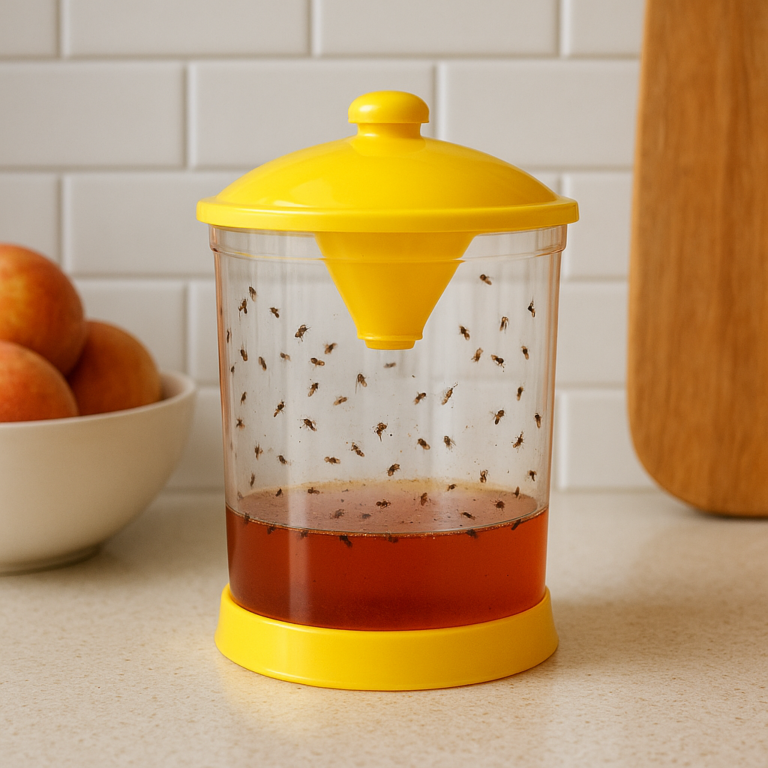
A basic DIY trap can help reduce adult fruit flies while you remove the breeding source:
- Pour a little apple cider vinegar into a small jar or cup.
- Add a drop of dish soap to help break the surface tension.
- Cover with plastic wrap and poke a few small holes, or make a paper funnel with its narrow end above the liquid.
- Set it near—but not inside—the sink.
- Replace the mixture when it becomes dirty or full of insects.
This trap is for adult fruit flies, not eggs or larvae in a drain. For more designs and placement advice, see our DIY fruit fly traps and best practices for fruit fly traps.
When to Use Commercial Fruit Fly Traps
Commercial traps can be convenient when you want a contained, ready-to-use option. Examples include TERO Fruit Fly Traps and Safer Brand Fruit Fly Trap. Check each product label for placement, use, and disposal directions; keep traps away from children, pets, and food-preparation surfaces.
- TERO Fruit Fly Trap: manufacturer information | Amazon search
- Safer Brand Fruit Fly Trap: manufacturer information | Amazon search
👉 Shop fruit fly traps and related options:
Why Traps Alone Won’t Stop a Breding Source
A trap may catch plenty of adults and still leave the source untouched. If larvae are developing in damp residue, new adults can continue appearing. Use traps as a monitoring and reduction tool, while cleaning the disposal, checking other drains, and removing rotting or fermenting material.
For a quick demonstration of how to think about fruit flies and drain flies, the first YouTube video embedded above, “How To Deal With Fruit Flies And Drain Flies” from WTHR, features Pat Sullivan of Sullivan Hardware sharing practical control tips.
🧼 How to Prevent Fruit Flies from Returning to Your Garbage Disposal
Everyday Disposal and Sink Cleaning Habits
- Scrape large food scraps into the trash or compost before rinsing dishes.
- Run the disposal with water as directed by its manual.
- Rinse away remaining food particles after grinding.
- Wipe the sink and splash guard regularly.
- Don’t leave food-soiled dishes sitting overnight.
- Investigate persistent odors promptly; they may signal residue or a plumbing issue.
Store Produce and Manage Food Waste
Fruit flies can use more than a sink. Store ripe fruit appropriately, empty compost and trash regularly, and rinse sticky beverage containers before recycling. The University of California Statewide Integrated Pest Management Program recommends sanitation and removing breeding materials as key fruit-fly controls.
For fruit-specific prevention, keep an eye on bananas, tomatoes, potatoes, onions, and forgotten produce in cupboards. One soft potato can make a surprisingly convincing fruit-fly nursery.
Keep Drains, Sponges, and Dishcloths Clean
Clean the sink drain and overflow as well as the disposal. Rinse sponges and cloths after use, let them dry between uses, and launder or replace them regularly. If your kitchen has multiple drains, inspect them rather than assuming every fly comes from the disposal.
Prevent Drain Flies in Other Kitchen Drains
Drain flies are associated with organic film in drains and other wet areas. Mechanical cleaning—using an appropriate brush to remove residue from accessible drain surfaces—can be more useful than simply pouring liquid into the pipe. The University of Minnesota Extension recommends locating and cleaning breeding sites; persistent or inaccessible buildup may need professional attention.
🧪 Enzyme Drain Cleaners and Other Treatment Options
How Enzyme and Bacterial Drain Treatments Work
Some drain treatments use enzymes or bacteria to help break down organic material. They may be useful for routine maintenance when the product is compatible with the plumbing and used as directed. They are not instant insecticides, and results depend on reaching the residue and giving the treatment the label-specified contact time.
Choosing a Treatment Safe for Your Plumbing and Disposal
Before using any drain product:
- Confirm the label permits use in your type of drain and disposal.
- Follow the dose, contact time, and flushing instructions exactly.
- Don’t combine it with bleach, acid, or another drain cleaner.
- Keep the product away from children and pets.
- Continue physical cleaning where accessible.
A product that is safe for a plain drain is not automatically approved for every disposal, septic system, or pipe material. When in doubt, check the disposal manufacturer’s manual or ask a plumber.
🛠️ When a Dirty Disposal Needs Repair or Professional Help
Signs of a Clog, Leak, or Disposal Problem
Call a qualified plumber or follow the manufacturer’s service guidance if you notice:
- Water leaking from the disposal or connections
- A persistent clog or water backing up
- A burning smell, repeated trips, or failure to run
- Unusual grinding, rattling, or vibration
- A damaged splash guard or inaccessible buildup
- Persistent flies after you’ve cleaned and checked nearby sources
Do not dismantle the unit while it is connected to power. A pest issue and a plumbing issue can overlap, but they require different fixes.
When to Call a Plumber or Pest Control Professional
Call a plumber for recurring drain backups, leaks, or suspected pipe damage. Consider a licensed pest professional if insect activity continues despite removing food waste, cleaning drains, checking houseplants, and trapping adults. Ask them to identify the insect and locate its breeding source before recommending treatment.
📅 A Simple Garbage Disposal Cleaning Schedule
| Frequency | Task |
|---|---|
| After food preparation | Scrape scraps away; rinse the sink and wipe spills |
| After using the disposal | Flush with water according to the unit’s manual |
| Weekly | Wash the sink, drain rim, and splash guard |
| Monthly or as needed | Inspect beneath the baffle and check the sink overflow |
| Whenever flies appear | Identify the insect, inspect nearby breeding sources, clean residue, and monitor with a trap |
Adjust the schedule to your household. A busy kitchen, frequent food waste, or recurring odor may call for more frequent checks. The best schedule is the one that prevents visible buildup—not the one that makes your disposal smell like a lemon grove for five minutes.