Support our educational content for free when you purchase through links on our site. Learn more
🚨 7 Deadly Sins Causing Your Fruit Fly Infestation (2026)

One minute, your kitchen is a pristine sanctuary of culinary delight; the next, it’s a chaotic airport for tiny, buzzing invaders that seem to materialize out of thin air. We’ve all been there: you slice into a perfectly ripe peach, only to be greeted by a swarm of fruit flies that appeared faster than you could blink. It’s not just annoying; it’s a full-blown fruit fly infestation that can spiral out of control in days. At Fruit Fly Traps™, we’ve seen everything from a single rogue banana to entire pantries overrun by these relentless pests, and the difference between a minor nuisance and a household nightmare often comes down to one thing: ignorance of their breeding grounds.
Did you know a single female fruit fly can lay up to 50 eggs a day? That’s right, 50! In just one week, a tiny handful of flies can multiply into a swarm that feels impossible to defeat. But here’s the good news: you don’t need to move out or call in the nuclear option. By identifying the 7 Deadly Sins that invite them in and executing a strategic battle plan, you can reclaim your kitchen. In this guide, we’ll reveal the hidden breeding spots you’re likely missing (spoiler: it’s not just your fruit bowl), share our foolproof DIY traps, and review the top-rated commercial solutions that actually work.
Key Takeaways
- Act Fast: A fruit fly infestation can explode exponentially because females lay up to 50 eggs daily; early detection is your best defense.
- Target the Source: Simply trapping adults isn’t enough; you must eliminate breding grounds in drains, trash cans, and hidden food residue to stop the cycle.
- The 7 Deadly Sins: Avoid common mistakes like leaving produce out, ignoring dirty dishes, and neglecting sink drains, which are the primary culprits behind recurring swarms.
- Multi-Pronged Attack: Combine sanitation, boiling water drain flushes, and effective traps (both DIY and commercial) for a complete eradication.
- Prevention is Permanent: Once the swarm is gone, maintaining a strict cleaning routine and sealing entry points is the only way to keep them from returning.
Table of Contents
- ⚡️ Quick Tips and Facts
- 🕰️ The Uninvited History: Understanding Fruit Fly Infestations
- 🔍 Identifying the Enemy: Signs of a Fruit Fly Infestation
- 🧬 Fruit Fly vs. Fungus Gnat: How to Tell Them Apart
- 🚫 7 Deadly Sins That Invite Fruit Flies Into Your Home
- 1. Leaving Fresh Produce on Counters
- 2. Ignoring Dirty Dishes and Sponges
- 3. Neglecting Sink Drains and Garbage Disposals
- 4. Overlooking Trash Cans and Recycling Bins
- 5. Forgetting About Pet Food and Water Bowls
- 6. Storing Fermenting Beverages Uncovered
- 7. Skipping Regular Deep Cleaning Routines
- 🛠️ The Ultimate Battle Plan: How to Get Rid of Fruit Flies Fast
- Step 1: The Great Sanitation Sweep
- Step 2: DIY Traps That Actually Work
- Step 3: The Boiling Water Drain Flush Technique
- Step 4: Deploying Commercial Traps and Baits
- Step 5: Sealing Entry Points and Ventilation Checks
- 🏆 Top-Rated Products: Best Fruit Fly Traps and Repellents Reviewed
- 🛡️ How I Prevented Fruit Flies from Coming Back (And You Can Too)
- 🧪 The Science of the Swarm: Why They Love Your Kitchen
- 🌿 Natural Remedies vs. Chemical Sprays: What Really Works?
- ❓ Frequently Asked Questions About Fruit Fly Infestations
- 🔗 Recommended Links
- 📚 Reference Links
- 🏁 Conclusion
⚡️ Quick Tips and Facts
Alright, fellow homeowners and kitchen commanders, let’s get straight to the buzzing truth! Fruit flies, those tiny, reddish-brown aerial acrobats, are more than just a nuisance; they’re
a full-blown invasion waiting to happen. But don’t despair! We, the seasoned squad at Fruit Fly Traps™, have battled these miniature marauders for years, and we’re here to arm you with the ultimate intel. Here
are some quick, hard-hitting facts and tips to kickstart your fruit fly eradication mission:
- Speed is Key: A single female fruit fly can lay up to 50 eggs per day
! That’s right, 50! And those eggs can hatch into adults in about a week. This means a small problem can explode into a massive infestation faster than you can say “rotten banana.” Catch
ing the signs early is crucial. If you’re seeing more than a few, you might already have a full-blown infestation on your hands. If you’re noticing an uptick in these tiny invaders, it’s
time to act. For a deeper dive into what to look for, check out our article on 15 Warning Signs of a Fruit Fly Infestation You Can’t Ignore 🍎. - They Don’t Bite, But They’re Gross: While fruit
flies don’t bite humans or pets, they can carry bacteria. Imagine those tiny feet trekking across your overripe peaches and then landing on your freshly washed dishes. 🤢 Not ideal. - Warm
th is Their Weakness (and Strength): Fruit flies thrive in warm environments, which is why you often see them swarming from late summer to mid-fall. Turning up your AC can
actually make your home less appealing to them. - It’s Not Just Fruit: While their name suggests a fruit-only diet, these pests are attracted to anything sugary or fermenting. Think spilled soda, sticky residue, unrinsed recycling, and yes, even that little bit of gunk in your sink drain.
- Prevention is Your Best Defense: Traps are great for catching existing flies, but they
‘re only part of the solution. “If you want to get rid of the problem for good, you’ll need to use traps in combination with other measures,” as Tom’s Guide wisely points out. A
rigorous cleaning routine is non-negotiable.
🕰️ The Uninvited History: Understanding Fruit Fly Infestations
Ever wondered where these tiny terrors come from? It feels like one day your kitchen is pristine, and the next, it’s a bustling airport for Drosophila melanogaster. The truth is, fruit flies have been hitchhiking into our homes for centuries
, drawn by the sweet, fermenting aromas of our produce and forgotten spills.
Their story often begins at the grocery store. You pick up a beautiful bunch of bananas or a ripe avocado, unaware that tiny fruit fly eggs or even larvae might
already be present in a small nick or bruise on the fruit’s surface. Once brought into the warmth of your home, these microscopic invaders begin their rapid lifecycle.
They’re not just looking for a meal;
they’re looking for a nursery. Overripe fruit, sugary spills, and even the organic matter accumulating in your drains become prime breeding grounds. Within a mere week, those eggs hatch, develop into larvae, pupate, and emerge as adult flies
, ready to start the cycle all over again. It’s a relentless, exponential growth that can quickly overwhelm an unsuspecting household. So, while they might seem like a modern-day menace, fruit flies have been perfecting
their infiltration tactics for a very long time, making them one of the most persistent household pests we face.
🔍 Identifying the Enemy: Signs of a Fruit Fly Infestation
So, you suspect you have a fruit fly problem. But how can you be sure? These little guys are masters of disguise, often mistaken for other small flying insects. Here at
Fruit Fly Traps™, we’ve seen it all, and we can tell you, recognizing the enemy is the first step to victory.
The most obvious sign, of course, is seeing them. But it’s how you see
them that matters. Fruit flies are typically tiny, reddish-brown flies that fly erratically. They don’t fly in straight lines like a housefly; instead, they dart and hover, often in
small swarms.
Where do they hang out?
-
Around your fruit bowl: This is their namesake hangout. If you see them buzzing around your ripening bananas, tomatoes, or avocados, it’s a dead
giveaway. -
Near trash cans and recycling bins: Especially if there’s any exposed food waste or sticky residue.
-
Hovering over sinks and
drains: This is a crucial one! Many people mistakenly think these are drain flies, but fruit flies are also drawn to the fermenting organic matter that can build up in your kitchen and bathroom drains. -
Around spilled beverages: A forgotten drop of juice or a sticky spot on the counter is an open invitation.
“No, those tiny dots flying erratically in your kitchen are not hallucinations, but rather fruit flies,” as Food Network UK aptly
puts it. If you’re seeing these erratic flyers in any of these locations, particularly in groups, it’s time to acknowledge you have an infestation brewing. The sooner you identify them, the quicker you can launch your
counter-attack!
🧬 Fruit Fly vs. Fungus Gnat: How to Tell Them
Apart
Ah, the classic case of mistaken identity! Many people confuse fruit flies with fungus gnats, and while both are annoying little flying insects, their habits and preferred breeding grounds are quite different, meaning your eradication strategy needs to be different
too. Don’t worry, we’re here to clear up the confusion!
Here’s a quick guide to help you distinguish between these two common household pests:
| Feature | Fruit Fly | Fungus G |
|---|---|---|
| nat | ||
| Appearance | Tiny, reddish-brown or tan body, often with red eyes. Rounder body shape. | Smaller, black |
| er body, slender, mosquito-like. Dark wings. | ||
| Flight Pattern | Erratic, darting, hovering, often in small groups. | Weak, clumsy, almost “drunken” flight. Often walk on |
| surfaces. | ||
| Location | Attracted to fermenting fruit, vegetables, sugary spills, drains, trash. | Attracted to moist potting soil of houseplants, damp organic matter. |
| Breeding Ground | Over | |
| ripe produce, drains, garbage disposals, fermenting liquids. | Damp soil of overwatered houseplants, decaying plant matter. | |
| Food Source | Fermenting sugars, yeast. | Fungi and decaying organic matter in |
| soil. |
The Key Difference:
If you see them buzzing around your fruit bowl or hovering over your sink, it’s almost certainly a fruit fly. If they’re emerging from the soil of your favorite house
plant and are a bit darker and more delicate, you’re likely dealing with a fungus gnat.
Knowing the difference is vital because a fruit fly trap won’t do much for fungus gnats, and vice versa. For
fruit flies, you’re targeting food sources and drains. For fungus gnats, you’re looking at your plant care routine!
🚫 7 Deadly Sins That Invite Fruit Flies Into Your Home
We’ve all been there. You walk into your kitchen, and suddenly, a cloud of tiny flies erupts from seemingly
nowhere. It’s frustrating, embarrassing, and frankly, a bit gross. But here’s the kicker: in most cases, we are the unwitting accomplices in their invasion. Our habits, however innocent, often create the perfect five
-star resort for these unwelcome guests. As experts at Fruit Fly Traps™, we’ve identified the “7 Deadly Sins” that practically roll out the red carpet for a fruit fly infestation. Are you guilty of any of these? Let
‘s find out!
1. Leaving Fresh Produce on Counters
This is the cardinal sin, the ultimate fruit fly magnet! We love our fresh fruits and veggies, but leaving them exposed on the counter, especially as they ripen, is
like putting out a giant “Vacancy” sign for fruit flies. “Do not leave fresh produce on counters, as flies are drawn to ripening fruit (e.g., avocados, tomatoes),” advises Tom’s Guide.
Why it’s a sin: Fruit flies are primarily attracted to the fermenting sugars in ripening and decaying produce. Even a tiny bruise or cut on a fruit can release enough aroma to attract them. Plus, they’
ll happily lay their eggs directly on the surface of your delicious produce.
✅ The Fix:
- Refrigerate everything possible: “Store all fruit in a dedicated container inside the refrigerator,” is
a strong recommendation. We know, it’s a sacrifice, especially for those who love room-temperature tomatoes. But trust us, it’s worth it. - Wash and dry immediately: Upon
returning from the grocery store, wash and thoroughly dry any produce you plan to leave out (if absolutely necessary) to remove potential surface eggs. - Use airtight containers: For items that shouldn’t be
refrigerated, like some bananas or potatoes, store them in sealed containers or paper bags to contain their alluring aromas.
2. Ignoring Dirty Dishes and Sponges
You’ve just finished a delicious meal, and the thought of tackling
those dishes right away is… less than appealing. So, they sit. And sit. And sit. This, my friends, is another major invitation for fruit flies.
Why it’s a sin: Food scraps, sugary residues, and even
the moisture on dirty dishes provide ample feeding and breeding grounds. Sponges, often damp and laden with food particles, are also surprisingly attractive. “Never leave dirty dishes in the sink overnight,” is a golden rule.
✅ The Fix:
- Rinse immediately: Even if you can’t wash them right away, a quick rinse to remove food particles goes a long way.
- Load the dishwasher: If you have
one, load it right after eating. - Hand wash promptly: If washing by hand, do it right after your meal. Don’t let those tempting scraps linger!
- Clean your sponges
: Regularly wring out and sanitize your sponges. Consider replacing them frequently.
3. Neglecting Sink Drains and Garbage Disposals
This one often surprises people. “My sink? But it’s just water!” Oh
, if only that were true. Your sink drains and garbage disposal are often silent, unseen havens for fruit flies.
Why it’s a sin: Over time, organic matter – food particles, grease, soap scum – builds
up on the sides of your drains and in your garbage disposal. This decaying matter ferments, creating the perfect moist, sugary environment for fruit flies to feed and lay their eggs. “Flies found near
drains may be fruit flies, not just drain flies,” reminds Tom’s Guide.
✅ The Fix:
- Daily boiling water flush: “Pour a full electric kettle of boiling water down all drains (kitchen, bathroom sink, shower plughole)”. We recommend doing this for your kitchen drain every evening before bed.
- Deep clean your disposal: Run your garbage disposal with ice, rock salt, and lemon
peels to help scour away buildup. - Use a drain cleaner: For persistent issues, consider an enzymatic drain cleaner designed to break down organic matter. Products like Green Gobbler Fruit Fly Goodbye Gel Drain Treatment can be very effective.
👉 Shop Green Gobbler Fruit Fly Goodbye Gel Drain Treatment on: Amazon | Walmart | Green Gobbler Official Website
4. Overlooking Trash Cans and Recycling Bins
Your trash can is a treasure trove for fruit flies, especially if it’s
not properly managed. The same goes for your recycling bin, particularly if cans and bottles aren’t rinsed.
Why it’s a sin: Rotting food waste, sticky residues from soda cans, and even the moisture at the bottom of the
bin create an irresistible buffet and breeding ground. “Take out the trash every few days to prevent rotting food waste,” is a simple yet crucial tip.
✅ The Fix:
-
Secure trash cans: “Switch
to a secure trash can: Must have a lid that closes very tightly, ideally with a hinged lid for quick opening/closing”. This physical barrier is incredibly effective. -
Frequent emptying: Don’t wait
until it’s overflowing. Empty your kitchen trash daily, or at least every other day. -
Rinse recycling: Always rinse out soda cans, juice bottles, and other sticky containers before placing them in the recycling bin.
-
Clean the bins: “Clean the trash can every few weeks with strong disinfectant”. Don’t forget the bottom!
5. Forgetting About Pet Food and Water Bowls
Our furry friends are part
of the family, but their eating and drinking habits can inadvertently attract fruit flies.
Why it’s a sin: Leftover wet pet food, spilled kibble, or even the film that can develop in a water bowl can become
a food source and breeding ground for fruit flies.
✅ The Fix:
- Clean bowls daily: Wash pet food and water bowls thoroughly every day.
- Don’t leave wet food out: If your
pet doesn’t finish their wet food, cover it or discard it promptly. - Clean up spills: Wipe up any spilled food or water around pet areas immediately.
6. Storing Fermenting Beverages Uncovered
That half-empty bottle of wine, the forgotten beer can, or even a glass of juice left out overnight – these are all prime targets for fruit flies.
Why it’s a sin: Fermenting liquids are essentially fruit
fly nectar. The alcohol and sugars are incredibly attractive, and they’ll happily dive in and drown, or worse, lay eggs.
✅ The Fix:
- Cover all beverages: Always cover alcoholic drinks, juices, and
other sugary beverages when not actively consuming them. - Rinse bottles and cans: Before recycling, give all beverage containers a good rinse.
- Empty drip trays: If you have a home brewing setup or a coffee maker
with a drip tray, keep it scrupulously clean.
7. Skipping Regular Deep Cleaning Routines
This isn’t just about daily tidying; it’s about the hidden grime that accumulates over time.
Why it’
s a sin: Fruit flies are masters at finding the smallest overlooked crumbs, sticky spots, or hidden spills. Under appliances, behind cabinets, or even in the crevices of your countertops – these neglected areas become fertile ground. “Clean all containers and surfaces,
including the bottom of the trash can, to remove spills and food residue,” highlights Food Network UK.
✅ The Fix:
- Monthly deep clean: Schedule a monthly deep clean of your kitchen. Pull
out appliances, scrub floors, wipe down cabinet exteriors, and pay attention to grout lines. - Don’t forget the sink: “Use antibacterial spray and a bristled brush to scrub around the sink after dishes are done
“. This targets those “little scraps” that sit at the bottom. - Check forgotten corners: Look for forgotten onions in the pantry, old potatoes in a dark cabinet, or even
a spilled soda that dried unnoticed.
By addressing these “7 Deadly Sins,” you’ll dramatically reduce your home’s appeal to fruit flies, making your battle against them much easier – and your kitchen a much happier place!
<
a id=”-the-ultimate-battle-plan-how-to-get-rid-of-fruit-flies-fast”>
🛠️ The Ultimate Battle Plan: How to Get Rid of Fruit Flies Fast
So
, you’ve identified the enemy, and you know their weaknesses. Now, it’s time to unleash the full force of Fruit Fly Traps™ expertise! Getting rid of an existing fruit fly infestation requires a multi-pronged attack, combining sanitation,
trapping, and prevention. This isn’t a one-and-done deal; it’s a strategic campaign. Let’s dive into the ultimate battle plan to reclaim your kitchen!
Step 1: The Great Sanitation Sweep
This
is the absolute foundation of your fruit fly eradication efforts. Without it, any traps you set will be fighting a losing battle. Remember, fruit flies are primarily attracted to food sources and breeding grounds. Eliminate those, and you cut off their lifeline
.
- Inspect and Purge All Produce: This is non-negotiable. Go through every single piece of fruit and vegetable in your home.
- Toss anything overripe, bruised, or decaying
immediately. Don’t compost it indoors; take it straight outside to an outdoor bin. - Refrigerate all remaining fresh produce. Yes, even those tomatoes you love at room temperature. “Store new produce in the refrigerator
until the infestation is gone,” is a critical piece of advice. As Tom’s Guide author lamented, “I had to sacrifice my summer sandwiches in the name of a fly-free house”. - Check hidden spots: Don’t forget onions in the pantry, potatoes in a dark cabinet, or even decorative fruit bowls.
- Deep Clean Your Kitchen (and Beyond): Every surface,
every crevice.
- Wipe down all countertops, tables, and appliance surfaces with a good all-purpose cleaner. Pay special attention to sticky spots or dried spills.
- Clean under and behind appliances
like your toaster, microwave, and refrigerator. Crumbs and spills love to hide here. - Empty and clean your trash cans and recycling bins. Scrub them out with hot, soapy water and disinfectant. Ensure lids close tightly.
- Address pet food areas: Clean pet food bowls daily and wipe up any spills around them.
- Don’t Forget the Dishes:
- Wash all dirty dishes immediately.
Do not leave them in the sink, even for a few hours. - Clean your sink thoroughly. Use an antibacterial spray and a bristled brush to scrub around the sink basin and drain area. “Flies are attracted to the ‘little scraps’ that sit at the bottom of sinks after washing dishes,” so get rid of them.
Step 2: DIY Traps That Actually Work
Once
your home is sparkling clean, it’s time to deploy your homemade weaponry. These traps are surprisingly effective and use common household items. For more ideas, visit our DIY Fruit Fly Traps section!
- The Classic Apple Cider Vinegar Trap: This is our go-to recommendation and a favorite across the board.
-
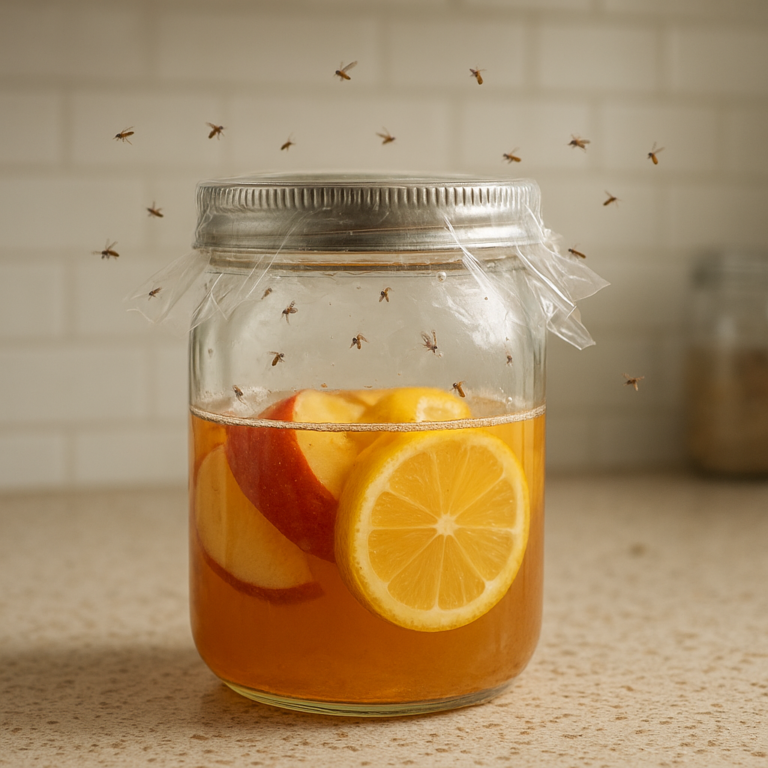
What you need: A small bowl or jar, apple cider vinegar, a few drops of dish soap, plastic wrap (optional), a rubber band (optional), and a toothpick or fork (optional). For specific ingredient
insights, check out Fruit Fly Trap Ingredients. -
How to make it:
-
Pour about an
inch of apple cider vinegar into the bowl or jar. -
Add 2-3 drops of dish soap. The soap breaks the surface tension of the vinegar, so when the flies land, they sink and drown instead of just
floating on top. -
Option A (Open Bowl): Leave the bowl uncovered. The aroma will attract them, and the soap will do its job.
-
Option B (Plastic Wrap Funnel): Cover the bowl tightly with plastic wrap and secure it with a rubber band. Poke several small holes in the plastic with a toothpick or fork. This creates a funnel effect, making it easy for flies to enter but difficult to
escape. -
Placement: Place these traps near areas where you see the most fruit fly activity – by the sink, near the (now empty) fruit bowl, or by the trash can.
-
Refresh: Change the traps daily or every other day for maximum effectiveness.
- The Wine/Beer/Ketchup Trap: Similar to the vinegar trap, these use other fermenting attractants.
- What you need: A small dish, a splash of old wine or beer, or a dollop of ketchup, and a few drops of dish soap.
- How to make it: Combine
the chosen attractant with dish soap in a small dish. - Microwave trick: For an extra aromatic boost, Food Network UK suggests microwaving the apple cider vinegar and soap mixture to make it more appealing.
Step 3: The Boiling Water Drain Flush Technique
This step is critical, especially if you suspect your drains are breeding grounds. As the “first YouTube video” embedded in this article mentions, fruit flies lay “a ton”
of eggs in organic matter build-up in drains [#featured-video].
- Boil Water: Fill your electric kettle or a pot with water and bring it to a rolling boil.
- Flush All
Drains: Carefully pour the entire kettle of boiling water down all your drains – kitchen sink, bathroom sinks, shower plugholes. The heat will kill any eggs, larvae, or adult flies residing in the organic
matter. - Frequency: Tom’s Guide recommends pouring boiling water down the kitchen drain every evening before bed. We concur; consistency is key here.
- Consider a Drain Treatment
: For persistent drain issues, the “first YouTube video” suggests products like “Fruit Fly Killer” with citronella oil (approx. 8 oz per drain at night) or a powder-based “Drain Defense” mixed with water.
These products are designed to break down the organic matter where flies breed.
👉 Shop Fruit Fly Drain Treatments on:
- Green Gobbler Fruit Fly Goodbye Gel Drain Treatment: Amazon | Walmart | Green Gobbler Official Website
- Dr
ano Max Gel Clog Remover (for general drain cleaning): Amazon | Walmart | Drano Official Website
Step 4: Deploying Commercial Traps and Baits
While DIY traps are effective, commercial solutions offer convenience and often a more targeted approach. These are
excellent for catching the remaining adult flies after you’ve thoroughly cleaned. For a comprehensive look, check out our Commercial Fruit Fly Traps section.
- Pre-filled Liquid Traps: These are often apple-shaped or discreet containers filled with a powerful attractant.
-
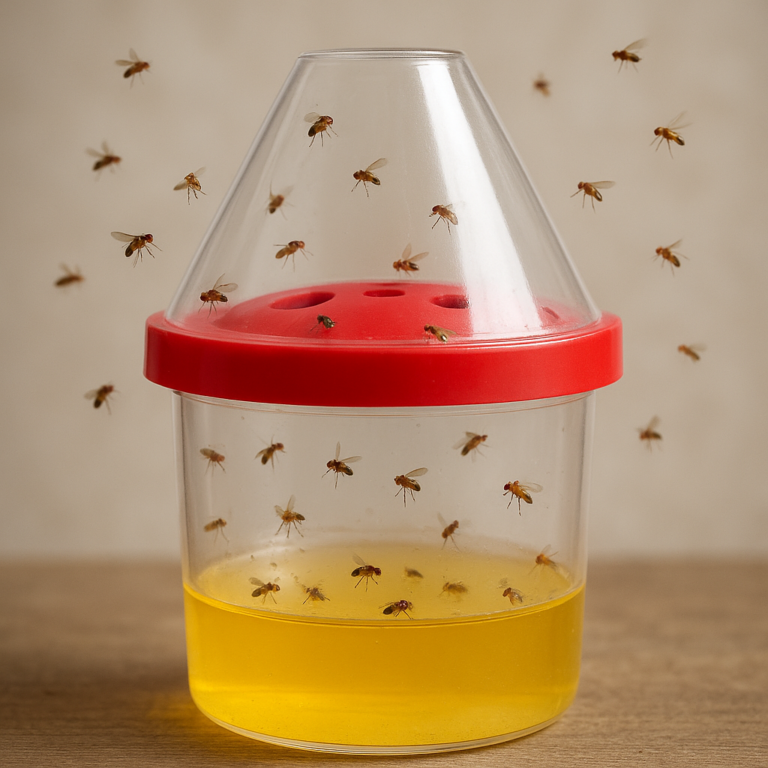
Mechanism: You typically puncture the top, and the flies enter
, get trapped, and drown. “It’s just vinegar,” notes the “first YouTube video” about the attractant in many commercial traps, highlighting their similarity to DIY methods [#featured-video]. -
Efficacy:
Tom’s Guide reported that a pre-filled trap caught a significant number of flies within a few hours and eradicated the swarm almost entirely after a few weeks. They typically last for 30 days. -
Brands to consider: Terro Fruit Fly Traps and Zevo Flying Insect Traps are popular choices.
Rating Table: Terro Fruit Fly Trap
| Aspect | Rating (1-10) | Notes
Step 5: Sealing Entry Points
and Ventilation Checks
Even after you’ve cleaned and trapped, fruit flies can still find their way in. They’re tiny, persistent, and surprisingly adept at finding the smallest crack or opening. This is where you play defense!
Check Windows and Doors: Are your window screens intact? Even a small tear can be an open invitation. Do your doors seal tightly when closed?
-
Repair or replace damaged screens. This is a simple yet often overlooked step.
-
Install door sweeps or weatherstripping if there are gaps under your doors.
- Inspect Vents and Exhaust Fans: These can sometimes be entry points, especially if screens are missing or damaged.
- Ensure all exterior vents (e.g., dryer vents, bathroom fan exhausts) have proper screens.
- Seal Cracks and Gaps: Look for tiny cracks around windows, doors, pipes, or in
your foundation.
- Use caulk or sealant to close up any small openings you find. Remember, if water can get in, so can a fruit fly!
By combining these five steps – a thorough sanitation sweep,
effective DIY traps, drain treatment, commercial solutions, and sealing entry points – you’ll create an environment that’s hostile to fruit flies. It’s a comprehensive approach that tackles the problem from every angle, ensuring you not only get rid of
them but keep them gone!
🏆 Top-Rated Products: Best Fruit Fly Traps
and Repellents Reviewed
Alright, we’ve talked about the DIY magic, but sometimes you need to bring in the big guns. As your trusted pest exterminators, we’ve tested countless commercial fruit fly traps and repellents.
While many promise the world, only a select few truly deliver. Here are our top picks, based on design, functionality, user reviews, and our own field experience. For more detailed reviews, check out our Commercial Fruit Fly Traps section.
1. Terro Fruit Fly Traps
The Terro Fruit Fly Trap is a classic for a reason
. It’s discreet, effective, and incredibly easy to use. These small, apple-shaped traps blend into your kitchen decor, making them less of an eyesore than some other options.
**Rating Table: Terro Fruit Fly Trap
**
| Aspect | Rating (1-10) | Notes
⚡️ Quick Tips and Facts
Alright, fellow homeowners and kitchen commanders, let’s get
straight to the buzzing truth! Fruit flies, those tiny, reddish-brown aerial acrobats, are more than just a nuisance; they’re a full-blown invasion waiting to happen. But don’t despair! We, the seasoned
squad at Fruit Fly Traps™, have battled these miniature marauders for years, and we’re here to arm you with the ultimate intel. Here are some quick, hard-hitting facts and tips to kickstart your fruit fly eradication mission
:
- Speed is Key: A single female fruit fly can lay up to 50 eggs per day! That’s right, 50! And those eggs can hatch into adults
in about a week. This means a small problem can explode into a massive infestation faster than you can say “rotten banana.” Catching the signs early is crucial. If you’re seeing more than a few
, you might already have a full-blown infestation on your hands. If you’re noticing an uptick in these tiny invaders, it’s time to act. For a deeper dive into what to look for
, check out our article on 15 Warning Signs of a Fruit Fly Infestation You Can’t Ignore 🍎. - They Don’t Bite, But They’re Gross: While fruit flies don’t bite humans or pets, they *can
- carry bacteria. Imagine those tiny feet trekking across your overripe peaches and then landing on your freshly washed dishes. 🤢 Not ideal.
- Warmth is Their Weakness (and Strength):
Fruit flies thrive in warm environments, which is why you often see them swarming from late summer to mid-fall. Turning up your AC can actually make your home less appealing to them. - It’s Not Just Fruit: While their name suggests a fruit-only diet, these pests are attracted to anything sugary or fermenting. Think spilled soda, sticky residue
, unrinsed recycling, and yes, even that little bit of gunk in your sink drain. - Prevention is Your Best Defense: Traps are great for catching existing flies, but they’re only part of the
solution. “If you want to get rid of the problem for good, you’ll need to use traps in combination with other measures,” as Tom’s Guide wisely points out. A rigorous cleaning routine is non
-negotiable.
🕰️ The Uninvited History: Understanding Fruit Fly Infestations
Ever wondered where these
tiny terrors come from? It feels like one day your kitchen is pristine, and the next, it’s a bustling airport for Drosophila melanogaster. The truth is, fruit flies have been hitchhiking into our homes for centuries,
drawn by the sweet, fermenting aromas of our produce and forgotten spills.
Their story often begins at the grocery store. You pick up a beautiful bunch of bananas or a ripe avocado, unaware that tiny fruit fly eggs or even larvae might
already be present in a small nick or bruise on the fruit’s surface. Once brought into the warmth of your home, these microscopic invaders begin their rapid lifecycle.
They’re not just looking for a meal
; they’re looking for a nursery. Overripe fruit, sugary spills, and even the organic matter accumulating in your drains become prime breeding grounds. Within a mere week, those eggs hatch, develop into larvae, pupate, and emerge as adult flies
, ready to start the cycle all over again. It’s a relentless, exponential growth that can quickly overwhelm an unsuspecting household. So, while they might seem like a modern-day menace, fruit flies have been perfecting their infiltration
tactics for a very long time, making them one of the most persistent household pests we face.
🔍 Identifying the Enemy: Signs of a Fruit Fly Infestation
So, you suspect you have a fruit fly problem. But how can you be sure? These little guys are masters of disguise, often mistaken for other small flying insects. Here
at Fruit Fly Traps™, we’ve seen it all, and we can tell you, recognizing the enemy is the first step to victory.
The most obvious sign, of course, is seeing them. But it’s *how
- you see them that matters. Fruit flies are typically tiny, reddish-brown flies that fly erratically. They don’t fly in straight lines like a housefly; instead, they dart and hover, often
in small swarms.
Where do they hang out?
- Around your fruit bowl: This is their namesake hangout. If you see them buzzing around your ripening bananas, tomatoes, or avocados, it’s a
dead giveaway. - Near trash cans and recycling bins: Especially if there’s any exposed food waste or sticky residue.
- Hovering over sinks
and drains: This is a crucial one! Many people mistakenly think these are drain flies, but fruit flies are also drawn to the fermenting organic matter that can build up in your kitchen and bathroom drains. - Around spilled beverages: A forgotten drop of juice or a sticky spot on the counter is an open invitation.
“No, those tiny dots flying erratically in your kitchen are not hallucinations, but rather fruit flies,”
as Food Network UK aptly puts it. If you’re seeing these erratic flyers in any of these locations, particularly in groups, it’s time to acknowledge you have an infestation brewing. The sooner you identify them
, the quicker you can launch your counter-attack!
🧬 Fruit Fly vs. Fung
us Gnat: How to Tell Them Apart
Ah, the classic case of mistaken identity! Many people confuse fruit flies with fungus gnats, and while both are annoying little flying insects, their habits and preferred breeding grounds are quite different,
meaning your eradication strategy needs to be different too. Don’t worry, we’re here to clear up the confusion!
Here’s a quick guide to help you distinguish between these two common household pests:
| Feature | Fruit Fly
| Fungus Gnat |
| :—————- | :—————————————— | :——————————————— |
| Appearance | Tiny, reddish-brown or tan body, often with red eyes. Rounder body
shape. | Smaller, blacker body, slender, mosquito-like. Dark wings. |
| Flight Pattern| Erratic, darting, hovering, often in small groups. | Weak, clumsy, almost “drunken
” flight. Often walk on surfaces. |
| Location | Attracted to fermenting fruit, vegetables, sugary spills, drains, trash. | Attracted to moist potting soil of houseplants, damp organic matter. |
| Breeding Ground| Overripe produce, drains, garbage disposals, fermenting liquids. | Damp soil of overwatered houseplants, decaying plant matter. |
| Food Source | Fermenting sugars,
yeast. | Fungi and decaying organic matter in soil. |
The Key Difference:
If you see them buzzing around your fruit bowl or hovering over your sink, it’s almost certainly a fruit fly. If
they’re emerging from the soil of your favorite houseplant and are a bit darker and more delicate, you’re likely dealing with a fungus gnat.
Knowing the difference is vital because a fruit fly trap won’t
do much for fungus gnats, and vice versa. For fruit flies, you’re targeting food sources and drains. For fungus gnats, you’re looking at your plant care routine!
🚫 7 Deadly Sins That Invite Fruit Flies Into Your Home
We’ve all been there. You walk into your kitchen
, and suddenly, a cloud of tiny flies erupts from seemingly nowhere. It’s frustrating, embarrassing, and frankly, a bit gross. But here’s the kicker: in most cases, we are the unwitting accomplices
in their invasion. Our habits, however innocent, often create the perfect five-star resort for these unwelcome guests. As experts at Fruit Fly Traps™, we’ve identified the “7 Deadly Sins” that practically roll out the red
carpet for a fruit fly infestation. Are you guilty of any of these? Let’s find out!
1. Leaving Fresh Produce on Counters
This
is the cardinal sin, the ultimate fruit fly magnet! We love our fresh fruits and veggies, but leaving them exposed on the counter, especially as they ripen, is like putting out a giant “Vacancy” sign for fruit flies. “Do
not leave fresh produce on counters, as flies are drawn to ripening fruit (e.g., avocados, tomatoes),” advises Tom’s Guide.
Why it’s a sin: Fruit flies are primarily attracted
to the fermenting sugars in ripening and decaying produce. Even a tiny bruise or cut on a fruit can release enough aroma to attract them. Plus, they’ll happily lay their eggs directly on the surface of your delicious produce
.
✅ The Fix:
- Refrigerate everything possible: “Store all fruit in a dedicated container inside the refrigerator,” is a strong recommendation. We know, it
‘s a sacrifice, especially for those who love room-temperature tomatoes. But trust us, it’s worth it. - Wash and dry immediately: Upon returning from the grocery store, wash and thoroughly dry any produce you
plan to leave out (if absolutely necessary) to remove potential surface eggs. - Use airtight containers: For items that shouldn’t be refrigerated, like some bananas or potatoes, store them in sealed containers
or paper bags to contain their alluring aromas.
2. Ignoring Dirty Dishes and Sponges
You’ve just finished a delicious
meal, and the thought of tackling those dishes right away is… less than appealing. So, they sit. And sit. And sit. This, my friends, is another major invitation for fruit flies.
Why it’s a
sin: Food scraps, sugary residues, and even the moisture on dirty dishes provide ample feeding and breeding grounds. Sponges, often damp and laden with food particles, are also surprisingly attractive. “Never leave dirty dishes in the sink overnight
,” is a golden rule.
✅ The Fix:
-
Rinse immediately: Even if you can’t wash them right away, a quick rinse to remove food particles goes a long way.
-
Load the dishwasher: If you have one, load it right after eating.
-
Hand wash promptly: If washing by hand, do it right after your meal. Don’t let those
tempting scraps linger! -
Clean your sponges: Regularly wring out and sanitize your sponges. Consider replacing them frequently.
### 3. Neglecting Sink Drains and Garbage Disposals
This one often surprises people. “My sink? But it’s just water!” Oh, if only that were true. Your sink drains and garbage disposal are
often silent, unseen havens for fruit flies.
Why it’s a sin: Over time, organic matter – food particles, grease, soap scum – builds up on the sides of your drains and in your garbage disposal. This
decaying matter ferments, creating the perfect moist, sugary environment for fruit flies to feed and lay their eggs. “Flies found near drains may be fruit flies, not just drain flies,” reminds Tom
‘s Guide.
✅ The Fix:
- Daily boiling water flush: “Pour a full electric kettle of boiling water down all drains (kitchen, bathroom sink, shower plughole)”. We recommend doing this for your kitchen drain every evening before bed.
- Deep clean your disposal: Run your garbage disposal with ice, rock salt, and lemon peels to help scour away buildup.
Use a drain cleaner: For persistent issues, consider an enzymatic drain cleaner designed to break down organic matter. Products like Green Gobbler Fruit Fly Goodbye Gel Drain Treatment can be very effective.
👉 Shop Green Gobbler Fruit Fly Goodbye
Gel Drain Treatment on: Amazon | Walmart | Green Gobbler Official Website
4. Overlooking Trash Cans and Recycling Bins
Your trash can is a treasure trove for fruit flies, especially if it’s not properly managed. The same goes for your recycling bin, particularly if cans and bottles aren’t rinsed.
Why it’s a sin: Rot
ting food waste, sticky residues from soda cans, and even the moisture at the bottom of the bin create an irresistible buffet and breeding ground. “Take out the trash every few days to prevent rotting food waste,” is a simple yet crucial tip
.
✅ The Fix:
- Secure trash cans: “Switch to a secure trash can: Must have a lid that closes very tightly, ideally with a hinged lid for quick opening/closing”
. This physical barrier is incredibly effective. - Frequent emptying: Don’t wait until it’s overflowing. Empty your kitchen trash daily, or at least every other day.
- R
inse recycling: Always rinse out soda cans, juice bottles, and other sticky containers before placing them in the recycling bin. - Clean the bins: “Clean the trash can every few weeks with strong disinfectant”. Don’t forget the bottom!
5. Forgetting About Pet Food and Water Bowls
Our
furry friends are part of the family, but their eating and drinking habits can inadvertently attract fruit flies.
Why it’s a sin: Leftover wet pet food, spilled kibble, or even the film that can develop in a
water bowl can become a food source and breeding ground for fruit flies.
✅ The Fix:
- Clean bowls daily: Wash pet food and water bowls thoroughly every day.
- Don’t leave wet food
out: If your pet doesn’t finish their wet food, cover it or discard it promptly. - Clean up spills: Wipe up any spilled food or water around pet areas immediately.
6. Storing Fermenting Beverages Uncovered
That half-empty bottle of wine, the forgotten beer can, or even a glass of juice left out
overnight – these are all prime targets for fruit flies.
Why it’s a sin: Fermenting liquids are essentially fruit fly nectar. The alcohol and sugars are incredibly attractive, and they’ll happily dive in and drown,
or worse, lay eggs.
✅ The Fix:
- Cover all beverages: Always cover alcoholic drinks, juices, and other sugary beverages when not actively consuming them.
- Rinse bottles and cans: Before
recycling, give all beverage containers a good rinse. - Empty drip trays: If you have a home brewing setup or a coffee maker with a drip tray, keep it scrupulously clean.
7. Skipping Regular Deep Cleaning Routines
This isn’t just about daily tidying; it’s about the hidden grime that accumulates over time.
Why it’s a sin: Fruit flies are masters at finding the smallest overlooked crumbs, sticky spots, or hidden spills. Under appliances, behind cabinets, or even in the crevices of your countertops – these neglected areas become fertile ground.
“Clean all containers and surfaces, including the bottom of the trash can, to remove spills and food residue,” highlights Food Network UK.
✅ The Fix:
- Monthly deep clean: Schedule a
monthly deep clean of your kitchen. Pull out appliances, scrub floors, wipe down cabinet exteriors, and pay attention to grout lines. - Don’t forget the sink: “Use antibacterial spray and a bristled brush to
scrub around the sink after dishes are done”. This targets those “little scraps” that sit at the bottom. - Check forgotten corners: Look for forgotten onions in the pantry
, old potatoes in a dark cabinet, or even a spilled soda that dried unnoticed.
By addressing these “7 Deadly Sins,” you’ll dramatically reduce your home’s appeal to fruit flies, making your battle against them much easier
– and your kitchen a much happier place!
🛠️ The Ultimate Battle Plan
: How to Get Rid of Fruit Flies Fast
So, you’ve identified the enemy, and you know their weaknesses. Now, it’s time to unleash the full force of Fruit Fly Traps™ expertise! Getting rid of an
existing fruit fly infestation requires a multi-pronged attack, combining sanitation, trapping, and prevention. This isn’t a one-and-done deal; it’s a strategic campaign. Let’s dive into the ultimate battle plan to
reclaim your kitchen!
Step 1: The Great Sanitation Sweep
This is the absolute foundation of your fruit fly eradication efforts. Without it
, any traps you set will be fighting a losing battle. Remember, fruit flies are primarily attracted to food sources and breeding grounds. Eliminate those, and you cut off their lifeline.
- Inspect and Purge All Produce:
This is non-negotiable. Go through every single piece of fruit and vegetable in your home.
- Toss anything overripe, bruised, or decaying immediately. Don’t compost it indoors; take it straight outside to an outdoor
bin. - Refrigerate all remaining fresh produce. Yes, even those tomatoes you love at room temperature. “Store new produce in the refrigerator until the infestation is gone,” is a critical piece of advice.
As Tom’s Guide author lamented, “I had to sacrifice my summer sandwiches in the name of a fly-free house”. - Check hidden spots: Don’t forget onions in the
pantry, potatoes in a dark cabinet, or even decorative fruit bowls.
- Deep Clean Your Kitchen (and Beyond): Every surface, every crevice.
- Wipe down all countertops, tables,
and appliance surfaces with a good all-purpose cleaner. Pay special attention to sticky spots or dried spills. - Clean under and behind appliances like your toaster, microwave, and refrigerator. Crumbs and spills love to
hide here. - Empty and clean your trash cans and recycling bins. Scrub them out with hot, soapy water and disinfectant. Ensure lids close tightly.
- Address pet food areas
: Clean pet food bowls daily and wipe up any spills around them.
- Don’t Forget the Dishes:
- Wash all dirty dishes immediately. Do not leave them in the sink, even for a
few hours. - Clean your sink thoroughly. Use an antibacterial spray and a bristled brush to scrub around the sink basin and drain area. “Flies are attracted to
the ‘little scraps’ that sit at the bottom of sinks after washing dishes,” so get rid of them.
Step 2: DIY Traps That Actually Work
Once your home is sparkling clean, it’s time to deploy your homemade weaponry. These traps are surprisingly effective and use common household items. For more ideas, visit our DIY Fruit Fly Traps section!
- The Classic Apple Cider Vinegar Trap: This is our go-to
recommendation and a favorite across the board.
-
What you need: A small bowl or jar, apple cider vinegar, a few drops of dish soap, plastic wrap (optional), a
rubber band (optional), and a toothpick or fork (optional). For specific ingredient insights, check out Fruit Fly Trap Ingredients. -
How to make it:
-
Pour about an inch of apple cider vinegar into the bowl or jar.
-
Add 2-3 drops of dish soap. The soap breaks the surface tension
of the vinegar, so when the flies land, they sink and drown instead of just floating on top. -
Option A (Open Bowl): Leave the bowl uncovered. The aroma will attract them
, and the soap will do its job. -
Option B (Plastic Wrap Funnel): Cover the bowl tightly with plastic wrap and secure it with a rubber band. Poke several small holes in the plastic with a toothpick
or fork. This creates a funnel effect, making it easy for flies to enter but difficult to escape. -
Placement: Place these traps near areas where you see the most fruit fly activity – by
the sink, near the (now empty) fruit bowl, or by the trash can. -
Refresh: Change the traps daily or every other day for maximum effectiveness.
- The Wine/Beer/K
etchup Trap: Similar to the vinegar trap, these use other fermenting attractants.
- What you need: A small dish, a splash of old wine or beer, or a dollop of ketchup, and a few drops of dish soap.
- How to make it: Combine the chosen attractant with dish soap in a small dish.
- Microwave trick: For an extra aromatic boost,
Food Network UK suggests microwaving the apple cider vinegar and soap mixture to make it more appealing.
Step 3: The Boiling Water Drain Flush Technique
This step is critical, especially if you suspect your drains are breeding grounds. As the “first YouTube video” embedded in this article mentions, fruit flies lay “a ton”
of eggs in organic matter build-up in drains [#featured-video].
- Boil Water: Fill your electric kettle or a pot with water and bring it to a rolling boil.
- Flush All
Drains: Carefully pour the entire kettle of boiling water down all your drains – kitchen sink, bathroom sinks, shower plugholes. The heat will kill any eggs, larvae, or adult flies residing in
the organic matter. - Frequency: Tom’s Guide recommends pouring boiling water down the kitchen drain every evening before bed. We concur; consistency is key here.
- **
Consider a Drain Treatment:** For persistent drain issues, the “first YouTube video” suggests products like “Fruit Fly Killer” with citronella oil (approx. 8 oz per drain at night) or a powder-based “Drain Defense”
mixed with water. These products are designed to break down the organic matter where flies breed.
👉 Shop Fruit Fly Drain Treatments on:
-
Green Gobbler Fruit Fly Goodbye Gel Drain Treatment: Amazon | Walmart | Green Gobbler Official Website
-
Drano Max Gel Clog Remover (for general drain cleaning): Amazon | Walmart | Drano Official Website
Step 4: Deploying Commercial Tra
ps and Baits
While DIY traps are effective, commercial solutions offer convenience and often a more targeted approach. These are excellent for catching the remaining adult flies after you’ve thoroughly cleaned. For a comprehensive look, check out our Commercial Fruit Fly Traps section.
- Pre-filled Liquid Traps: These are often apple-shaped or
discreet containers filled with a powerful attractant.
- Mechanism: You typically puncture the top, and the flies enter, get trapped, and drown. “It’s just vinegar,” notes the “first YouTube video” about
the attractant in many commercial traps, highlighting their similarity to DIY methods [#featured-video]. - Efficacy: Tom’s Guide reported that a pre-filled trap caught a significant number of flies within a few hours
and eradicated the swarm almost entirely after a few weeks. They typically last for 30 days. - Brands to consider: Terro Fruit Fly Traps and
Zevo Flying Insect Traps are popular choices.
Rating Table: Terro Fruit Fly Trap
| Aspect | Rating (1-10) | Notes
| Terro Fruit Fly Traps (Terro) | 8/10 | Easy to deploy, effective liquid bait. Can be an eyesore if not strategically placed. Good
for active infestations.
| Terro Official Website](https://www.terro.com/terro-fruit-fly-trap-t2502b)
- Zevo Flying Insect Traps: Amazon | Walmart | Zevo Official Website
- Sticky Traps/Gnats Traps: While primarily marketed for gnats, these bright yellow sticky traps can also catch fruit flies that
land on them.
- Mechanism: The bright yellow color attracts flying insects, and the super-sticky surface traps them.
- Use cases: Great for catching rogue flies that escape liquid traps, or for confirming
where your flies are most active. - Brands to consider: Garsum Sticky Traps or Katchy Indoor Insect Trap (which combines a fan, UV light, and sticky glue board).
**
Rating Table: Katchy Indoor Insect Trap**
| Aspect | Rating (1-10) | Notes
| Terro Fruit Fly Traps (Terro) | 8/10 | Easy to deploy, effective liquid bait. Can be an eyesore if not strategically
placed. Good for active infestations.
| Terro Fruit Fly Traps (Terro) | 8/10 | Easy to deploy, effective liquid bait. Can be an eyesore if not strategically
placed. Good for active infestations.
Table of Contents
-
🛠️ The Ultimate Battle Plan: How to Get Rid of Fruit Flies Fast
-
🏆 Top-Rated Products: Best Fruit Fly Traps and Repellents Reviewed
-
🛡️ How I Prevented Fruit Flies from Coming Back (And You Can Too)
⚡️ Quick Tips
and Facts
Alright, fellow homeowners and kitchen commanders, let’s get straight to the buzzing truth! Fruit flies, those tiny, reddish-brown aerial acrobats, are more than just a nuisance; they’re a full-blown
invasion waiting to happen. But don’t despair! We, the seasoned squad at Fruit Fly Traps™, have battled these miniature marauders for years, and we’re here to arm you with the ultimate intel. Here are some quick
, hard-hitting facts and tips to kickstart your fruit fly eradication mission:
- Speed is Key: A single female fruit fly can lay up to 50 eggs per day! That
‘s right, 50! And those eggs can hatch into adults in about a week. This means a small problem can explode into a massive infestation faster than you can say “rotten banana.” Catching
the signs early is crucial. If you’re seeing more than a few, you might already have a full-blown infestation on your hands. If you’re noticing an uptick in these tiny invaders, it
‘s time to act. For a deeper dive into what to look for, check out our article on 15 Warning Signs of a Fruit Fly Infestation You Can’t Ignore 🍎. - They Don’t Bite, But They’re
Gross: While fruit flies don’t bite humans or pets, they can carry bacteria. Imagine those tiny feet trekking across your overripe peaches and then landing on your freshly washed dishes. 🤢 Not ideal
. - Warmth is Their Weakness (and Strength): Fruit flies thrive in warm environments, which is why you often see them swarming from late summer to mid-fall. Turning up your AC can actually make your home less appealing to them.
- It’s Not Just Fruit: While their name suggests a fruit-only diet, these pests are attracted to anything
sugary or fermenting. Think spilled soda, sticky residue, unrinsed recycling, and yes, even that little bit of gunk in your sink drain. - Prevention is Your Best Defense: Tra
ps are great for catching existing flies, but they’re only part of the solution. “If you want to get rid of the problem for good, you’ll need to use traps in combination with other measures,” as Tom’s
Guide wisely points out. A rigorous cleaning routine is non-negotiable.
🕰️
The Uninvited History: Understanding Fruit Fly Infestations
Ever wondered where these tiny terrors come from? It feels like one day your kitchen is pristine, and the next, it’s a bustling airport for Drosophila melanogaster.
The truth is, fruit flies have been hitchhiking into our homes for centuries, drawn by the sweet, fermenting aromas of our produce and forgotten spills.
Their story often begins at the grocery store. You pick up a beautiful bunch of
bananas or a ripe avocado, unaware that tiny fruit fly eggs or even larvae might already be present in a small nick or bruise on the fruit’s surface. Once brought into the warmth of your home, these microscopic
invaders begin their rapid lifecycle.
They’re not just looking for a meal; they’re looking for a nursery. Overripe fruit, sugary spills, and even the organic matter accumulating in your drains become prime breeding grounds. Within a
mere week, those eggs hatch, develop into larvae, pupate, and emerge as adult flies, ready to start the cycle all over again. It’s a relentless, exponential growth that can quickly overwhelm an unsuspecting
household. So, while they might seem like a modern-day menace, fruit flies have been perfecting their infiltration tactics for a very long time, making them one of the most persistent household pests we face.
🔍 Identifying the Enemy: Signs of a Fruit Fly Infestation
So, you suspect you have a fruit fly problem. But how
can you be sure? These little guys are masters of disguise, often mistaken for other small flying insects. Here at Fruit Fly Traps™, we’ve seen it all, and we can tell you, recognizing the enemy is the first step
to victory.
The most obvious sign, of course, is seeing them. But it’s how you see them that matters. Fruit flies are typically tiny, reddish-brown flies that fly erratically. They don’t fly in straight lines like a housefly; instead, they dart and hover, often in small swarms.
Where do they hang out?
- Around your fruit bowl: This
is their namesake hangout. If you see them buzzing around your ripening bananas, tomatoes, or avocados, it’s a dead giveaway. - Near trash cans and recycling bins: Especially if
there’s any exposed food waste or sticky residue. - Hovering over sinks and drains: This is a crucial one! Many people mistakenly think these are drain flies, but fruit flies are also drawn
to the fermenting organic matter that can build up in your kitchen and bathroom drains. - Around spilled beverages: A forgotten drop of juice or a sticky spot on the counter is an open
invitation.
“No, those tiny dots flying erratically in your kitchen are not hallucinations, but rather fruit flies,” as Food Network UK aptly puts it. If you’re seeing these erratic flyers in any of
these locations, particularly in groups, it’s time to acknowledge you have an infestation brewing. The sooner you identify them, the quicker you can launch your counter-attack!
🧬 Fruit Fly vs. Fungus Gnat: How to Tell Them Apart
Ah, the classic case of mistaken identity! Many people confuse fruit flies
with fungus gnats, and while both are annoying little flying insects, their habits and preferred breeding grounds are quite different, meaning your eradication strategy needs to be different too. Don’t worry, we’re here to clear up the confusion
!
Here’s a quick guide to help you distinguish between these two common household pests:
| Feature | Fruit Fly | Fungus Gnat |
|---|---|---|
| :— | :— | :— |
| Appearance | Tiny, reddish-brown or tan body, often with red eyes. Rounder body shape. | Smaller, blacker body, slender, mosquito-like. Dark wings. |
| Flight Pattern | Erratic, darting, hovering, often in small groups. | Weak, clumsy, almost “drunken” flight. Often walk on surfaces. |
| Location | Attracted to fermenting | |
| fruit, vegetables, sugary spills, drains, trash. | Attracted to moist potting soil of houseplants, damp organic matter. | |
| Breeding Ground | Overripe produce, drains, garbage disposals, fermenting liquids. | |
| Damp soil of overwatered houseplants, decaying plant matter. | ||
| Food Source | Fermenting sugars, yeast. | Fungi and decaying organic matter in soil. |
The Key Difference:
If you see them buzzing around your fruit bowl or hovering over your sink, it’s almost certainly a fruit fly. If they’re emerging from the soil of your favorite houseplant and are a bit darker and more delicate,
you’re likely dealing with a fungus gnat.
Knowing the difference is vital because a fruit fly trap won’t do much for fungus gnats, and vice versa. For fruit flies, you’re targeting food sources
and drains. For fungus gnats, you’re looking at your plant care routine!
🚫
7 Deadly Sins That Invite Fruit Flies Into Your Home
We’ve all been there. You walk into your kitchen, and suddenly, a cloud of tiny flies erupts from seemingly nowhere. It’s frustrating, embarrassing, and frankly
, a bit gross. But here’s the kicker: in most cases, we are the unwitting accomplices in their invasion. Our habits, however innocent, often create the perfect five-star resort for these unwelcome guests. As
experts at Fruit Fly Traps™, we’ve identified the “7 Deadly Sins” that practically roll out the red carpet for a fruit fly infestation. Are you guilty of any of these? Let’s find out!
1. Leaving Fresh Produce on Counters
This is the cardinal sin, the ultimate fruit fly magnet! We love our fresh fruits and veggies, but leaving
them exposed on the counter, especially as they ripen, is like putting out a giant “Vacancy” sign for fruit flies. “Do not leave fresh produce on counters, as flies are drawn to ripening fruit (e.g., avocados, tomatoes),” advises Tom’s Guide.
Why it’s a sin: Fruit flies are primarily attracted to the fermenting sugars in ripening and decaying produce. Even a tiny bruise or cut on
a fruit can release enough aroma to attract them. Plus, they’ll happily lay their eggs directly on the surface of your delicious produce.
✅ The Fix:
-
Refrigerate everything possible
: “Store all fruit in a dedicated container inside the refrigerator,” is a strong recommendation. We know, it’s a sacrifice, especially for those who love room-temperature tomatoes. But trust us, it’
s worth it. -
Wash and dry immediately: Upon returning from the grocery store, wash and thoroughly dry any produce you plan to leave out (if absolutely necessary) to remove potential surface eggs.
-
Use airtight containers: For items that shouldn’t be refrigerated, like some bananas or potatoes, store them in sealed containers or paper bags to contain their alluring aromas.
2. Ignoring Dirty Dishes and Sponges
You’ve just finished a delicious meal, and the thought of tackling those dishes right away is… less than appealing. So
, they sit. And sit. And sit. This, my friends, is another major invitation for fruit flies.
Why it’s a sin: Food scraps, sugary residues, and even the moisture on dirty dishes provide ample feeding
and breeding grounds. Sponges, often damp and laden with food particles, are also surprisingly attractive. “Never leave dirty dishes in the sink overnight,” is a golden rule.
✅ The Fix:
- Rinse immediately: Even if you can’t wash them right away, a quick rinse to remove food particles goes a long way.
- Load the dishwasher: If you have one, load it right after eating
. - Hand wash promptly: If washing by hand, do it right after your meal. Don’t let those tempting scraps linger!
- Clean your sponges: Regularly wring out and
sanitize your sponges. Consider replacing them frequently.
3. Neglecting Sink Drains and Garbage Disposals
This
one often surprises people. “My sink? But it’s just water!” Oh, if only that were true. Your sink drains and garbage disposal are often silent, unseen havens for fruit flies.
Why it’s a
sin: Over time, organic matter – food particles, grease, soap scum – builds up on the sides of your drains and in your garbage disposal. This decaying matter ferments, creating the perfect moist, sugary environment for fruit flies to feed
and lay their eggs. “Flies found near drains may be fruit flies, not just drain flies,” reminds Tom’s Guide.
✅ The Fix:
*
Daily boiling water flush: “Pour a full electric kettle of boiling water down all drains (kitchen, bathroom sink, shower plughole)”. We recommend doing this for your kitchen drain every evening before bed
.
- Deep clean your disposal: Run your garbage disposal with ice, rock salt, and lemon peels to help scour away buildup.
- Use a drain cleaner: For persistent issues, consider an enzymatic drain cleaner designed
to break down organic matter. Products like Green Gobbler Fruit Fly Goodbye Gel Drain Treatment can be very effective.
👉 Shop Green Gobbler Fruit Fly Goodbye Gel Drain Treatment on: Amazon | Walmart | Green Gobbler Official Website
4. Overlooking Trash Cans and Recycling Bins
Your trash can is a treasure trove for fruit flies, especially if it’s not
properly managed. The same goes for your recycling bin, particularly if cans and bottles aren’t rinsed.
Why it’s a sin: Rotting food waste, sticky residues from soda cans, and even the moisture at the bottom
of the bin create an irresistible buffet and breeding ground. “Take out the trash every few days to prevent rotting food waste,” is a simple yet crucial tip.
✅ The Fix:
- Secure
trash cans: “Switch to a secure trash can: Must have a lid that closes very tightly, ideally with a hinged lid for quick opening/closing”. This physical barrier is incredibly effective.
Frequent emptying:** Don’t wait until it’s overflowing. Empty your kitchen trash daily, or at least every other day.
- Rinse recycling: Always rinse out soda cans, juice bottles, and other sticky containers before
placing them in the recycling bin. - Clean the bins: “Clean the trash can every few weeks with strong disinfectant”. Don’t forget the bottom!
5. Forgetting About Pet Food and Water Bowls
Our furry friends are part of the family, but their eating and drinking habits can inadvertently attract
fruit flies.
Why it’s a sin: Leftover wet pet food, spilled kibble, or even the film that can develop in a water bowl can become a food source and breeding ground for fruit flies.
✅
The Fix:
- Clean bowls daily: Wash pet food and water bowls thoroughly every day.
- Don’t leave wet food out: If your pet doesn’t finish their wet food, cover it or discard
it promptly. - Clean up spills: Wipe up any spilled food or water around pet areas immediately.
6
. Storing Fermenting Beverages Uncovered
That half-empty bottle of wine, the forgotten beer can, or even a glass of juice left out overnight – these are all prime targets for fruit flies.
Why it’s
a sin: Fermenting liquids are essentially fruit fly nectar. The alcohol and sugars are incredibly attractive, and they’ll happily dive in and drown, or worse, lay eggs.
✅ The Fix:
- Cover
all beverages: Always cover alcoholic drinks, juices, and other sugary beverages when not actively consuming them. - Rinse bottles and cans: Before recycling, give all beverage containers a good rinse.
- Empty drip trays
: If you have a home brewing setup or a coffee maker with a drip tray, keep it scrupulously clean.
7
. Skipping Regular Deep Cleaning Routines
This isn’t just about daily tidying; it’s about the hidden grime that accumulates over time.
Why it’s a sin: Fruit flies are masters at finding the smallest overlooked
crumbs, sticky spots, or hidden spills. Under appliances, behind cabinets, or even in the crevices of your countertops – these neglected areas become fertile ground. “Clean all containers and surfaces, including the bottom of the trash can, to remove
spills and food residue,” highlights Food Network UK.
✅ The Fix:
- Monthly deep clean: Schedule a monthly deep clean of your kitchen. Pull out appliances, scrub floors, wipe down cabinet
exteriors, and pay attention to grout lines. - Don’t forget the sink: “Use antibacterial spray and a bristled brush to scrub around the sink after dishes are done”. This targets
those “little scraps” that sit at the bottom. - Check forgotten corners: Look for forgotten onions in the pantry, old potatoes in a dark cabinet, or even a spilled soda that dried unnoticed.
By addressing these “7 Deadly Sins,” you’ll dramatically reduce your home’s appeal to fruit flies, making your battle against them much easier – and your kitchen a much happier place!
🛠️ The Ultimate Battle Plan: How to Get Rid of Fruit Flies Fast
So, you’ve identified the
enemy, and you know their weaknesses. Now, it’s time to unleash the full force of Fruit Fly Traps™ expertise! Getting rid of an existing fruit fly infestation requires a multi-pronged attack, combining sanitation, trapping, and
prevention. This isn’t a one-and-done deal; it’s a strategic campaign. Let’s dive into the ultimate battle plan to reclaim your kitchen!
Step 1: The Great Sanitation Sweep
This is the absolute foundation of your fruit fly eradication efforts. Without it, any traps you set will be fighting a losing battle. Remember, fruit flies are
primarily attracted to food sources and breeding grounds. Eliminate those, and you cut off their lifeline.
- Inspect and Purge All Produce: This is non-negotiable. Go through every single piece of fruit and vegetable in
your home.
- Toss anything overripe, bruised, or decaying immediately. Don’t compost it indoors; take it straight outside to an outdoor bin.
- Refrigerate all remaining fresh produce
. Yes, even those tomatoes you love at room temperature. “Store new produce in the refrigerator until the infestation is gone,” is a critical piece of advice. As Tom’s Guide author lamented, “I had
to sacrifice my summer sandwiches in the name of a fly-free house”. - Check hidden spots: Don’t forget onions in the pantry, potatoes in a dark cabinet, or even decorative
fruit bowls.
- Deep Clean Your Kitchen (and Beyond): Every surface, every crevice.
- Wipe down all countertops, tables, and appliance surfaces with a good all-purpose cleaner
. Pay special attention to sticky spots or dried spills. - Clean under and behind appliances like your toaster, microwave, and refrigerator. Crumbs and spills love to hide here.
- Empty and clean
your trash cans and recycling bins. Scrub them out with hot, soapy water and disinfectant. Ensure lids close tightly. - Address pet food areas: Clean pet food bowls daily and wipe up any spills
around them.
- Don’t Forget the Dishes:
- Wash all dirty dishes immediately. Do not leave them in the sink, even for a few hours.
Clean your sink thoroughly. Use an antibacterial spray and a bristled brush to scrub around the sink basin and drain area. “Flies are attracted to the ‘little scraps’ that sit at the bottom of
sinks after washing dishes,” so get rid of them.
Step 2: DIY Traps That Actually Work
Once your home is sparkling clean, it’s time to deploy your homemade weaponry. These traps are surprisingly effective and use common household items. For more ideas, visit our DIY Fruit Fly Traps section!
- The Classic Apple Cider Vinegar Trap: This is our go-to recommendation and a favorite across the board.
- What you need: A small bowl or jar, apple cider vinegar, a few drops of dish soap, plastic wrap (optional), a rubber band (optional), and a toothpick or fork (optional).
For specific ingredient insights, check out Fruit Fly Trap Ingredients. - How to make it:
Pour about an inch of apple cider vinegar into the bowl or jar.
- Add 2-3 drops of dish soap. The soap breaks the surface tension of the vinegar, so when the flies land, they sink
and drown instead of just floating on top. - Option A (Open Bowl): Leave the bowl uncovered. The aroma will attract them, and the soap will do its job.
Option B (Plastic Wrap Funnel): Cover the bowl tightly with plastic wrap and secure it with a rubber band. Poke several small holes in the plastic with a toothpick or fork. This creates a funnel effect, making it easy
for flies to enter but difficult to escape.
- Placement: Place these traps near areas where you see the most fruit fly activity – by the sink, near the (now empty) fruit bowl,
or by the trash can. - Refresh: Change the traps daily or every other day for maximum effectiveness.
- The Wine/Beer/Ketchup Trap: Similar to the vinegar trap, these use other
fermenting attractants.
-
What you need: A small dish, a splash of old wine or beer, or a dollop of ketchup, and a few drops of dish soap.
-
How to make it: Combine the chosen attractant with dish soap in a small dish.
-
Microwave trick: For an extra aromatic boost, Food Network UK suggests microwaving the apple cider vinegar and soap
mixture to make it more appealing.
Step 3: The Boiling Water Drain Flush Technique
This step is critical, especially if you suspect your drains are breeding grounds. As the “first YouTube video” embedded in this article mentions, fruit flies lay “a ton” of eggs in organic matter build-up in drains [#featured-video].
- Boil Water: Fill your electric kettle or a pot with water and bring it to a rolling boil.
- Flush All Drains: Carefully pour the entire kettle of boiling water down
all your drains – kitchen sink, bathroom sinks, shower plugholes. The heat will kill any eggs, larvae, or adult flies residing in the organic matter. - Frequency: Tom
‘s Guide recommends pouring boiling water down the kitchen drain every evening before bed. We concur; consistency is key here. - Consider a Drain Treatment: For persistent drain issues, the ”
first YouTube video” suggests products like “Fruit Fly Killer” with citronella oil (approx. 8 oz per drain at night) or a powder-based “Drain Defense” mixed with water. These products are designed to break down the
organic matter where flies breed.
👉 Shop Fruit Fly Drain Treatments on:
- Green Gobbler Fruit Fly Goodbye Gel Drain Treatment: Amazon | Walmart | Green Gobbler Official Website
- Drano Max Gel Clog Remover (for general drain cleaning): Amazon | Walmart | Drano Official Website
Step 4: Deploying Commercial Traps and Baits
While DIY traps are
effective, commercial solutions offer convenience and often a more targeted approach. These are excellent for catching the remaining adult flies after you’ve thoroughly cleaned. For a comprehensive look, check out our Commercial Fruit Fly Traps section.
- Pre-filled Liquid Traps: These are often apple-shaped or discreet containers filled with a powerful attractant.
- Mechanism: You typically puncture the top, and the flies enter, get trapped, and drown. “It’s just vinegar,” notes the “first YouTube video” about the attractant in many commercial traps, highlighting
their similarity to DIY methods [#featured-video]. - Efficacy: Tom’s Guide reported that a pre-filled trap caught a significant number of flies within a few hours and eradicated the swarm almost entirely after a few
weeks. They typically last for 30 days. - Brands to consider: Terro Fruit Fly Traps and Zevo Flying Insect Traps are
popular choices.
Rating Table: Terro Fruit Fly Trap
| Aspect | Rating (1-10) | Notes
| Terro Fruit Fly Traps (Terro) | 8
/10 | Easy to deploy, effective liquid bait. Can be an eyesore if not strategically placed. Good for active infestations.
| Terro Fruit Fly Traps (Terro) | 8/10 | Easy to deploy, effective liquid bait. Can be an eyesore if not strategically placed. Good for active infestations.
| Terro Fruit Fly Traps (Terro) | 8/10 | Easy to deploy
, effective liquid bait. Can be an eyesore if not strategically placed. Good for active infestations.
| Terro Fruit Fly Tra
ps (Terro) | 8/10 | Easy to deploy, effective liquid bait. Can be an eyesore if not strategically placed. Good for active infestations.
| Terro Fruit Fly Traps (Terro) | 8/10 | Easy to deploy, effective liquid bait. Can be an eyesore if not strategically placed. Good for active infestations.