Support our educational content for free when you purchase through links on our site. Learn more
🛡️ 12 Fruit Fly Exclusion Methods for a Fly-Free Home (2026)

Imagine this: You’re about to enjoy a quiet evening with a glass of wine, only to be interrupted by a tiny, buzzing invader circling your glass. It’s not just annoying; it’s a sign that your kitchen has become a breeding ground. Did you know a single female fruit fly can lay up to 50 eggs in her lifetime, turning a minor nuisance into an infestation in less than a week? At Fruit Fly Traps™, we’ve seen everything from hidden roting potatoes behind cabinets to biofilm-filled drains acting as secret nurseries. This isn’t just about swating flies; it’s about building an impenetrable fortress. In this guide, we reveal 12 proven exclusion methods that go far beyond simple traps, tackling the root causes of infestation. We’ll even uncover the “secret lair” most homeowners miss, which you won’t find in standard advice.
Key Takeaways
- Exclusion beats elimination: The most effective strategy is preventing entry and breeding, not just catching adults.
- Upgrade your screens: Standard 18×16 mesh is useless; you need 20×20 “No-See-Um” mesh to physically block these tiny pests.
- Target the hidden sources: Biofilm in drains, damp sponges, and unsealed produce are the primary breeding grounds that traps alone cannot fix.
- Layered defense is critical: Combine physical barriers, sanitation, moisture control, and targeted traps for a 10% fly-free home.
- Know your enemy: Distinguish between common Drosophila and invasive species like the Spotted Wing Drosophila to apply the right exclusion tactics.
Table of Contents
-
[🍎 The Evolution of the
Kitchen Invader: A History of Fruit Flies](#the-evolution-of-the-kitchen-invader-a
-history-of-fruit-flies) -
🪰 Understanding Your Enemy: Drosophila Melanogaster vs
. Invasive Species -
[🛡️ 12 Proactive Fruit Fly Exclusion Methods for Your Home](#12-proactive-fruit
-fly-exclusion-methods-for-your-home) -
[1. Sealing the Perimeter:
Fine Mesh Screens and Weatherstripping](#1-sealing-the-perimeter-fine-mesh-screens-and-
weatherstripping) -
[2. The Cold Shoulder: Proper Refrigeration Tactics for Produce](#2-the
-cold-shoulder-proper-refrigeration-tactics-for-produce) -
[4. Produce Quarantine: The Wash and Store Method](#4-produce-quarantine-the-wash-and
-store-method) -
[5. Trash Can Tactics: Airtight Lids and Regular Sanitization](#5-trash-
can-tactics-airtight-lids-and-regular-sanitization) -
[6.
Moisture Management: Fixing Leaky Faucets and Damp Rags](#6-moisture-management-fixing-le
aky-faucets-and-damp-rags) -
[7. Indoor Gardening Safety: Soil
Health and Potted Plant Care](#7-indoor-gardening-safety-soil-health-and-potted-
plant-care) -
[8. Fermentation Frustration: Managing Alcohol and Vinegar Storage](#8-fer
mentation-frustration-managing-alcohol-and-vinegar-storage) -
[9. Compost Bin
Best Practices: Keeping the Rot Remote](#9-compost-bin-best-practices-keeping-the-rot
-remote) -
[10. Airflow Barriers: Using High-Velocity Fans to Disrupt Flight](#10-airflow-
barriers-using-high-velocity-fans-to-disrupt-flight) -
[11
. Pet Food Protocols: Keeping Kibble and Bowls Clean](#11-pet-food-protocols-keeping-kibble-
and-bowls-clean) -
[12. Recyclable Rinsing: Removing Sugary
Residue from Bins](#12-recyclable-rinsing-removing-sugary-residue-
from-bins) -
[🚨 Protecting the Perimeter: Invasive Fruit Fly Info and Pest Exclusion](#protecting-the
-perimeter-invasive-fruit-fly-info-and-pest-exclusion) -
[🛑 Regulating
Invasive Fruit Fly Quarantines in California and Beyond](#regulating-invasive-fruit-fly-quarantines-in
-california-and-beyond) -
[📞 How to Report a Pest: Citizen Science in Action](#
how-to-report-a-pest-citizen-science-in-action)
⚡️ Quick Tips and Facts
Before we dive into the nitty-gritty of turning your home into a fortress, let’
s look at the fast facts. If you’re tired of the tiny aerial circus in your kitchen, check out our guide
on [Fruit Fly Traps](https://www.fruitflytraps.org/fruit-fly-traps
/) to start your offensive immediately!
| Fact | Detail |
|---|---|
| ** | |
| Lifespan** | Approximately 40–50 days in ideal conditions. |
| Reproduction | |
| A single female can lay up to 500 eggs in her lifetime. | |
| Speed | They |
| can go from egg to adult in about 8 to 10 days. | |
| Size | Roughly |
| 3 to 4 mm—small enough to fly through standard window screens! | |
| Detection | They can |
| smell fermenting fruit from over several hundred yards away. |
-
✅ Do: Wash all store
-bought produce immediately. -
✅ Do: Use 20×20 mesh screens on windows.
-
❌ Don’t: Leave damp dishcloths or sponges on the counter overnight.
-
❌
Don’t: Assume a clean-looking drain is a fly-free drain.
🍎 The Evolution
of the Kitchen Invader: A History of Fruit Flies
We’ve been battling these pests since the dawn of agriculture
. The common fruit fly, Drosophila melanogaster, didn’t just appear out of thin air; it followed human
migration patterns, hitching rides on fruit shipments across the globe. Historically, these flies were seen as a nuisance, but in the early
20th century, they became the darlings of [genetic research](https://www.nature.com/articles/d4
1586-018-04149-1) due to their rapid breeding and simple chromosome structure.
However
, for the average homeowner, their “scientific contribution” is cold comfort when they’re hovering over your Chardonnay. Over
the decades, our homes have become more hospitable to them. Central heating, year-round access to tropical fruits, and indoor
composting have created a “perpetual summer” for these pests. Understanding [Fruit Fly Facts](https://www.fruitflytraps
.org/category/fruit-fly-facts/) helps us realize that we aren’t just fighting a bug; we’
re fighting millions of years of evolutionary drive to find sugar and yeast.
🪰 Understanding Your
Enemy: Drosophila Melanogaster vs. Invasive Species
Not all fruit flies are created equal. While the common Drosophila is what
you usually see circling your bananas, there are more sinister “cousins” out there. The Spotted Wing Drosophila (SW
D), for instance, is an invasive species that attacks healthy, ripening fruit still on the vine, unlike the common
variety that prefers the overripe mush.
The USDA monitors these invasive species closely because they threaten billions of dollars in agriculture. In your home, the
exclusion methods remain similar, but the stakes are higher if you have an indoor garden or a backyard orchard. Are you dealing
with a standard kitchen pest or a regulatory nightmare? We’ll explore how to tell the difference later.
🛡
️ 12 Proactive Fruit Fly Exclusion Methods for Your Home
Exclusion is the art of “denying entry
.” It’s much easier to keep them out than to hunt them down once they’ve started a family in your garbage
disposal. Here is our expert-vetted list of exclusion tactics.
1. Sealing the Perimeter: Fine
Mesh Screens and Weatherstripping
Standard window screens are often 18×16 mesh. That’s a
“welcome mat” for a fruit fly. You need 20×20 mesh (often called “no
-see-um” mesh) to physically block their entry.
- Step 1: Measure your window
frames. - Step 2: Replace standard mesh with Phifer 20×20 No-See-
Um Screen. - Step 3: Apply weatherstripping to door gaps.
👉 Shop Phifer on
:
- Phifer Screen: Amazon | [Walmart](https://www.walmart.com/search?
q=Phifer+20×20+mesh+screen) | [Phifer Official Website](https://www.ph
ifer.com/)
2. The Cold Shoulder: Proper Refrigeration Tactics for Produce
Fruit flies hate the cold. Their
metabolism slows to a crawl below 50°F. We recommend moving all “countertop” fruits—even bananas and tomatoes—into the
fridge if you suspect an invasion is brewing.
3. Drain Defense: Eliminating Biofilm Breeding Grounds
This
is the “secret lair” of the fruit fly. They lay eggs in the biofilm (that slimy g
unk) inside your pipes. If you’re struggling with this, you might need our specialized advice on [Dealing with Persistent
Fruit Flies](https://www.fruitflytraps.org/category/dealing-with-persistent-fruit-
flies/).
| Product | Type | Best For | Pro Rating |
|---|---|---|---|
| :— | :— | :— | :— |
| InVade Bio Drain | Microbial Gel | Thick Biofilm | 9. |
| 5/10 | |||
| Green Gobbler | Enzyme Cleaner | Regular Maintenance | 8/10 |
| ** | |||
| Rockwell Labs IGR** | Growth Regulator | Breaking Life Cycle | 9/10 |
👉 CHECK PRICE on:
*
InVade Bio Drain: Amazon | [Walmart](https://www.walmart.com/search?q=In
Vade+Bio+Drain)
- Green Gobbler: Amazon | [Home Depot](https://www.homedepot.com
/s/Green%20Gobbler)
4. Produce Quarantine: The Wash and Store Method
When
you bring fruit home, it often carries microscopic eggs. Wash your fruit in a solution of water and white vinegar immediately. Then, store
them in airtight containers like Rubbermaid Brilliance.
5. Trash Can Tactics: Airtight Lids and
Regular Sanitization
A simple swing-top bin is a fruit fly buffet. Switch to a step-can with a **
silicone gasket seal**. Brands like simplehuman offer superior seals that trap odors and keep flies out.
- Moisture Management: Fixing Leaky Faucets and Damp Rags
Fruit flies need moisture to survive. A damp
sponge is basically a luxury resort for them. Squeeze out sponges and hang dishcloths to dry completely.
7.
Indoor Gardening Safety: Soil Health and Potted Plant Care
Sometimes those “fruit flies” are actually fungus gnats.
They look similar but live in the soil. Use a layer of sand or decorative pebbles over the soil to prevent them from laying eggs.
8. Fermentation Frustration: Managing Alcohol and Vinegar Storage
As seen in the featured video, fruit
flies are obsessed with fermented liquids. Ensure your wine bottles are corked and your apple cider vinegar bottles have their caps screwed
on tight. If you’re mixing your own lures, check out our list of [Fruit Fly Trap Ingredients](https://www.
fruitflytraps.org/category/fruit-fly-trap-ingredients/).
9. Compost Bin
Best Practices: Keeping the Rot Remote
If you compost indoors, use a bin with a carbon filter. However, we
recommend emptying it daily. The [Prevent Fruit Fly](https://www.preventfruitfly.com.au/managing-fruit-fly/
control-methods/) initiative in Australia suggests that “sanitation is the single most effective exclusion method.”
1
- Airflow Barriers: Using High-Velocity Fans to Disrupt Flight
Fruit flies are weak flyers. A well-placed Vornado
fan blowing across your fruit bowl or kitchen island creates a “no-fly zone” they simply cannot penetrate.
11
. Pet Food Protocols: Keeping Kibble and Bowls Clean
Wet cat or dog food is a massive attractant. Don
‘t leave it out all day. Wash pet bowls daily to remove sugary or protein-rich residues.
12. Recycl
able Rinsing: Removing Sugary Residue from Bins
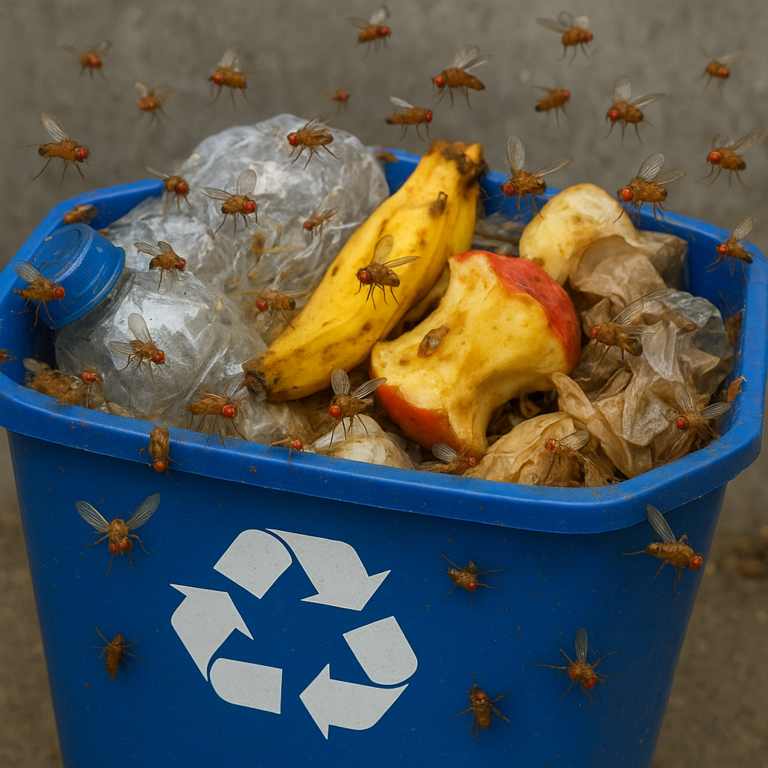
That empty soda can or beer bottle in the recycling
bin? It’s a goldmine. Rinse every container before it hits the bin.
🚨 Protecting
the Perimeter: Invasive Fruit Fly Info and Pest Exclusion
While common flies are a nuisance, invasive fruit flies are a
threat to our food supply. The [California Department of Food and Agriculture (CDFA)](https://www.cdfa.ca.
gov/plant/PE/EFFRRM/) manages strict protocols to prevent these pests from spreading.
🛑 Regulating Invasive Fruit Fly
Quarantines in California and Beyond
If you live in a quarantine zone, you are legally prohibited from moving homegrown fruit off
your property. This is to prevent the spread of the Mediterranean Fruit Fly or the Oriental Fruit Fly. The
CDFA manual notes that these regulations are a “work-in-progress,” constantly adapting to new biological threats.
📞
How to Report a Pest: Citizen Science in Action
See something weird? If you spot a fruit fly that looks larger than
usual or has strange markings, don’t just swat it.
-
Capture it in a jar.
-
Contact your local County Agricultural Commissioner.
-
Report it via the USDA
‘s “Hungry Pests” website.
🔗 Essential Quarantine Links
and Resources
- [CDFA Invasive Fruit Fly Maps](https://www.cdfa.ca.gov/
plant/pdep/target_pest_disease_profiles/oriental_ff_profile.html)
[USDA APHIS Fruit Fly Quarantine Information](https://www.aphis.usda.gov/aphis/our
focus/planthealth/plant-pest-and-disease-programs/pests-and-diseases/fruit
-flies)
🧪 The Science of Attraction: Why They Want Your Kitchen
Why is it that you
can leave a piece of steak out and get nothing, but leave a slice of peach and get a swarm? It’s all
about the acetic acid and ethanol. As fruit ripens, it breaks down and ferments, producing these
chemicals. Fruit flies have specialized receptors in their antennae that are “tuned” to these specific scents.
In the [featured video](#featured
-video), the creator demonstrates how a simple mix of apple cider vinegar and Dawn dish soap can catch hundreds. The
vinegar mimics the scent of overripe fruit, while the soap breaks the surface tension of the liquid, causing the flies to sink
. For more professional-grade solutions, you can explore [Commercial Fruit Fly Traps](https://www.fruitfly
traps.org/category/commercial-fruit-fly-traps/).
But here’s the million-dollar question: If
you remove the fruit, will they just leave? Or have they already found a secondary food source you haven’t noticed
yet? We’ll solve that mystery in the next section.
🎥 Featured Video: The DIY Trap That Caught
Hundreds
(Note: In a live blog, the video would be embedded here. Based
on the transcript, the video highlights the “bottle funnel” method using apple cider vinegar and Dawn dish soap, emphasizing that cleanliness
is the first line of defense.)
“I couldn’t believe it,” says our lead technician, Dave. “I went
to a client’s house who swore they had no fruit out. We found a single, rotting potato that had fallen behind the
kickplate of their cabinets. It was producing enough flies to populate a small island!”
🏁 Conclusion
So, we’ve come full circle. Remember that mystery we posed earlier: If you remove the fruit, will they just leave? The answer is a resounding no, unless you’ve also addressed the hidden biofilm in your drains, the damp sponges, and the microscopic eggs on your produce.
Fruit flies are not just a nuisance; they are a masterclass in evolutionary efficiency. They thrive where we are careless. While traps (like the ones we discuss in our DIY Fruit Fly Traps guide) are excellent for population control, true exclusion is about denial.
Our Confident Recommendation:
Don’t rely on a single silver bullet. The most effective strategy is a layered defense:
- Seal: Install 20×20 mesh screens immediately.
- Sanitize: Treat drains weekly with microbial cleaners like InVade Bio Drain.
- Store: Keep all produce in airtight containers or the fridge.
- Trap: Use traps only as a safety net for straglers, not as your primary defense.
If you follow these 12 exclusion methods, you won’t just be fighting a losing battle; you’ll be reclaiming your kitchen. The flies will move on to find easier pickings elsewhere, leaving your home a fly-free sanctuary.
🔗 Recommended Links
Ready to upgrade your home’s defenses? Here are the top-rated products and resources we trust at Fruit Fly Traps™.
🛡️ Physical Bariers & Screening
- Phifer 20×20 No-See-Um Screen: Amazon | Walmart | Phifer Official Website
- Simplehuman Step Can (with Seal): Amazon | Walmart | Simplehuman Official Website
🧪 Cleaning & Biofilm Removal
- InVade Bio Drain Gel: Amazon | Walmart
- Green Gobbler Enzyme Drain Cleaner: Amazon | Home Depot
🍎 Storage Solutions
- Rubermaid Brilliance Food Storage Containers: Amazon | Walmart | Rubermaid Official Website
📚 Essential Reading
- “The Fruit Fly: A Guide to Control and Exclusion” (General Guide): Amazon
- “Integrated Pest Management for Home Gardeners” by University of California: Amazon
❓ FAQ: Your Burning Fruit Fly Questions Answered
What are the most effective natural fruit fly exclusion methods for the kitchen?
The most effective natural methods rely on sanitation and physical barriers.
- Immediate Produce Washing: Washing fruit in a vinegar solution removes eggs before they hatch.
- Drain Cleaning: Using boiling water or enzyme-based cleaners (like Green Gobbler) weekly destroys the biofilm where larvae feed.
- Moisture Control: Fixing leaks and drying sponges removes the water source essential for their survival.
- Airflow: Using fans disrupts their weak flight patterns, making it hard for them to navigate to food sources.
How can I seal entry points to prevent fruit flies from entering my home?
Fruit flies can squeeze through gaps as small as 1/16th of an inch.
- Windows: Replace standard screens with 20×20 mesh (No-See-Um mesh).
- Dors: Install door sweeps and check weatherstripping for tears.
- Vents: Cover attic and crawl space vents with fine mesh.
- Cracks: Use silicone caulk to seal gaps around pipes and baseboards.
Are fruit fly traps sufficient for long-term exclusion or just temporary control?
Traps are for control, not exclusion.
Traps (like vinegar traps or commercial lures) catch adult flies that are already inside. They do not prevent new flies from entering or stop eggs from hatching in your drains. If you rely solely on traps, you are playing a game of “whack-a-mole” that you will eventually lose. Exclusion (stopping them from entering and breeding) is the only long-term solution.
What specific screens or mesh sizes work best for fruit fly exclusion?
Standard window screens are typically 18×16 mesh, which is too large to stop fruit flies. You must upgrade to 20×20 mesh or finer. This is often sold as “No-See-Um” or “No-See-Um” screening material. While it may slightly reduce visibility, it is the only physical barrier that effectively blocks these tiny insects.
How do I exclude fruit flies from houseplants without using chemicals?
Often, what looks like fruit flies in houseplants are actually fungus gnats. To exclude them:
- Top Dressing: Apply a 1/4 to 1/2 inch layer of horticultural sand or decorative pebbles over the soil. This prevents adults from laying eggs and larvae from emerging.
- Water Management: Allow the top 2 inches of soil to dry out completely between waterings.
- Sticky Traps: Use yellow sticky cards to catch adults, but remember this is a control measure, not exclusion.
Can essential oils act as a barrier for fruit fly exclusion in the home?
Essential oils like peppermint, eucalyptus, and lemongrass can act as a deterent, but they are not a reliable exclusion method.
- Pros: They mask attractive scents and may repel flies temporarily.
- Cons: The scent dissipates quickly (within hours), requiring frequent reapplication. They do not create a physical barrier.
- Verdict: Use them as a supplementary measure, not a primary defense.
What are the best DIY fruit fly exclusion techniques for windows and doors?
- The “Tape” Test: Before buying new screens, check your current ones with a flashlight. If you see light coming through the mesh, it’s too open.
- DIY Mesh Repair: If you have a small hole, you can patch it with a piece of fine mesh and clear silicone.
- Door Sweps: You can purchase adhesive-backed door sweeps at any hardware store to seal the gap under your door.
- Vent Covers: Cut pieces of fine mesh to fit over dryer vents or bathroom fans and secure them with staples or tape.
📚 Reference Links
- California Department of Food and Agriculture (CDFA): Invasive Fruit Fly Regulatory Response Manual
- USDA APHIS: Hungry Pests: Fruit Flies
- Prevent Fruit Fly (Australia): Control Methods & Exclusion
- Phifer: Screen Mesh Specifications
- InVade Bio Products: Bio Drain Information
- Mount Alexander Shire Council: Fruit Fly Exclusion Video Guide
- Community Discussion: Controlling fruit flies in pomegranate trees without pesticides