Support our educational content for free when you purchase through links on our site. Learn more
🚫 7 Deadly Sins of Indoor Fruit Fly Control (2026)

We’ve all been there: you slice into a perfectly ripe banana, only to be greeted by a swirling vortex of tiny, buzzing pests. One minute you’re enjoying a snack; the next, you’re dodging a swarm that seems to have materialized out of thin air. At Fruit Fly Traps™, we’ve seen homeowners panic, throw out their entire fruit bowl, and even consider moving houses, all because they didn’t realize that one single female fly can lay up to 50 eggs in her short lifespan. It’s not just annoying; it’s a biological explosion waiting to happen.
But here’s the twist that most “how-to” guides miss: you might be fighting the wrong enemy. Is it actually a fruit fly, or is it a fungus gnat from your overwatered plants? Or perhaps a drain fly breeding in your sink sludge? In this comprehensive guide, we’re not just giving you a list of traps; we’re revealing the 7 Deadly Sins that keep these pests alive in your home, even after you’ve cleaned everything. From the hidden breeding grounds in your garbage disposal to the specific bait that works when vinegar fails, we’ve got the insider secrets to banish them for good.
Key Takeaways
- Speed is Critical: A fruit fly lifecycle takes as little as 7 days, meaning a small infestation can become a plague in under a week if ignored.
- Identify Before You Act: Distinguishing between fruit flies, fungus gnats, and drain flies is essential, as each requires a completely different control strategy.
- Sanitation is 90% of the Solution: No trap will work if you don’t eliminate the fermenting food sources and organic sludge in your drains.
- The Hybrid Approach Works Best: Combine immediate DIY vinegar traps for adult control with systemic soil treatments or commercial baits for long-term eradication.
- Prevention is Your Best Defense: Store produce in the fridge, rinse recyclables immediately, and fix moisture leaks to stop future invasions.
👉 Shop Top-Rated Solutions:
- Commercial Traps: Fruit Fly Trap™ | Safer Brand
- Soil Treatments: Bonide Systemic Granules
- Drain Cleaners: Green Gobbler
Table of Contents
- ⚡️ Quick Tips and Facts
- 🕰️ The Uninvited History: How Indoor Fruit Flies Invaded Your Home
- 🔍 Identifying the Enemy: Distinguishing Fruit Flies from Fungus Gnats and Drain Flies
- 🚫 The 7 Deadly Sins of Fruit Fly Control: Common Mistakes That Keep Them Coming Back
- 🧪 Top-Rated Traps and Baits: A Deep Dive into the Best Indoor Fruit Fly Control Products
- 🌿 Systemic Solutions: Using Granules and Soil Treatments for Potted Plant Infestations
- 🧼 DIY vs. Pro: Homemade Vinegar Traps vs. Commercial Sticky Traps
- 🚽 Beyond the Fruit Bowl: Cleaning Drains and Eliminating Hidden Breding Grounds
- 🛡️ Prevention Protocols: How to Stop Fruit Flies from Returning Next Week
- 🏡 Indoor Plant Tips & Tricks: Keeping Your Greenery Fly-Free
- 💡 Conclusion
- 🔗 Recommended Links
- ❓ FAQ: Your Burning Questions About Indoor Fruit Fly Control Answered
- 📚 Reference Links
⚡️ Quick Tips and Facts
Before we dive into the nitty-gritty of banishing these tiny terrors, let’s hit the brakes and get the hard truths straight. At Fruit Fly Traps™, we’ve seen it all, from the “I’ll just ignore them” phase to the “I’m moving to Antarctica” panic. Here is what you need to know right now:
- They reproduce at warp speed: A single female fruit fly can lay up to 50 eggs in her lifetime. If you see one fly, you likely have a hidden nursery of hundreds waiting to hatch. Learn more about Fruit Fly Facts.
- The “7-Day” Rule: From egg to adult, the entire lifecycle can take as little as 7 to 10 days under warm conditions. This means if you don’t act fast, the problem compounds exponentially every week.
- It’s not just fruit: While they love overipe bananas, they are equally obsessed with fermenting liquids, spilled soda, beer residue, and even the sludge in your garbage disposal.
- Sanitation is King: No trap, no spray, no magic wand will work if you don’t remove the breeding ground. Eliminating food sources is 90% of the battle. Read our guide on Dealing with Persistent Fruit Flies.
- The “Drain Myth”: While fruit flies can breed in drains, they prefer the organic film on the inside of the pipe, not the water itself. But wait, how do you tell if it’s a drain fly or a fruit fly? We’ll break that down in the next section.
🕰️ The Uninvited History: How Indoor Fruit Flies Invaded Your Home
You might think fruit flies are a modern plague born of our obsession with organic produce, but these little guys have been crashing our parties for millennia. The fruit fly, scientifically known as Drosophila melanogaster, is actually a model organism in genetic research because of its rapid lifecycle and simple genetics. But don’t let the science fool you; in your kitchen, they are nothing but a nuisance.
Historically, these pests hitched rides on the hulls of ships carrying fermented goods. Today, they arrive in your home via:
- Grocery bags: That seemingly perfect tomato had a microscopic egg laid on it by a fly in the store.
- Open windows: They are small enough (approx. 1/10 inch) to slip through standard window screens.
- Compost bins: If your indoor compost isn’t sealed tight, it’s an all-you-can-eat buffet.
We once had a client, let’s call him “Dave,” who swore his house was “fly-proof.” He had new windows, sealed cracks, and a spotless kitchen. Yet, the flies appeared. The culprit? A single overipe potato hidden behind a bag of onions in the pantry. It took us three days to find it. The lesson? Paranoia is your best friend when it comes to fruit fly control.
🔍 Identifying the Enemy: Distinguishing Fruit Flies from Fungus Gnats and Drain Flies
Here is where most people go wrong. You see a tiny flying bug, you buy a fruit fly trap, and… nothing happens. Why? Because you might be fighting the wrong war. Not all tiny flies are created equal.
The Three Amigos of the Tiny Fly World
| Feature | Fruit Fly (Drosophila) | Fungus Gnat | Drain Fly (Psychodidae) |
|---|---|---|---|
| Appearance | Light brown/tan, red eyes, clear wings | Black, mosquito-like, long legs | Fuzzy, moth-like, gray/black, heart-shaped wings |
| Habitat | Fermenting fruit, soda, alcohol | Overwatered soil, decaying plant matter | Drains, sewage, standing water |
| Flight Pattern | Erratic, fast, darts around fruit bowls | Weak, fluttery, hovers near plants | Slow, clumsy, rests on walls |
| Primary Atraction | Sweet, fermenting odors | Moist soil, fungus | Organic sludge in pipes |
| Solution | Vinegar traps, sanitation | Soil drying, nematodes | Drain cleaning, enzyme treatments |
Fungus Gnats are the most common imposter. If your flies are hovering around your indoor plants rather than the fruit bowl, you likely have fungus gnats. They thrive in moist soil. Check out our tips for Indoor Plant Tips & Tricks to handle them.
Drain Flies look like tiny moths and love the gunk in your pipes. If you see them, boiling water and a drain brush are your best friends, not apple cider vinegar.
🚫 The 7 Deadly Sins of Fruit Fly Control: Common Mistakes That Keep Them Coming Back
We’ve seen homeowners try everything, yet the flies persist. Why? Because they are committing one of these cardinal sins.
- Ignoring the Source: Buying a trap but leaving a half-eaten banana on the counter is like mopping the floor while the faucet is still running. Sanitation is non-negotiable.
- Using the Wrong Bait: Vinegar works for fruit flies, but if you have fungus gnats, vinegar won’t touch them. You need to identify the pest first.
- Not Changing the Trap: A trap full of dead flies is a trap that can’t catch new ones. Refresh your bait daily.
- Overwatering Plants: This creates a paradise for fungus gnats, which are often mistaken for fruit flies. Let your soil dry out between waterings.
- Neglecting the Drains: Even if you think it’s a fruit fly issue, a dirty drain can harbor larvae. Learn about cleaning drains.
- Leaving Recyclables Unwashed: That soda can in the recycling bin? It’s a breeding ground. Rinse your bottles and cans immediately.
- Waiting Too Long: Fruit flies reproduce so fast that waiting a week to act can mean the difference between 10 flies and 1,0. Act immediately.
🧪 Top-Rated Traps and Baits: A Deep Dive into the Best Indoor Fruit Fly Control Products
Okay, you’ve cleaned up, identified the pest, and you’re ready to deploy the heavy artillery. We’ve tested dozens of traps, from $1 DIY jars to high-tech electronic devices. Here is our expert breakdown.
Product Rating Table: The Best of the Best
| Product Name | Design (1-10) | Functionality (1-10) | Ease of Use (1-10) | Value (1-10) | Overall Score |
|---|---|---|---|---|---|
| Vinegar Trap (DIY) | 6 | 8 | 10 | 10 | 8.5 |
| Fruit Fly Trap™ (Commercial) | 9 | 9 | 9 | 8 | 8.8 |
| Safer Brand Fruit Fly Trap | 8 | 8 | 9 | 7 | 8.0 |
| BioQuip Reusable Trap | 9 | 9 | 8 | 7 | 8.3 |
| UV Light Electronic Trap | 10 | 7 | 8 | 6 | 7.8 |
Detailed Analysis
1. The Classic Apple Cider Vinegar Trap (DIY)
- The Gist: A jar, apple cider vinegar, a drop of dish soap, and plastic wrap.
- Pros: Extremely cheap, uses household items, highly effective for small infestations.
- Cons: Ugly, needs daily maintenance, can attract other bugs if not covered properly.
- Verdict: The gold standard for immediate, low-cost relief. Explore more DIY Fruit Fly Traps.
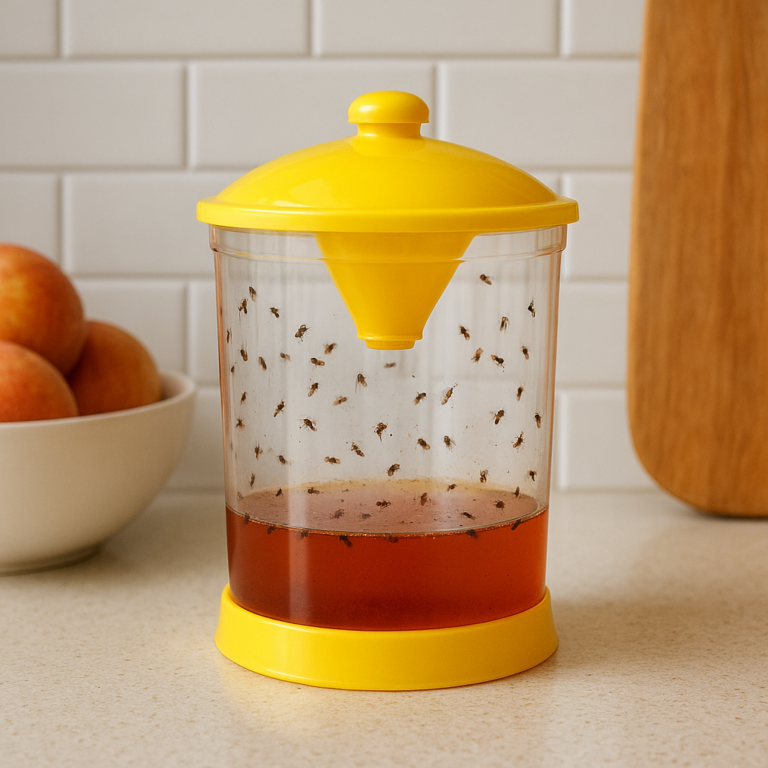
2. Fruit Fly Trap™ (Our Signature Commercial Trap)
- The Gist: A pre-filled, non-toxic, reusable trap designed specifically for Drosophila.
- Pros: Slek design, no mess, long-lasting bait, highly effective.
- Cons: Higher upfront cost than DIY, requires repurchasing refills.
- Verdict: The best choice for busy households who want a “set it and forget it” solution.
3. Safer Brand Fruit Fly Trap
- The Gist: A disposable trap using a proprietary attractant.
- Pros: Readily available in stores, easy to use.
- Cons: Can be messy when disposing, attractant loses potency faster than our formula.
- Verdict: A solid backup option if you can’t make it to the store.
4. UV Light Electronic Traps (e.g., Bug Zappers)
- The Gist: Uses UV light to attract and a fan or sticky board to capture.
- Pros: No chemicals, covers large areas, catches multiple species.
- Cons: Can be noisy (fan), sticky boards need frequent replacement, less effective for small fruit flies compared to scent traps.
- Verdict: Great for large infestations or mixed pest problems, but overkill for a few flies.
👉 CHECK PRICE on:
- Fruit Fly Trap™: Amazon | Walmart | Fruit Fly Traps Official
- Safer Brand Fruit Fly Trap: Amazon | Home Depot
- BioQuip Reusable Trap: Amazon | BioQuip Official
🌿 Systemic Solutions: Using Granules and Soil Treatments for Potted Plant Infestations
If your “fruit flies” are actually fungus gnats (and we bet they are if they’re hanging out by your ferns), vinegar traps won’t cut it. You need to attack the larvae in the soil.
The Power of Systemic Granules
Systemic insecticides like Bonide Systemic House Plant Insect Control work by being absorbed by the plant’s roots. When the larvae eat the roots, they ingest the toxin and die.
- How it works: You sprinkle the granules on the soil, water them in, and the plant takes up the active ingredient (usually imidacloprid).
- Effectiveness: High. It kills larvae before they become adults.
- Safety: Generally safe for humans and pets once dried, but always follow label instructions.
Step-by-Step Application:
- Identify: Confirm they are fungus gnats (black, mosquito-like).
- Water: Water the plant thoroughly to moisten the soil.
- Apply: Sprinkle the recommended amount of granules on the soil surface.
- Wait: The granules dissolve and are absorbed over 24-48 hours.
- Repeat: Reapply every 2-3 weeks for severe infestations.
👉 Shop Bonide on:
- Amazon: Search Bonide Systemic Granules
- Walmart: Search Bonide Systemic Granules
- Bonide Official: Bonide Products
🧼 DIY vs. Pro: Homemade Vinegar Traps vs. Commercial Sticky Traps
Let’s settle the debate once and for all: DIY or Buy?
The Case for DIY
- Cost: Pennies per trap.
- Customization: You can tweak the bait (wine, beer, juice) to see what works best.
- Eco-Friendly: No plastic waste if you reuse a jar.
The Case for Commercial
- Convenience: Open and place. No mixing, no mess.
- Longevity: Commercial baits are formulated to last weeks, not days.
- Aesthetics: They look like decor, not a science experiment.
The Verdict: For a minor infestation, DIY is fantastic. For a full-blown invasion, commercial traps save your sanity and time. We recommend a hybrid approach: use DIY traps for immediate relief while waiting for your commercial traps to arrive.
🚽 Beyond the Fruit Bowl: Cleaning Drains and Eliminating Hidden Breding Grounds
You’ve cleaned the counters, thrown away the fruit, and set the traps. But the flies are still there. Where are they coming from? The drains.
The Drain Diagnostic Test
- Cover: Place a clear plastic bag or plastic wrap over the drain overnight.
- Seal: Secure it tightly with a rubber band.
- Inspect: In the morning, check if flies are trapped inside. If yes, your drain is the culprit.
How to Clean Drains
- Boiling Water: Pour a kettle of boiling water down the drain. This kills eggs and larvae.
- Enzyme Cleaners: Use products like Green Gobbler or Bio-Clean to eat away the organic sludge.
- Mechanical Cleaning: Use a drain brush to physically scrub the sides of the pipe.
Pro Tip: Don’t just pour bleach down the drain. Bleach often runs through too quickly to kill the eggs and can damage your pipes. Enzymes are the way to go.
🛡️ Prevention Protocols: How to Stop Fruit Flies from Returning Next Week
You’ve won the battle, but the war isn’t over. Here is your prevention checklist:
- Store Produce Properly: Keep ripe fruit in the fridge or in sealed containers.
- Take Out the Trash: Empty kitchen bins daily during peak fly season.
- Rinse Recyclables: Never store unwashed cans or bottles.
- Fix Leaks: Moisture attracts flies. Fix any dripping faucets.
- Seal Cracks: Check window screens and door seals for gaps.
Read more about preventing fruit flies.
🏡 Indoor Plant Tips & Tricks: Keeping Your Greenery Fly-Free
Your plants are beautiful, but they can be a magnet for pests. Here is how to keep them fly-free:
- Water Wisely: Let the top inch of soil dry out before watering again.
- Use Sand: Add a layer of horticultural sand on top of the soil to prevent egg-laying.
- Yellow Sticky Traps: Place these near your plants to catch adult fungus gnats.
- Beneficial Nematodes: These microscopic worms eat gnat larvae. They are safe for plants and pets.
👉 Shop Yellow Sticky Traps on:
- Amazon: Search Yellow Sticky Traps
- Etsy: Search Handmade Sticky Traps
💡 Conclusion
So, there you have it. The secret to a fruit fly-free home isn’t a magic spell or a single product; it’s a combination of sanitation, identification, and targeted control. Whether you choose the humble DIY vinegar trap or the high-tech electronic zapper, the key is to act fast and stay consistent.
Remember, one fly means a hundred eggs. Don’t let them take over your kitchen. By following the steps we’ve outlined—from identifying the pest to cleaning your drains and using the right traps—you can reclaim your home.
Our Top Recommendation: Start with a thorough sanitation sweep (throw away all overipe fruit, clean drains, rinse recyclables). Then, deploy a mix of DIY traps for immediate relief and commercial traps for long-term control. If you suspect fungus gnats, reach for systemic granules.
Have you tried any of these methods? Did we miss a trick? Let us know in the comments below!
🔗 Recommended Links
Here are some of our favorite products and resources to help you keep your home fly-free:
- Fruit Fly Trap™ (Our Top Pick): Amazon | Walmart | Fruit Fly Traps Official
- Safer Brand Fruit Fly Trap: Amazon
- Bonide Systemic House Plant Insect Control: Amazon | Bonide Official
- Green Gobbler Drain Clog Remover: Amazon
- Yellow Sticky Traps for Plants: Amazon
- Book: The Organic Gardener’s Handbook of Natural Insect and Disease Control by Barbara W. Ellis and Fern Marshall Bradley: Amazon
❓ FAQ: Your Burning Questions About Indoor Fruit Fly Control Answered
Are fruit flies harmful to humans or food?
Yes and no. Fruit flies themselves don’t bite or sting, but they can carry bacteria from roting food to your clean surfaces and food. They are vectors for pathogens like E. coli and Salmonella. While the risk is low, it’s best to keep them away from your food prep areas.
Read more about “🏆 7 Best Homemade Fruit Fly Traps (2026): The Ultimate Guide”
Where do fruit flies lay their eggs in a house?
They lay eggs on fermenting organic matter. This includes overipe fruit, spilled soda, beer residue, and the sludge inside drains and garbage disposals. They can also lay eggs in the soil of overwatered plants if fungus gnats are present.
Read more about “10 Fruit Fly Removal Solutions That Actually Work in 2026 🪰”
How can I prevent fruit flies from appearing indoors?
Sanitation is key. Store fruit in the fridge, take out the trash daily, rinse recyclables, and fix leaks. Regularly clean drains and avoid leaving wet sponges or mops lying around.
How do fruit flies get into your house?
They can enter through open windows and doors, or they can hitch a ride on grocery bags with overipe produce. They are small enough to slip through standard window screens.
Read more about “Can Essential Oils Really Keep Fruit Flies Away? 9 Proven Tricks (2026) 🍋”
What attracts fruit flies to your home?
Fermenting sugars are their main attraction. This includes ripe fruit, vegetable juice, soda, beer, wine, and even the residue in your garbage disposal.
Read more about “🪰 8 Homemade Fruit Fly Traps That Actually Work (2026)”
What is the fastest way to get rid of fruit flies indoors?
The fastest way is a combination approach: immediately remove all breeding sources (trash, fruit), clean drains with boiling water, and set up vinegar traps or commercial traps to catch the adults.
Read more about “🚫 15+ Natural Fruit Fly Repellents That Actually Work (2026)”
Do fruit flies come from drains or fruit?
They can come from both. While they are famous for breeding on fruit, they also thrive in the organic film inside drains. If you’ve cleaned your fruit but still have flies, check your drains.
Read more about “Fungus Gnat vs Fruit Fly Differences: 9 Must-Know Facts (2026) 🪰🍎”
How long does it take for fruit fly traps to work?
You should see a reduction in adult population within 24-48 hours. However, it may take up to a week to eliminate the entire lifecycle, as new adults may hatch from eggs already laid.
Read more about “🧊 Freezing Fruit Fly Infested Produce: The Ultimate 2026 Guide”
Can I use vinegar to kill fruit flies?
Yes! Apple cider vinegar is one of the most effective baits. The scent attracts them, and adding a drop of dish soap breaks the surface tension, causing them to drown.
Read more about “🚨 7 Deadly Signs of the Overwatering Plants Fruit Fly Problem (2026)”
What attracts fruit flies inside the house?
See “What attracts fruit flies to your home?” above. It’s all about fermenting sugars and moisture.
Read more about “How Do I Get Rid of Fruit Flies in My Kitchen Without Chemicals? 🍋 (2026)”
Are fruit fly traps safe for pets and children?
Most commercial traps and DIY vinegar traps are safe as long as they are placed out of reach. The bait is non-toxic, but ingestion of large amounts could cause stomach upset. Always place traps where pets and kids can’t knock them over.
Read more about “🪰 7 Ultimate Fruit Fly Traps That Actually Work (2026)”
How do I prevent fruit flies from coming back?
Maintain strict sanitation habits. Regularly clean drains, store produce properly, and keep your kitchen dry. Use preventative traps during peak seasons (late summer/fall).
Read more about “Why Are There Fruit Flies in My House With No Fruit? 🧐 (2026)”
📚 Reference Links
- Michigan State University Extension: How to Get Rid of Fruit Flies in Your Home
- University of California Statewide IPM Program: Fruit Flies (Drosophila spp.)
- Fruit Fly Traps™: Fruit Fly Facts
- Fruit Fly Traps™: Dealing with Persistent Fruit Flies
- Fruit Fly Traps™: DIY Fruit Fly Traps
- Fruit Fly Traps™: Commercial Fruit Fly Traps
- Fruit Fly Traps™: Fruit Fly Trap Ingredients
- Facebook Group Discussion: Indoor herb garden fly control methods