Support our educational content for free when you purchase through links on our site. Learn more
🪰 12 Chemical-Free Ways to Beat Kitchen Fruit Flies

To answer “How do I get rid of fruit flies in my kitchen without using chemicals?”: remove their food and breeding sources, clean the spots they’re using, and set a simple vinegar trap to catch the adults. Traps help, but they won’t solve the problem if a forgotten piece of produce, sticky recycling bin, or sink residue keeps welcoming the next generation.
We’ve seen the same kitchen mystery unfold: the fruit bowl is cleared, a trap catches a few flies, and—somehow—the tiny visitors return. The culprit is often hiding in plain sight, like a damp compost caddy or the sticky rim of a bottle headed for recycling.
Key Takeaways
- Find and remove the source first: Check produce, compost, trash, recycling, drains, and hidden spills.
- Use a DIY vinegar trap for adult flies: Apple cider vinegar with a few drops of dish soap can help catch them.
- Clean breeding spots, not just countertops: Scrub sink strainers, accessible drain residue, and bin lids.
- Store ripe produce thoughtfully: Refrigerate ripe or cut fruit and discard damaged, fermenting items.
- Identify the insect correctly: Fruit flies, drain flies, and fungus gnats need different source checks.
- Keep at it for several days: Traps catch adults, while consistent cleanup helps prevent more flies from emerging.
Table of Contents
- ⚡ Quick Tips and Facts
- 🪰 Why Fruit Flies Invade Kitchens
- Fruit Flies vs. Drain Flies and Fungus Gnats
- How Quickly Fruit Flies Multiply
- 🔎 Find the Source Before You Set a Trap
- Check Fruit, Produce, and Food Scraps
- Inspect Drains, Garbage, and Recycling
- Check Houseplants and Hidden Spill Spots
- 🍎 12 Chemical-Free Ways to Get Rid of Fruit Flies
- 1. Make an Apple Cider Vinegar Trap
- 2. Try a Wine or Beer Trap
- 3. Use Overipe Fruit as Bait
- 4. Build a Paper-Funnel Trap
- 5. Make a Dish-Soap and Vinegar Trap
- 6. Set Out a Store-Bought Sticky Trap
- 7. Refrigerate Ripe Produce
- 8. Take Out and Clean the Trash
- 9. Scrub the Sink and Drain Cover
- 10. Clean the Garbage Disposal
- 11. Wash Reusable Bottles and Recycling
- 12. Vacuum Adult Flies and Wipe Surfaces
- 🧼 How to Clean Kitchen Drains Without Harsh Chemicals
- Brush Away Organic Film Where Flies Breed
- Why Vinegar, Boiling Water, and Bleach Aren’t Magic Drain Fixes
- 🚫 Common Fruit Fly Remedies That Don’t Work Well
- Peper and Milk, Salt, and Other Viral Hacks
- Why Traps Alone Won’t Stop a Reinfestation
- 🛡️ Prevent Fruit Flies from Coming Back
- Store Produce and Compost Smartly
- Keep Counters, Drains, and Bins Clean
- Block Entry and Check Grocery Produce
- ⏱️ How Long Does It Take to Get Rid of Fruit Flies?
- ❓ Fruit Fly FAQs
- What’s the Fastest Natural Way to Kill Fruit Flies?
- Do Fruit Flies Come from the Drain?
- Can Fruit Flies Lay Eggs in Houseplants?
- Are Fruit Flies Harmful to People or Food?
- When Should You Call a Pest Professional?
- ✅ Conclusion
- 🔗 Recommended Links
- 📚 Reference Links
⚡ Quick Tips and Facts
The fastest chemical-free approach is a two-part job: remove the food or breeding source, then catch the adult flies that are already airborne. Traps can make a satisfying dent; source removal is what stops the kitchen from becoming a fruit-fly nursery. For more trap ideas, see our guide to fruit fly traps.
| Quick fact | What to do |
|---|---|
| Fruit flies are drawn to fermenting, sugary organic matter. | Check overipe produce, food scraps, sticky recycling, trash, and drains. |
| Traps catch adults, not eggs and larvae hidden in breeding material. | Clean and remove the source as well as setting a trap. |
| Fruit flies can develop quickly in warm conditions. | Don’t wait for “just a few” to become a cloud. |
| Drain flies and fungus gnats can look similar from across the room. | Identify the insect before choosing a fix. |
| Vinegar is useful as bait, not as a magic whole-kitchen repellent. | Use it in a trap, then clean the attractant sources. |
Our fast, practical plan
- Put ripe fruit in the refrigerator or discard produce that’s leaking or fermenting.
- Empty and wash the compost caddy, trash can, and recycling containers.
- Wipe counters, rinse bottles, and clean sticky spills.
- Scrub the sink drain and disposal opening to remove food residue.
- Set a small apple-cider-vinegar trap near the activity—not beside clean food.
- Repeat the source check daily until you stop seeing flies.
The University of Minnesota Extension likewise emphasizes sanitation and removing breeding sites as key fruit-fly controls. Our DIY fruit fly trap ideas can help with the adults while you tackle the actual source. 🧽
🪰 Why Fruit Flies Invade Kitchens
Fruit flies are not auditioning for a role in your kitchen. They’re following food cues—especially the smell of ripe, damaged, or fermenting produce and other moist organic material. A forgotten potato, an unwashed juice bottle, or gunk in the drain can be more inviting than the fruit bowl you’re keeping an eye on.
According to UC Integrated Pest Management, fruit flies are attracted to fermenting materials and can breed in a range of organic matter. That broad menu explains why a clean-looking countertop doesn’t always mean the kitchen is fly-free.
Fruit Flies vs. Drain Flies and Fungus Gnats
| Pest | Typical appearance | Common location | Likely source |
|---|---|---|---|
| Fruit fly | Small tan, yellowish, or brown fly; some have red eyes | Around fruit, bins, bottles, or kitchen surfaces | Fermenting produce or moist organic residue |
| Drain fly | Fuzzy, moth-like wings; rests near sinks | Sink, floor, or shower drains | Organic film in a drain or plumbing area |
| Fungus gnat | Slender, dark, mosquito-like fly | Around houseplants and windows | Damp poting mix |
A useful clue: fruit flies tend to hover around food, while drain flies often rest on nearby walls. Fungus gnats are more likely to patrol your houseplants. If the flies are concentrated at the drain, don’t assume vinegar traps alone will solve it; inspect and clean the drain. The University of California IPM guide describes fruit-fly identification and management, while Penn State Extension explains fungus gnat behavior.
For more identification help, browse our fruit fly facts.
How Quickly Fruit Flies Multiply
Fruit flies have a short life cycle, so a small overlooked food source can become a recurring nuisance. The exact timing depends on temperature and food conditions, but warm kitchens generally speed insect development. The University of Minnesota Extension notes that fruit flies develop rapidly, which is why prompt cleanup matters.
The practical takeaway: Don’t spend a week perfecting your trap while a damp compost bin quietly hosts the next generation. Remove the breeding material first.
🔎 Find the Source Before You Set a Trap
At Fruit Fly Traps™, we’ve seen the same kitchen mystery play out many times: the fruit bowl gets cleared, the flies linger, and the homeowner assumes the trap has failed. Often, the flies are still emerging from somewhere less obvious.
Try a short “source sweep” with a flashlight and a curious nose. Fruit-fly breeding spots can be tucked under liners, around bottle rims, beneath appliances, or inside the drain opening. For stubborn cases, our guide to dealing with persistent fruit flies walks through a more systematic inspection.
Check Fruit, Produce, and Food Scraps
- Check the bottoms of fruit bowls and produce bags.
- Look for split tomatoes, soft onions, bruised bananas, and potatoes that have begun to rot.
- Inspect reusable produce containers and the area beneath them.
- Empty food-scrap bowls and countertop compost containers.
- Rinse produce before storage, and follow safe handling advice from the FDA’s guide to selecting and serving produce safely.
Don’t wash fruit with dish soap or household cleaners. The FDA recommends washing produce under running water; soap and detergents are not recommended for fruits and vegetables.
Inspect Drains, Garbage, and Recycling
Look beyond the obvious:
- Sink drain: Check for food scraps and residue around the strainer.
- Garbage disposal: Inspect the splash guard and underside, where food gunk can cling.
- Trash: Clean the inside and underside of the lid; drips can hide beneath the liner.
- Recycling: Rinse cans, bottles, and jars—especially those that held juice, wine, beer, or syrup.
- Compost: Empty it regularly, wash the container, and replace or clean its filter as directed by its maker.
- Dishwasher: Check for food debris around the door seal and filter.
The first YouTube video demonstrates a bottle-funnel trap and also recommends wiping spills, keeping cut produce covered, and emptying compost regularly. You can watch the featured video; treat the trap as one part of the fix, not a substitute for source removal.
Check Houseplants and Hidden Spill Spots
If tiny flies gather around plants, they may be fungus gnats, not fruit flies. Leting the top layer of poting mix dry between waterings can help reduce fungus gnat activity; see Penn State Extension’s fungus gnat guidance.
In the kitchen, also check:
- Under the toaster, microwave, and coffee maker.
- Beneath the refrigerator and dishwasher.
- Around a pet-food bowl or water dish.
- Inside reusable shopping bags that held produce.
- Under damp dishcloths and sponges.
- In forgotten cups, lunch containers, or bottles.
Here’s the question that often changes the whole investigation: What if the “fruit fly problem” isn’t coming from the fruit at all? The drain is one possibility—but only if the insect identification and evidence point that way.
🍎 12 Chemical-Free Ways to Get Rid of Fruit Flies
The methods below combine traps with the unglamorous work that actually breaks the cycle: removing food, washing breeding sites, and keeping new adults from finding an easy meal. Choose a trap based on where flies are active, then pair it with cleaning.
| Method | Best for | Main advantage | Main limitation |
|---|---|---|---|
| Apple cider vinegar trap | Fruit flies near produce or bins | Simple, inexpensive household ingredients | Won’t remove hidden eggs or larvae |
| Wine or beer bait trap | Flies attracted to fermented smells | Makes use of a small leftover amount | Still needs frequent checking |
| Paper-funnel trap | Keeping flies in a bait container | Reusable and easy to assemble | Must be emptied and cleaned |
| Sticky trap | Monitoring flying adults | No liquid bait to spill | Not a source-removal method |
| Cleaning and food storage | Preventing new generations | Targets the conditions flies need | Requires checking overlooked spots |
For more bait and recipe ideas, see our fruit fly trap ingredients and DIY trap guide.
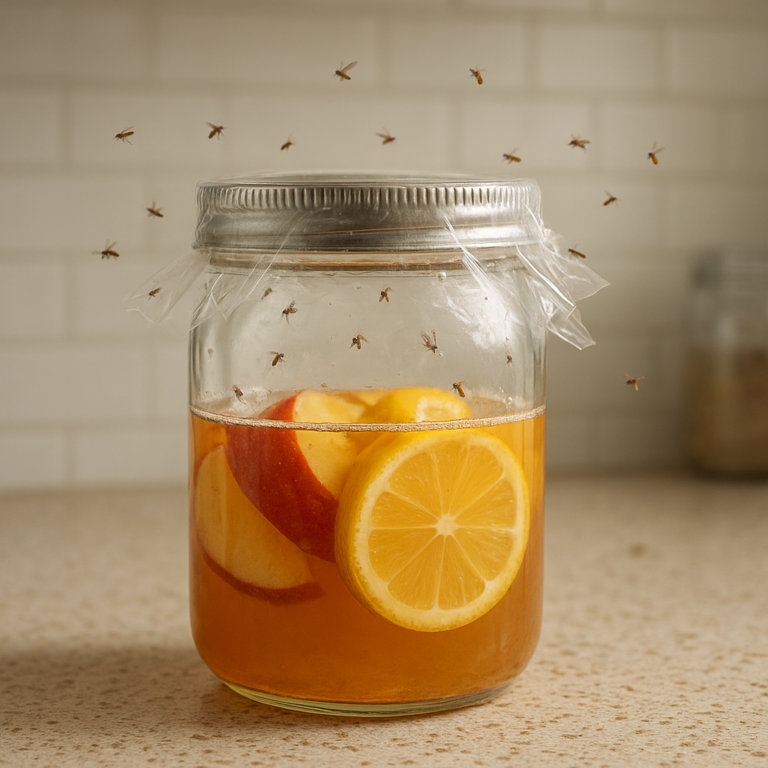
1. Make an Apple Cider Vinegar Trap
Apple cider vinegar’s fermented smell can attract adult fruit flies. The University of Minnesota Extension includes vinegar-based traps among practical monitoring and control options.
What you’ll need
- A small glass or jar
- Apple cider vinegar
- A few drops of dish soap
- Optional: a paper funnel or a piece of plastic wrap
Step-by-step
- Pour a small amount of apple cider vinegar into the jar.
- Add a few drops of dish soap. This helps reduce surface tension so flies that land in the liquid are less likely to escape.
- Set the trap near the area where you see activity, but away from food-preparation surfaces.
- Check it daily and replace the liquid when it becomes dirty or no longer catches flies.
- Keep cleaning and removing the source. A trap is a catcher, not a tiny insect extermination army.
Benefits: Quick to assemble and useful for catching or monitoring adults.
Drawbacks: It may attract flies to the area, can spill, and won’t eliminate breeding material elsewhere.
For a comparison of bait options, browse our fruit fly trap ingredients.
2. Try a Wine or Beer Trap
Fruit flies can be attracted to fermented smells, so a small amount of leftover wine or beer may work as bait.
- Pour a little leftover wine or beer into a small container.
- Add a couple drops of dish soap, or cover the container with plastic wrap and poke several small holes.
- Place it near the activity and check it regularly.
- Discard the contents and wash the container when you’re done.
Good to know: This is a convenient reuse of leftovers, not a stronger or more reliable fix than cleaning. If the flies ignore it, switch bait or relocate the trap close to the source—without putting it where it could contaminate food.
3. Use Overipe Fruit as Bait
A piece of overipe fruit can lure adult flies into a covered container.
- Put a small piece of overipe fruit in a jar.
- Cover the opening with plastic wrap and secure it with a band.
- Poke a few tiny holes in the wrap.
- Place the jar near the flies, then dispose of it carefully and wash the container.
The trade-off: fruit bait can smell and spoil, and it is still food. Never leave it unattended for days. If you have pets, children, or concerns about hygiene, use a lidded commercial trap or a vinegar trap instead.
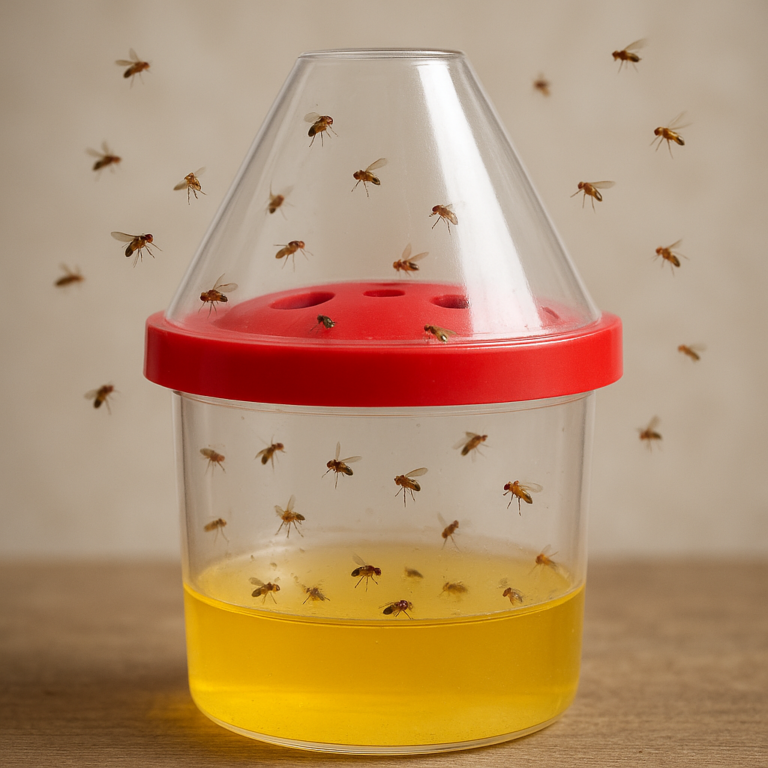
4. Build a Paper-Funnel Trap
A paper funnel encourages flies to enter the bait container and makes it harder for them to find the opening again.
- Add apple cider vinegar, wine, or a small amount of fruit bait to a jar.
- Roll a sheet of paper into a funnel, leaving a small opening at the narrow end.
- Position the funnel so its tip sits above the bait without touching the liquid.
- Secure the funnel to the jar so flies can’t escape through a gap.
- Replace the bait and clean the jar regularly.
Why it helps: It contains the bait and can reduce escape opportunities.
Why it isn’t magic: A paper funnel does nothing to the source hiding behind the bin or in the disposal.
5. Make a Dish-Soap and Vinegar Trap
This is the uncomplicated version of the classic kitchen trap:
- Add apple cider vinegar to a small dish.
- Mix in a few drops of dish soap.
- Set it near the flies, out of reach of children and pets.
- Refresh it as needed.
Some DIY instructions add water, but it isn’t essential to the basic idea. The first video’s version uses a cut plastic bottle, water, apple cider vinegar, and dish soap to create a funnel trap; its method is demonstrated in the featured video.
Use common sense: Keep liquid traps away from food, electrical appliances, and places where they can be knocked over.
6. Set Out a Store-Bought Sticky Trap
A sticky card can help catch flying adults and show where activity is greatest. For example, Safer Brand and Garsum make sticky traps sold for indoor pest monitoring. Follow the label and use a product intended for the location and pest.
Benefits: No liquid to spill; useful for monitoring.
Drawbacks: Sticky cards can catch non-target insects, collect dust, and look untidy. They don’t find or remove the breeding source.
For larger or recurring problems in food-service settings, see our category for commercial fruit fly traps.
7. Refrigerate Ripe Produce
Move ripe or cut produce to the refrigerator, using clean, covered containers where appropriate. Discard damaged or fermenting produce rather than trying to rescue it as a countertop decoration. The FDA’s produce safety guidance recommends washing produce under running water and keeping food handling clean.
A fruit bowl may look lovely, but if it contains bruised fruit in a warm kitchen, it can become an open invitation. Put only sound, uncut fruit out—and inspect it daily.
8. Take Out and Clean the Trash
- Tie the bag and remove it from the kitchen.
- Check the bin for leaked juice or food scraps.
- Wash the inside, lid, and rim with warm water and dish soap.
- Rinse and dry the bin before replacing the liner.
- Keep food waste covered and empty it regularly.
Pro tip: Pay attention to the underside of the lid and the lip where the bag folds. That little rim is a champion at hiding sticky residue.
9. Scrub the Sink and Drain Cover
Remove visible scraps, wash the sink basin, and scrub around the drain strainer. If flies gather near the drain, clean the accessible drain opening and strainer rather than merely pouring a scented liquid down the pipe.
Use a drain brush only as directed by its maker, and avoid damaging the plumbing. If activity persists after careful cleaning, consider whether these are actually drain flies or another insect. UC IPM’s fruit-fly guidance explains why identification matters.
10. Clean the Garbage Disposal
Food residue can cling to the disposal splash guard and nearby surfaces.
- Turn the disposal off and follow the manufacturer’s safety instructions.
- Remove and wash any removable baffle or splash guard, if the manual says it is removable.
- Scrub the underside and rim with a brush—not your fingers inside the unit.
- Flush the disposal according to the manufacturer’s directions.
- Clean the sink strainer and surrounding surfaces.
Never put your hand into a disposal. If you’re unsure how to clean a particular model, consult the appliance manual.
11. Wash Reusable Bottles and Recycling
Rinse cans, bottles, and jars that held sweet or fermented drinks, and clean reusable lids. Let containers drain before putting them into the recycling bin.
This simple task is easy to overlook because an empty bottle looks harmless. To a fruit fly, the sticky ring at its mouth can be a tiny buffet.
12. Vacuum Adult Flies and Wipe Surfaces
A vacuum can quickly remove a visible cluster of adult flies. Empty the vacuum canister outdoors or into a sealed bag afterward, then wipe nearby surfaces and still hunt for the source.
This is a quick knockdown, not a full treatment. If the flies return, they may be emerging from food residue or another breeding spot. That brings us to the kitchen’s least glamorous suspect: the drain.
🧼 How to Clean Kitchen Drains Without Harsh Chemicals
A drain may be involved, but “flies near the sink” doesn’t automatically mean “fruit flies are breeding in the pipes.” Drain flies often have a fuzzy, moth-like appearance, while fruit flies are typically smoother-bodied. Start with identification and observation; don’t treat the plumbing on guesswork alone.
Brush Away Organic Film Where Flies Breed
If you suspect drain-associated activity:
- Remove the sink strainer or stopper if it can be removed safely.
- Scrub accessible grime and food residue with a drain brush.
- Clean the underside of the strainer and the sink rim.
- Rinse according to the drain and plumbing manufacturer’s instructions.
- Repeat as needed and monitor where the flies appear.
The key is physical removal of organic residue, not hoping that a strong-smelling liquid will dissolve every breeding site. For persistent drain-fly concerns, University of Kentucky Entomology offers guidance on drain flies and their breeding sites.
Why Vinegar, Boiling Water, and Bleach Aren’t Magic Drain Fixes
Online tips often promise that vinegar, boiling water, or bleach will eliminate every fly in one pour. That confidence isn’t warranted.
- Vinegar: Useful as trap bait; it doesn’t reliably remove a layer of buildup from deep within a drain.
- Boiling water: May pose a burn hazard and may not reach or remove all organic material. Avoid it unless your plumbing and appliance guidance specifically permits it.
- Bleach: Not a substitute for scrubbing. It can also create dangerous fumes if mixed with other cleaners.
- Chemical drain cleaners: Don’t combine them with any other product, and follow the product label exactly. They are not our first choice for a simple kitchen fruit-fly problem.
The CDC’s cleaning and disinfection guidance warns against mixing bleach with other cleaners. For ordinary food residue, soap, water, and physical cleaning are usually the sensible starting point.
🚫 Common Fruit Fly Remedies That Don’t Work Well
Viral household “tricks” are entertaining, but not every old-fashioned recipe has evidence behind it. Our rule: if a remedy doesn’t remove food, clean a breeding site, or catch adult flies, ask what it is actually doing.
Peper and Milk, Salt, and Other Viral Hacks
Claims such as pepper-and-milk mixtures or salt sprinkled around the kitchen are not reliable fruit-fly control methods. They don’t remove fermenting food or clean the residue where flies can breed.
The supplied competitor summary for one video says it discusses five household methods, but its available text does not provide the actual recipes or evidence. We won’t invent missing details. Similarly, advice about cleaning garden vegetables is useful for produce hygiene, but it should not be confused with a treatment for flies already breeding in a kitchen.
Safer produce routine: Rinse fruits and vegetables under running water, rub firm produce, and use a clean produce brush where appropriate. Don’t use dish soap, bleach, or household cleaners on food; see the FDA’s produce-washing advice.
Why Traps Alone Won’t Stop a Reinfestation
A trap can catch adults and help reveal where they’re active. It cannot clean a trash-can leak, remove rotting produce, or scrub a drain.
That’s why advice saying a trap works “overnight” needs context: you may catch flies quickly, but you haven’t necessarily stopped new ones from emerging. The University of Minnesota Extension emphasizes sanitation and eliminating breeding material, not relying on traps alone.
🛡️ Prevent Fruit Flies from Coming Back
Prevention isn’t complicated; it’s a few repeatable habits that remove the easy food and breeding opportunities. If you do only one thing after a successful cleanup, make it a quick daily check of produce, food waste, and the sink area.
Store Produce and Compost Smartly
- Refrigerate ripe or cut fruit.
- Remove damaged produce promptly.
- Use covered containers for food scraps.
- Empty kitchen compost regularly; wash the bin and maintain its filter according to the manufacturer’s instructions.
- Rinse produce under running water before eating or preparing it.
The featured DIY video also stresses cleaning produce and emptying a compost bin regularly. The useful principle is simple: don’t let scraps sit warm, wet, and uncovered.
Keep Counters, Drains, and Bins Clean
- Wipe spills as soon as they happen.
- Wash dishes and food-preparation tools promptly.
- Rinse drink containers before recycling.
- Clean bin rims, lids, and liners.
- Scrub sink strainers and remove trapped food.
- Wash dishcloths and sponges regularly, and let them dry.
- Keep pet food sealed and clean up leftovers.
A useful consumer habit is a two-minute closing shift: before bed, clear scraps, wipe the counter, rinse the sink, and check the bin. It’s not glamorous. Neither is discovering a fruit fly party in the morning.
Block Entry and Check Grocery Produce
Fruit flies may arrive on produce or enter through openings, but the most productive first step is still to remove food and breeding conditions indoors. Inspect produce when you unpack it, discard damaged items, and clean bags or containers that held leaking fruit.
Screens and closed doors can reduce access for flying insects, but they won’t fix flies already developing indoors. When activity continues despite a thorough cleanup, revisit the source hunt rather than adding more scented remedies.
⏱️ How Long Does It Take to Get Rid of Fruit Flies?
You may catch adult flies quickly, but a complete resolution can take longer if eggs or larvae remain in a food source. The timeline depends on temperature, how much breeding material is present, and whether the source was fully removed.
| What you see | Likely next move |
|---|---|
| A few adults in one spot | Remove nearby food residue and set a trap |
| Flies continue after the fruit is removed | Inspect trash, recycling, drains, disposal, and hidden spills |
| Flies appear around houseplants | Check for fungus gnats and damp poting mix |
| Activity persists after repeated cleaning | Confirm the insect identity and consider a pest professional |
Check traps and likely sources daily. If you continue seeing new flies after several days of careful cleaning, something may have been missed—or the insect may not be a fruit fly. Our persistent fruit-fly troubleshooting guide can help you narrow it down.
❓ Fruit Fly FAQs

What are the best fruit fly prevention tips for a clean kitchen?
Keep ripe fruit refrigerated, discard damaged produce, rinse food containers before recycling, empty compost regularly, and wipe up sweet spills quickly. Clean around the sink, disposal, and trash bin—not just the visible countertop.
Read more about “15 Fruit Fly Breding Sites in Home 🍎”
Can essential oils help in getting rid of fruit flies?
Essential oils may smell strong to people, but they are not a dependable way to eliminate a fruit-fly infestation. They don’t remove breeding material, and concentrated oils can irritate skin or be unsafe around pets. We recommend sanitation and traps over essential oils.
Read more about “Yeast Traps: Your 5-Step Fruit Fly Freedom Plan! 🚀”
How do I clean my kitchen to avoid attracting fruit flies?
Remove food scraps, wash sticky containers, clean the trash-can rim, and scrub accessible sink residue. Dry wet cloths and sponges, store ripe fruit appropriately, and check under small appliances for crumbs or spills.
Read more about “13 Homemade Fruit Fly Repellent Recipes That Work 🪰”
What household items can I use to repel fruit flies naturally?
Apple cider vinegar, wine, or beer can be used as bait in a trap, but they don’t repel flies from the room. Dish soap can help trap flies in liquid bait. The most effective household “repellent” is removing what attracts them.
Read more about “🚀 15 Fruit Fly Killers Ranked: The Only One That Eradicates 9% (2026)”
Are there homemade traps that effectively catch fruit flies?
Yes. A small jar with apple cider vinegar and a few drops of dish soap is a straightforward option. A paper funnel or plastic-wrap cover can help contain flies. Homemade traps catch adults; combine them with source removal for lasting control.
Read more about “🚫 10 Fruit Fly Control Tips for Apartments: Stop the Swarm Now (2026)”
How can I prevent fruit flies from coming back after cleaning?
Keep food waste covered, empty compost regularly, rinse recycling, refrigerate ripe produce, and check drains and bins for residue. If adults keep appearing, inspect less obvious sites such as a forgotten drink, a damp container, or a leak beneath an appliance.
Read more about “🚫 Banish Fruit Flies in 24 Hours: The Ultimate 2026 Guide”
What natural remedies can I use to eliminate fruit flies in my kitchen?
Use vinegar, wine, or fruit bait to catch adults, and use soap and water plus brushing to clean food residue. “Natural” does not automatically mean effective or safe: avoid spraying essential oils around food or pets, and don’t put household cleaners on produce.
Read more about “🚫 Fruit Fly Eradication: 2-6 Weeks to Victory (2026)”
What non-toxic cleaning methods help keep a kitchen fruit-fly-free?
For ordinary food residue, use warm water, dish soap, a cloth or brush, and thorough rinsing. Physically remove scraps from strainers and accessible drain surfaces. Follow appliance instructions, and never mix cleaning products.
How do I identify and eliminate the source of a fruit fly infestation?
Observe where flies gather, then inspect produce, compost, trash, recycling, drains, the disposal, and hidden spills. Compare their appearance with fruit-fly and other fly identification guidance from UC IPM. Remove or clean the suspected source, then monitor with a trap.
Read more about “🛡️ Stop Fruit Fly Destruction: Small Orchard Management Guide (2026)”
What common attractants draw fruit flies into a kitchen?
Overipe or damaged produce, fermenting drinks, juice residue, food scraps, compost, sticky recycling, and organic buildup around sinks are common attractants. Remove the residue and keep food waste covered.
Read more about “🚀 7 Best Fruit Fly Atractant Pheromones to Crush Infestations (2026)”
Are fruit flies dangerous to people or food?
Fruit flies are chiefly a nuisance, but they can move between waste and food-contact areas. Keep food covered, clean surfaces, and discard produce that is spoiled or contaminated. Follow standard food safety guidance from the FDA.
Read more about “🏆 7 Best Homemade Fruit Fly Traps (2026): The Ultimate Guide”
When should I call a pest professional?
Consider professional help if flies persist despite removing likely sources, if the breeding site may be inside inaccessible plumbing or building materials, or if you’re unsure which pest you’re dealing with. A correct identification matters: fruit flies, drain flies, and fungus gnats call for different source checks.
🎥 Featured Video: A Simple DIY Fruit Fly Trap
The featured video shows a bottle-funnel trap made with an empty plastic water bottle, water, apple cider vinegar, and a couple drops of dish soap such as Dawn. It also recommends wiping counters, covering cut produce, and emptying compost regularly.
The trap is easy to assemble, but the more durable lesson is the prevention routine: remove the food source, clean the residue, then use a trap to catch adults. Watch the simple DIY fruit-fly trap video for the demonstration.