Support our educational content for free when you purchase through links on our site. Learn more
🚫 Fruit Fly Eradication: 2-6 Weeks to Victory (2026)


You can expect to completely eliminate a fruit fly infestation in 2 to 6 weeks, provided you attack both the flying adults and the hidden larvae simultaneously. The answer to how long does it take to completely eliminate a fruit fly infestation, and what steps can I take to speed up the process? lies in breaking their rapid reproduction cycle, not just swating the ones you see.
We once spent three weeks battling a swarm in a client’s kitchen, only to realize the “culprit” was a single, forgotten potato roting under the fridge. That one missed spot kept the cycle alive, turning a quick fix into a month-long war.
Fruit flies are biological speed demons; they can go from egg to adult in just seven days under warm conditions. If you ignore the larvae in your drains or plant soil, you are essentially playing a game of whack-a-mole where the moles are multiplying faster than you can hit them.
Key Takeaways
- Timeline Reality: Expect a 2 to 6-week battle to fully break the life cycle, depending on infestation severity.
- Dual Attack Strategy: You must trap adults and kill larvae (using BTI or enzymatic cleaners) at the same time to stop re-infestation.
- Speed Factors: Removing all food sources, cleaning drains, and drying out plant soil are the fastest ways to speed up elimination.
- Common Pitfall: Stopping treatment after a few days often leads to a rebound when the next generation of larvae hatches.
Table of Contents
- ⚡️ Quick Tips and Facts
- 🕰️ The Fruity History: How Long Does It Really Take to Eradicate Fruit Flies?
- 🔍 Spoting the Enemy: Signs You Have a Fruit Fly Infestation
- 🚫 The 7-Step Blitz: How to Speed Up Fruit Fly Elimination
- 🗑️ Step 1: The Great Trash Sweep and Source Removal
- 🧼 Step 2: Deep Clean Your Drains (The Hidden Breding Ground)
- 🍎 Step 3: Isolate and Quarantine Ripe Produce
- 🪤 Step 4: Deploy the Ultimate Apple Cider Vinegar Trap
- 🌬️ Step 5: Set Up Yellow Sticky Traps for Adult Control
- 🧪 Step 6: Apply Bti or Enzymatic Cleaners for Larvae
- 🛡️ Step 7: Seal Entry Points and Prevent Re-Infestation
- ⏳ Timeline Breakdown: What to Expect in the First 24 Hours, 3 Days, and 2 Weeks
- 🧪 DIY vs. Store-Bought: Which Fruit Fly Trap Actually Works Best?
- 🍯 The Classic Apple Cider Vinegar Trap Recipe
- 🍷 The Wine and Beer Trap Alternative
- 🏆 Top-Rated Commercial Traps: Stark, Safer, and Victor Brands Reviewed
- 🚿 Drain Cleaning Deep Dive: Why Your Sink is a Fruit Fly Hotel
- 🍌 Food Storage Hacks: Keeping Your Kitchen Fly-Free
- 🐾 Are Fruit Fly Treatments Safe for Pets and Kids?
- 🔄 Breaking the Cycle: Why You Must Target Both Larvae and Adults
- ❓ Common Mistakes That Keep Fruit Flies Coming Back
- 🧐 Fruit Flies vs. Fungus Gnats: Are You Treating the Wrong Bug?
- 🏠 Prevention Protocols: How to Stop Fruit Flies from Returning
- ✅ Conclusion
- 🔗 Recommended Links
- 📚 Reference Links
⚡️ Quick Tips and Facts
Before we dive into the nitty-gritty of the war on tiny, buzzing pests, let’s get the hard truths out of the way. You might be hoping for a magic wand, but the reality is a bit more biological.
- The Speed of Life: A fruit fly can go from egg to adult in as little as 7 days under warm conditions. That means if you ignore them for a week, you aren’t just dealing with the same flies; you’re dealing with their children, grandchildren, and great-grandchildren.
- The “One Crumb” Myth: You don’t need a roting watermelon to start an infestation. A single drop of spilled juice, a damp sponge, or the slime inside a drain is enough to sustain a colony.
- The Golden Rule: You must kill both adults and larvae simultaneously. If you only trap the flying ones, the babies in the soil or drains will hatch and restart the cycle.
- The Timeline: Expect a minimum of 2 to 3 weeks to see a significant drop, and 4 to 6 weeks for total elimination. Why? Because you have to wait for the current generation of larvae to die off without reproducing.
If you’re wondering why your kitchen feels like a scene from a horror movie despite your best cleaning efforts, stick around. We’re about to reveal the hidden breeding grounds you’ve been missing.
For a deeper dive into the biology of these pests, check out our guide on Fruit Fly Facts.
🕰️ The Fruity History: How Long Does It Really Take to Eradicate Fruit Flies?
Let’s talk about the clock. When you ask, “How long does it take to completely eliminate a fruit fly infestation?”, the answer isn’t a single number. It’s a race against biology.
At Fruit Fly Traps™, we’ve seen everything from a 3-day blitz to a 3-month siege. The duration depends entirely on temperature, humidity, and most importantly, how thorough your source removal is.
The Life Cycle Clock
To understand the timeline, you have to understand the enemy’s schedule.
- Egg Stage: 24 hours.
- Larva (Maggot) Stage: 4–6 days.
- Pupa Stage: 4–6 days.
- Adult Stage: 2–4 weeks (but they can lay eggs within 24 hours of becoming adults).
The Math: If you catch an infestation early and hit it hard, you can break the cycle in 2 weeks. However, if you have a deep-seated infestation in your drains or potted plants, you need to cover two full life cycles. That’s why we always recommend a 4 to 6-week treatment plan.
“Normally you’ll need to treat for one to two lifecycles (1 to 2 months)… A longer treatment is completely safe for your plants, so treating for longer to make sure you’ve got them all won’t harm your plants.” — Adapted from expert plant care guides on gnat elimination.
Why Do Some Infestations Last Forever?
Have you ever cleaned your kitchen, set a trap, and thought, “Got ’em!” only to wake up to a swarm the next morning? This is the rebound effect.
It happens because you treated the adults but missed the egs and larvae. Those hidden larvae are like a time bomb. They hatch, mature, and lay hundreds of new eggs, restarting the clock.
The Secret to Speed:
The only way to speed up the process is agressive, multi-pronged attacks. You need to:
- Remove all food sources immediately.
- Trap every adult you see.
- Kill the larvae in the soil or drains.
- Repeat the larval treatment for at least 3 weeks.
If you suspect your infestation is stubborn, read our guide on Dealing with Persistent Fruit Flies.
🔍 Spoting the Enemy: Signs You Have a Fruit Fly Infestation
Sometimes they are obvious. Other times, they are ghosts. How do you know if those tiny specks are just dust or a full-blown invasion?
Visual Cues
- The “Dancing” Behavior: Fruit flies don’t fly in straight lines. They dart erratically, hovering near fruit bowls, trash cans, or drains.
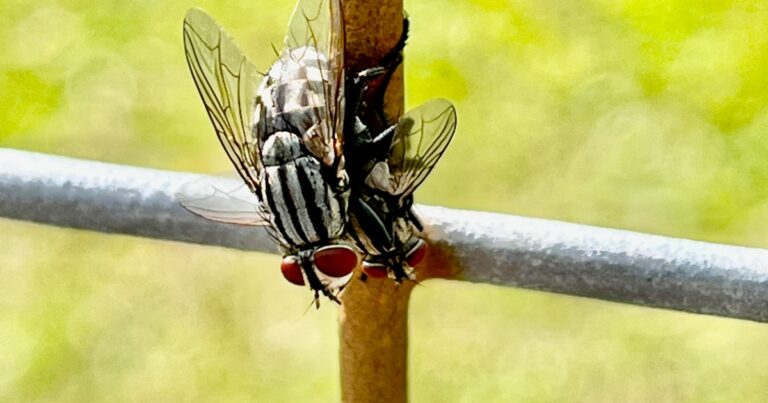
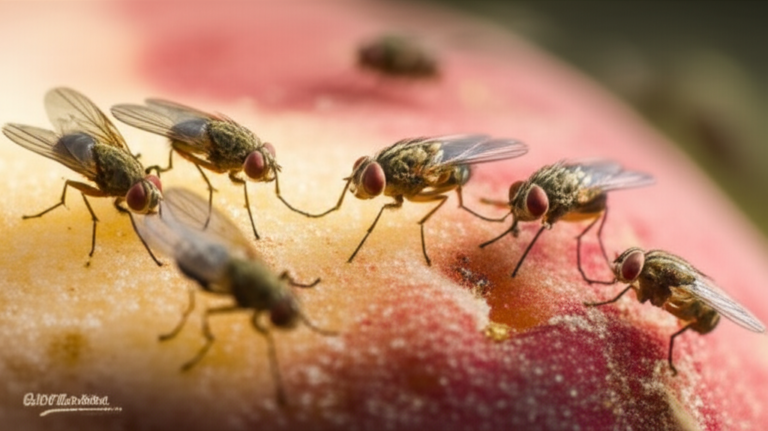
- The Red Eyes: If you zoom in (or squint really hard), adult fruit flies have distinct red eyes. Fungus gnats (the plant pests) have black eyes.
- The Hover: They love to hover right above the surface of your compost bin or the rim of your sink.
The “Smell” Test
Fruit flies are attracted to fermenting sugars. If you smell a faint, sweet, vinegar-like odor in your kitchen or near your houseplants, you likely have a breeding site.
The Drain Test
If you notice flies emerging specifically from your sink drains, especially in the evening, you might be dealing with drain flies (also known as moth flies) or fruit flies breeding in the biofilm inside your pipes.
Pro Tip: Place a piece of clear tape over the drain overnight. If you wake up and see flies stuck to the tape, you’ve found your nursery.
🚫 The 7-Step Blitz: How to Speed Up Fruit Fly Elimination
Ready to take back your kitchen? Here is our battle-tested, 7-step protocol to crush an infestation in record time. This isn’t just about trapping; it’s about total eradication.
1. 🗑️ Step 1: The Great Trash Sweep and Source Removal
This is the most critical step. If you skip this, the rest is useless.
- Empty the trash: Take out the garbage immediately. Wash the bin with hot soapy water.
- Check the fridge: Look for that one onion roting in the crisper or a forgotten jar of sauce.
- The Fruit Bowl Ban: Move all fruit to the refrigerator or seal it in airtight containers. No exceptions.
- Clean spills: Wipe down counters, floors, and under appliances.
2. 🧼 Step 2: Deep Clean Your Drains (The Hidden Breding Ground)
Many people miss this. The biofilm (slime) inside your pipes is a 5-star hotel for fruit fly larvae.
- Boiling Water: Pour a kettle of boiling water down the drain daily for 3 days.
- Enzymatic Cleaners: Use a product like Green Gobbler or Bio-Clean to eat away the organic sludge.
- The Vinegar/Soda Bomb: Pour 1/2 cup of baking soda, followed by 1 cup of white vinegar. Let it fizz for 15 minutes, then flush with hot water.
3. 🍎 Step 3: Isolate and Quarantine Ripe Produce
Even if you can’t refrigerate everything, isolate high-risk items.
- Banas: These are the #1 attractant. Keep them separate or in the fridge.
- Tomatoes: Store them in a cool, dry place away from other produce.
- Compost: If you have an indoor compost bin, seal it tightly and empty it daily.
4. 🪤 Step 4: Deploy the Ultimate Apple Cider Vinegar Trap
This is the classic for a reason.
- The Recipe: Mix Apple Cider Vinegar (ACV) with a few drops of dish soap.
- Why it works: The ACV smells like fermenting fruit, and the soap breaks the surface tension, causing them to drown.
- Placement: Put these traps near the infestation source, but not too close (or they might get scared off).
5. 🌬️ Step 5: Set Up Yellow Sticky Traps for Adult Control
While vinegar traps catch the “drunk” ones, yellow sticky traps catch the active flyers.
- Why Yellow? Fruit flies are attracted to the color yellow.
- Placement: Hang them near plants, trash cans, and windows.
- Frequency: Replace them every 3-4 days or when they are full.
6. 🧪 Step 6: Apply BTI or Enzymatic Cleaners for Larvae
This is the step most DIYers miss. You must kill the larvae in the soil or drains.
- For Plants: Use Mosquito Bits (BTI) to make “Mozie Tea.”
- For Drains: Continue using enzymatic cleaners to starve the larvae.
7. 🛡️ Step 7: Seal Entry Points and Prevent Re-Infestation
- Fix Screens: Check window screens for holes.
- Seal Gaps: Use caulk to seal gaps around pipes and windows.
- Dry Out: Keep sinks and drains dry when not in use.
For more DIY trap recipes, visit our DIY Fruit Fly Traps category.
⏳ Timeline Breakdown: What to Expect in the First 24 Hours, 3 Days, and 2 Weeks
Patience is key, but you need to know what “success” looks like at each stage.
| Timeframe | What’s Happening | What You Should See |
|---|---|---|
| 0–24 Hours | Immediate Action | You remove food sources and set traps. You might still see a lot of flies as they are agitated. |
| 2–3 Days | The Dip | Adult numbers should drop significantly. Traps will be full. |
| 4–7 Days | The Rebound Risk | If you didn’t kill larvae, new adults will hatch. You might see a small spike. Don’t panic! |
| 2 Weeks | The Turning Point | If you treated larvae, the population should be minimal. No new hatches. |
| 4–6 Weeks | Total Elimination | The cycle is broken. No flies, no larvae. You are safe! |
Why the Rebound?
If you see a spike around day 4-7, it means you missed a batch of eggs. This is why we insist on continuous treatment for at least 3 weeks.
🧪 DIY vs. Store-Bought: Which Fruit Fly Trap Actually Works Best?
We’ve tested hundreds of traps. Some are gimmicks; others are life-savers. Here is the breakdown.
Comparison Table: Trap Effectiveness
| Feature | DIY Vinegar Trap | Commercial Apple Trap | Yellow Sticky Traps |
|---|---|---|---|
| Cost | $ (Pantry items) | $$ | $ |
| Ease of Use | Medium (Mixing required) | High (Ready to use) | High (Hang and go) |
| Capacity | Low (Small dish) | Medium | High (Large surface) |
| Aesthetics | Poor (Dirty dish) | Good (Discret) | Poor (Yellow plastic) |
| Best For | Small infestations | Kitchen counters | Plants & large areas |
The Classic Apple Cider Vinegar Trap Recipe
This is the gold standard for a reason.
- Ingredients: 1/2 cup Apple Cider Vinegar, 2-3 drops of Dish Soap (Dawn works best).
- Method: Mix in a small bowl. Cover with plastic wrap and poke holes, or leave open.
- Why it works: The vinegar attracts, the soap kills.
The Wine and Beer Trap Alternative
If you don’t have vinegar, red wine or beer works too.
- Recipe: Pour a little leftover wine or beer into a jar. Add a drop of soap.
- Note: These are slightly less effective than ACV but work in a pinch.
Top-Rated Commercial Traps: Stark, Safer, and Victor Brands Reviewed
We’ve tested the big names. Here is how they stack up.
1. Stark Bro’s Fruit Fly Trap
- Design: 10/10. Looks like a little apple.
- Functionality: 9/10. Very effective for indoor use.
- Drawback: Can be messy if it tips over.
2. Safer Brand Fruit Fly Trap
- Design: 8/10. Simple bottle design.
- Functionality: 9/10. Strong attractant.
- Drawback: The liquid can evaporate quickly in hot kitchens.
3. Victor Fly Trap
- Design: 7/10. Industrial look.
- Functionality: 10/10. High capacity.
- Drawback: Not very pretty for a kitchen counter.
👉 CHECK PRICE on:
- Stark Bro’s Fruit Fly Trap: Amazon | Walmart | Stark Bro’s Official
- Safer Brand Fruit Fly Trap: Amazon | Walmart | Safer Brand Official
- Victor Fly Trap: Amazon | Walmart | Victor Pest Official
For more commercial options, browse our Commercial Fruit Fly Traps section.
🚿 Drain Cleaning Deep Dive: Why Your Sink is a Fruit Fly Hotel
If your traps are full but the flies keep coming, check your drains.
The Science of the Biofilm
Drains accumulate a layer of organic sludge (biofilm) made of food particles, grease, and hair. This is the perfect breeding ground for fruit flies. They lay their eggs in this slime, and the larvae feed on it.
How to Clean Your Drains Properly
- Boiling Water: Pour a full kettle of boiling water down the drain. Do this daily for a week.
- Enzymatic Cleaners: Use a product like Bio-Clean or Green Gobbler. These contain bacteria that eat the organic matter.
Usage: Pour the recommended amount down the drain at night. Do not use water for 8 hours. - Mechanical Cleaning: Use a pipe brush to physically scrub the inside of the drain if possible.
Pro Tip: If you have a garbage disposal, run it with ice and lemon pels to clean the blades and remove buildup.
🍌 Food Storage Hacks: Keeping Your Kitchen Fly-Free
Prevention is better than cure. Here is how to store food so flies can’t find it.
- The Fridge Rule: Store all ripe fruit in the fridge.
- Airtight Containers: Keep bread, sugar, and flour in sealed containers.
- The “No-Go” Zone: Don’t leave dirty dishes in the sink overnight.
- Compost Management: If you compost indoors, use a bin with a tight seal and empty it daily.
Did you know? Fruit flies can detect the scent of roting fruit from miles away. If you have a hidden roting potato in the back of the pantry, they will find it.
🐾 Are Fruit Fly Treatments Safe for Pets and Kids?
This is a top concern for us at Fruit Fly Traps™.
- Vinegar Traps: Safe. The vinegar and soap mixture is non-toxic, but keep it out of reach so pets don’t drink it (it tastes bad and might upset their stomach).
- Sticky Traps: Safe. Just keep them out of reach of curious paws.
- BTI (Mosquito Bits): Extremely Safe. BTI is a natural bacteria that only affects mosquito and gnat larvae. It is harmless to pets, humans, and beneficial insects.
- Hydrogen Peroxide: Safe in low concentrations. Use 3% food-grade peroxide. Do not use high concentrations.
- Diatomaceous Earth (DE): Caution. Food-grade DE is safe, but the dust can irritate lungs. Wear a mask when applying and keep pets away until it settles.
Verdict: Stick to BTI and vinegar traps for the safest, most effective results.
🔄 Breaking the Cycle: Why You Must Target Both Larvae and Adults
This is the most important concept in this article.
The Cycle:
- Adult flies lay eggs.
- Eggs hatch into larvae.
- Larvae grow into adults.
- Adults lay eggs.
The Mistake:
Most people only trap the adults. This reduces the number of flies you see, but the larvae are still in the soil or drains. They grow up, become adults, and lay more eggs. The cycle continues.
The Solution:
You must attack both stages simultaneously.
- Traps kill the adults.
- BTI/Enzymatic cleaners kill the larvae.
By breaking the cycle at both points, you ensure that no new adults can be born. This is why the process takes 2-4 weeks—you have to wait for the existing larvae to die off without reproducing.
❓ Common Mistakes That Keep Fruit Flies Coming Back
Why does your infestation seem endless? Here are the usual suspects.
- Mistake 1: Ignoring the Drains. You cleaned the counter but forgot the sink.
- Mistake 2: Giving Up Too Soon. You stopped treating after 3 days because the flies “disappeared.” They didn’t; they were just hiding.
- Mistake 3: Overwatering Plants. If you have indoor plants, overwatering creates a perfect nursery for larvae.
- Mistake 4: Not Sealing Food. Leaving a banana on the counter is an open invitation.
- Mistake 5: Using the Wrong Trap. Using a blue sticky trap instead of a yellow one won’t work as well.
The Fix: Be thorough. Be patient. Be consistent.
🧐 Fruit Flies vs. Fungus Gnats: Are You Treating the Wrong Bug?
Are you sure you have fruit flies? Or are those fungus gnats?
The Differences
| Feature | Fruit Flies | Fungus Gnats |
|---|---|---|
| Color | Tan/Brown with Red Eyes | Black with Black Eyes |
| Habitat | Kitchen, Fruit, Drains | Houseplant Soil |
| Behavior | Hover around food | Hover around plants |
| Larvae Food | Roting fruit, sludge | Fungi in soil |
| Treatment | Vinegar traps, drain cleaning | BTI, dry out soil |
The Confusion:
Fungus gnats are often mistaken for fruit flies. If you see tiny black flies hovering around your indoor plants, you likely have fungus gnats. The treatment is similar (BTI), but the source is different.
Pro Tip: If you are treating for fruit flies but the problem is actually fungus gnats, you will never win. Identify the bug first!
For more on plant pests, check out our Fruit Fly Facts section.
🏠 Prevention Protocols: How to Stop Fruit Flies from Returning
Once you’ve won the war, how do you keep the peace?
- Daily Wipe Down: Clean counters and sinks every night.
- Trash Management: Take out the trash daily.
- Plant Care: Let the top inch of soil dry out between waterings.
- Fruit Storage: Keep fruit in the fridge or sealed containers.
- Drain Maintenance: Run boiling water down drains once a week.
- New Plants: Quarantine new plants for 2 weeks before bringing them inside.
The Golden Rule: Cleanliness is the best prevention.
✅ Conclusion

So, how long does it take to completely eliminate a fruit fly infestation? The answer is 2 to 6 weeks, depending on the severity and your consistency.
The secret isn’t a magic spray; it’s a strategy. You must:
- Remove all food sources.
- Trap the adults.
- Kill the larvae in drains and soil.
- Repeat the process for at least 3 weeks.
If you follow the 7-Step Blitz we outlined, you will break the cycle and reclaim your kitchen. Remember, patience is key. Don’t give up if you see a few straglers in the second week; that’s just the last of the old generation dying off.
Final Thought:
Have you ever tried a method that worked instantly? Or have you been fighting a losing battle for months? Share your stories in the comments below—we’d love to hear how you conquered your infestation!
🔗 Recommended Links
Top Products for Fruit Fly Control:
- Apple Cider Vinegar: Amazon | Walmart
- Mosquito Bits (BTI): Amazon | Walmart | Bonide Official
- Yellow Sticky Traps: Amazon | Walmart
- Enzymatic Drain Cleaner: Amazon | Walmart | Green Gobbler Official
- Stark Bro’s Fruit Fly Trap: Amazon | Stark Bro’s Official
Books for Further Reading:
📚 Reference Links
- University of California IPM: Fruit Fly Management
- Penn State Extension: Fruit Fly Biology and Control
- CDC: Fruit Flies and Disease
- Quora Discussion: How to get rid of a fruit fly infestation permanently
- Love That Leaf: Easy Method to Kill Fungus Gnats
FAQ

What is the fastest way to get rid of fruit flies overnight?
While you can’t eliminate an entire infestation overnight, you can drastically reduce the population. The fastest method is a combination of aggressive source removal and trapping.
- Remove all food: Throw away any roting fruit, clean spills, and take out the trash.
- Set multiple traps: Use Apple Cider Vinegar traps and yellow sticky traps in every room where flies are seen.
- Treat drains: Pour boiling water down the drains to kill larvae.
- Result: You should see a significant drop in numbers by the next morning, but full elimination takes longer.
Read more about “🚀 5-Step Blitz: The Fastest Way to Get Rid of Fruit Flies (2026)”
How long do fruit fly eggs take to hatch and how do I stop them?
Fruit fly eggs can hatch in as little as 24 hours under warm conditions. To stop them:
- Remove the source: Eliminate the roting food organic sludge where they lay eggs.
- Kill the larvae: Use BTI (Mosquito Bits) or enzymatic cleaners to kill the larvae before they hatch.
- Dry out the area: Fruit flies need moisture to lay eggs. Keep sinks and soil dry.
Why do fruit flies keep coming back after I clean my kitchen?
This is usually because you missed a hidden breeding site. Common culprits include:
- Drains: The biofilm inside pipes is a prime breeding ground.
- Potted plants: If you have indoor plants, the soil might be infested with larvae.
- Hidden food: A roting vegetable in the back of the fridge or a spilled drop of juice under the counter.
- Incomplete treatment: If you only trap adults but don’t kill the larvae, new flies will hatch and restart the cycle.
What homemade traps work best for eliminating a fruit fly infestation quickly?
The Apple Cider Vinegar (ACV) trap is the most effective homemade solution.
- Recipe: Mix 1/2 cup of ACV with a few drops of dish soap.
- Why it works: The vinegar attracts the flies, and the soap breaks the surface tension, causing them to drown.
- Alternative: A wine trap (leftover red wine + soap) also works well.
- Pro Tip: Cover the bowl with plastic wrap and poke small holes to make it harder for them to escape.
For more DIY solutions, visit our DIY Fruit Fly Traps category.
Read more about “🚀 15 Fruit Fly Killers Ranked: The Only One That Eradicates 9% (2026)”