Support our educational content for free when you purchase through links on our site. Learn more
Yeast Traps: Your 5-Step Fruit Fly Freedom Plan! 🚀

If you’re battling those tiny, persistent fruit flies, the fastest and most effective solution often lies in
a simple, homemade yeast and fruit fly trap. We’ve seen countless homeowners transform their kitchens from buzzing nightmares to peaceful havens using this surprisingly potent pantry staple. Imagine walking into your kitchen without a cloud of tiny insects rising from
your fruit bowl – that’s the power of a well-placed yeast trap.
From our years of experience at Fruit Fly Traps™, we’ve learned that fruit flies are irresistibly drawn to the fermentation process, which yeast excels
at mimicking. One time, a client swore their kitchen was “cursed” until we showed them how a basic yeast, sugar, and water concoction could clear out an entire infestation overnight. It’s not magic; it’s
just understanding what makes these little pests tick.
These DIY solutions are not only incredibly effective but also safe and inexpensive, making them our go-to recommendation for immediate relief. They target the fruit flies’ primary instinct – the search for ripe
, fermenting food – turning their natural desires against them. Get ready to reclaim your kitchen!
Key Takeaways
- Yeast is a powerful attractant: Active dry yeast, when mixed with sugar and warm water, creates an
irresistible fermentation aroma that lures fruit flies. - DIY traps are simple and effective: You can easily craft highly potent traps using common household items like jars, plastic wrap, and a few pantry staples.
- Dish soap
is crucial: Adding a few drops of dish soap breaks the surface tension of the liquid, ensuring that once fruit flies land, they sink and drown. - Placement and maintenance matter: Position traps near known fruit fly hotspots and refresh
the bait every 3-5 days for continuous effectiveness. - Combine with source control: For lasting results, always eliminate breeding grounds like overripe fruit, damp drains, and food spills in conjunction with trapping.
Table of Contents
- ⚡️ Quick Tips and Facts: Your Fast Track to Fruit Fly Freedom
- 🔬 The Sweet Science of Attraction: Why Yeast Drives Fruit Flies Wild
- What Exactly Are Fruit Flies? Unmasking the Tiny Invaders 🔍
- The Irresistible Allure of Fermentation: Yeast’s Secret Weapon 🧪
- Yeast vs. Vinegar: A Fermented Face-Off in the Trap Arena 🍎
- 🏡 Crafting Your Own Fruit Fly Feast: DIY Yeast Trap Recipes That Really Work!
- 1. The Classic Yeast & Sugar Brew: Simple, Sweet, and Deadly 🍯
- 2. The Apple Cider Vinegar & Yeast Power-Up: A Double Whammy! 💥
- 3. The Fruit Scraps & Yeast Concoction: Zero Waste, Maximum Lure 🍌
- 4. The Beer/Wine Dregs & Yeast Combo: Repurposing for Pest Control 🍷
- 5. The Dish Soap Twist: The Fatal Finish Line 🧼
- ✨ Beyond the Brew: Optimizing Your Yeast Trap’s Performance for Peak Pest Control
- Placement is Key: Where to Put Your Traps for Maximum Impact 📍
- The Perfect Container: Size, Shape, and Opening Matters! 🏺
- Maintenance & Refresh: Keeping Your Trap Potent and Productive 💪
- Troubleshooting Your Trap: When Things Go Awry and Flies Persist 🤷 ♀️
- 📊 Yeast Traps in Action: What to Expect and When to Call the Pros
- How Quickly Do Yeast Traps Work? The Timeline to a Fly-Free Zone ⏱️
- Pros and Cons of Yeast-Based Solutions: A Balanced Perspective ✅❌
- When DIY Isn’t Enough: Recognizing a Bigger Infestation and Seeking Expert Help 🚨
- 🌍 The Bigger Picture: Holistic Fruit Fly Management & Prevention Strategies
- Source Control: Eliminating the Root of the Problem, Not Just the Symptoms 🌱
- Sanitation Superpowers: Keeping Your Kitchen a No-Fly Zone 🧹
- Beyond Traps: Other Effective Fruit Fly Deterrents & Killers 🚫
- Sticky Traps & Zappers: Commercial Solutions for Persistent Pests ⚡
- Essential Oils & Natural Repellents: Aromatic Armor Against Annoyances 🌿
- 🧑 🔬 Our “Fruit Fly Traps™” Expert Insights: Real-World Anecdotes & Pro Tips from the Trenches
- A Tale of Two Kitchens: Our Team’s Yeast Trap Adventures and Lessons Learned 🧑 🔬
- Common Misconceptions Debunked: What NOT to Do When Battling Fruit Flies! 🚫
- ✅ Conclusion: Mastering the Art of Yeast-Powered Fruit Fly Control for a Peaceful Home
- 🔗 Recommended Links: Your Go-To Resources for a Fly-Free Home
- 📚 Reference Links: The Science Behind Our Swatting Success
⚡️ Quick Tips and Facts: Your Fast Track to Fruit Fly Freedom
Alright, fellow kitchen commanders, let’s get straight to the buzzing truth! Fruit flies are tiny
terrors, but they’re not invincible. Here at Fruit Fly Traps™, we’ve waged countless battles against these winged nuisances, and we’ve learned a thing or two. The secret weapon? Often, it’s
something as simple and unassuming as yeast. These little fermenting marvels are absolute magnets for fruit flies, drawing them in with an irresistible aroma that promises a delicious, if ultimately fatal, feast.
Here’
s the skinny on getting started:
- Yeast is a Fruit Fly Magnet: Active dry yeast, when mixed with sugar and warm water, creates a fermentation process that mimics ripening fruit, which fruit flies adore.
- Simple Setup, Big Impact: You don’t need fancy gadgets. A simple jar, some plastic wrap, and a few pantry staples are often all it takes to build an effective trap.
- Location
, Location, Location: Place your traps near fruit bowls, sinks, and trash cans – anywhere you’ve spotted these tiny invaders. - Consistency is Key: Don’t just set it and forget it! Refresh your traps
every few days to maintain their potency. - Source Control First: Traps are fantastic, but the ultimate victory comes from eliminating their breeding grounds. We’re talking about ripe fruit, damp drains, and forgotten spills. This
is the first step in truly keeping your home fruit fly-free. Learn more about effective fruit fly traps and strategies on our main page: Fruit Fly Traps.
🔬 The Sweet Science of Attraction: Why Yeast Drives Fruit Flies
Wild
Ever wonder why those tiny fruit flies seem to appear out of thin air the moment a banana gets a little too ripe? It’s not magic, it’s science – specifically, the science of fermentation! And that, dear
friends, is where yeast steps onto the stage as our star player in the fight against these miniature marauders.
### What Exactly Are Fruit Flies? Unmasking the Tiny Invaders 🔍
Before we dive into their weaknesses, let’s get to know our adversary. Fruit flies, scientifically known as Drosophila melanogaster, are small
, reddish-brown insects, typically about 1/8 inch long, with distinctive red eyes. They’re not just annoying; they can contaminate food and are incredibly prolific breeders. A single female can lay hundreds of eggs in her short
lifespan, often on the surface of fermenting fruits and vegetables. That’s why a small problem can quickly become an overwhelming infestation! For more fascinating (and slightly unsettling) facts about these pests, check out our Fruit Fly Facts section.
The
Irresistible Allure of Fermentation: Yeast’s Secret Weapon 🧪
So, why are fruit flies so utterly obsessed with yeast? It all boils down to their biology. Fruit flies are drawn to the volatile organic compounds (VOCs) produced during fermentation, which signal the presence of ripe, decaying fruit – their ideal food source and breeding ground. Yeast, particularly active dry yeast, is a master of fermentation. When you mix it with sugar and warm water, it begins
to consume the sugar, producing carbon dioxide and, crucially for our purposes, ethanol and other aromatic compounds. These are the very scents that scream “dinner time!” to a fruit fly.
It’s like ringing
a dinner bell for them, but instead of a delicious meal, they find themselves in a sticky situation. The aroma is so potent that it can attract fruit flies from a surprising distance, making yeast an incredibly effective lure for homemade traps. This
is a core concept we explore in our Fruit Fly Trap Ingredients guide.
Yeast vs. Vinegar: A Fermented Face-Off in the Trap Arena 🍎
Now, you might be thinking, “But
I’ve heard apple cider vinegar works wonders!” And you’d be right! Apple cider vinegar (ACV) is another fantastic fruit fly attractant, and it also works on the principle of fermentation. ACV already contains the acetic
acid and other compounds that fruit flies find appealing. So, which one is better?
From our experience, both yeast and apple cider vinegar are highly effective, and often, the best approach is to use them together or experiment to
see what your particular fruit fly population prefers. The YouTube channel Daisy Creek Farms with Jag Singh, for instance, highlights both vinegar and active dry yeast as effective DIY trap ingredients, suggesting that variety can be key in pest control. We’ve found that sometimes, a yeast-based trap might catch more flies in one scenario, while an ACV trap shines in another. It really depends on the specific conditions and the local fruit fly palate!
Here’
s a quick comparison:
| Feature | Yeast-Based Trap
to the Fruit
Fly Traps™ team, we’ve found that combining these two powerhouses can be incredibly effective. Why not offer them a choice of delicious doom?
🏡 Crafting Your Own Fruit Fly Feast: DIY Yeast Trap Recipes That Really Work!
Alright, aspiring exterminators, it’s time to
roll up your sleeves and get a little crafty! The beauty of yeast-based fruit fly traps is their simplicity and the fact that you likely have most of the ingredients lurking in your pantry right now. We’ve tested countless concoctions, and these
are our top picks for luring those tiny terrors to their sweet, sticky end. Remember, the goal is to create an irresistible aroma that draws them in, and a clever design that keeps them there. For more DIY inspiration, visit
our DIY Fruit Fly Traps section!
1. The Classic Yeast & Sugar Brew: Simple, Sweet, and Deadly 🍯
This is the foundational yeast trap, praised by many for its effectiveness. The Com
ox Valley Zero Waste group on Facebook, for instance, highlights this exact method, with users exclaiming, “It works like a charm!” and “I’ve tried everything and this is the only thing that has worked.”
We couldn’t agree more!
What you’ll need:
- Container: A small jar (like a mason jar or old jam jar), a plastic cup, or even a small bowl.
- Y
east: 1 packet (about 2 ¼ teaspoons) of active dry yeast (e.g., Fleischmann’s Active Dry Yeast or Red Star Active Dry Yeast). - Sugar: 1-
2 tablespoons of granulated sugar. - Warm Water: ½ cup of warm (not hot!) water.
- Lid/Cover: Plastic wrap, a paper cone, or a piece of paper.
Poking Tool:** A toothpick, fork, or pen.
- Optional: A few drops of dish soap.
Step-by-step instructions:
- Activate the Yeast: In your chosen container,
combine the warm water and sugar. Stir until the sugar is mostly dissolved. Then, sprinkle the active dry yeast over the surface. Give it a gentle stir. - Let it Bloom: Let the mixture sit for 5-10
minutes. You should see it start to get foamy and bubbly – that’s the yeast activating and beginning its fermentation magic! This is where the irresistible scent starts to develop. - Prepare the Trap Door:
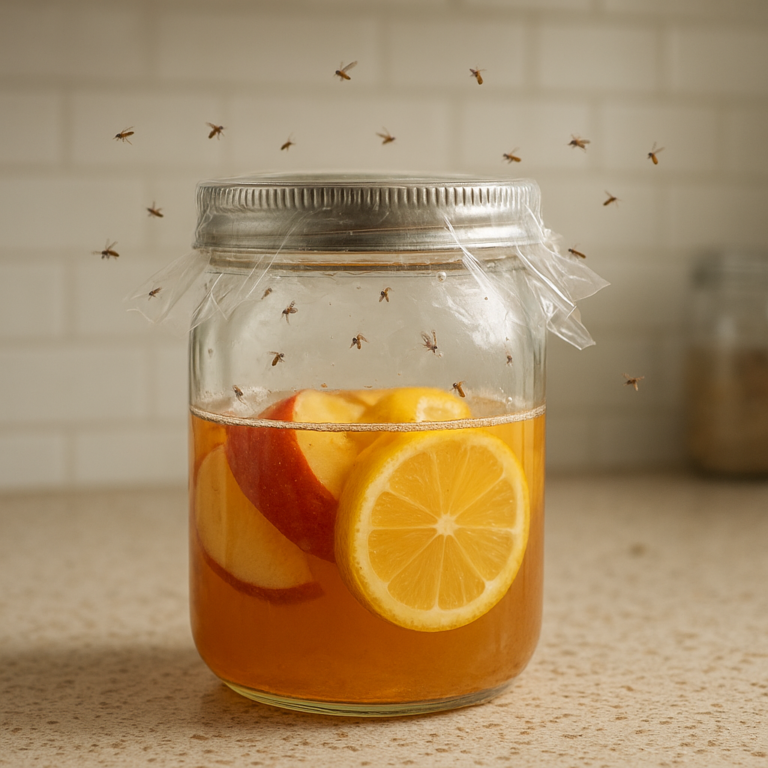
Plastic Wrap Method: Tightly cover the top of your container with plastic wrap. Use your poking tool to create several small holes (about 1/8 inch in diameter) in the plastic wrap. Make sure they’re small enough to
make escape difficult but large enough for the flies to enter.
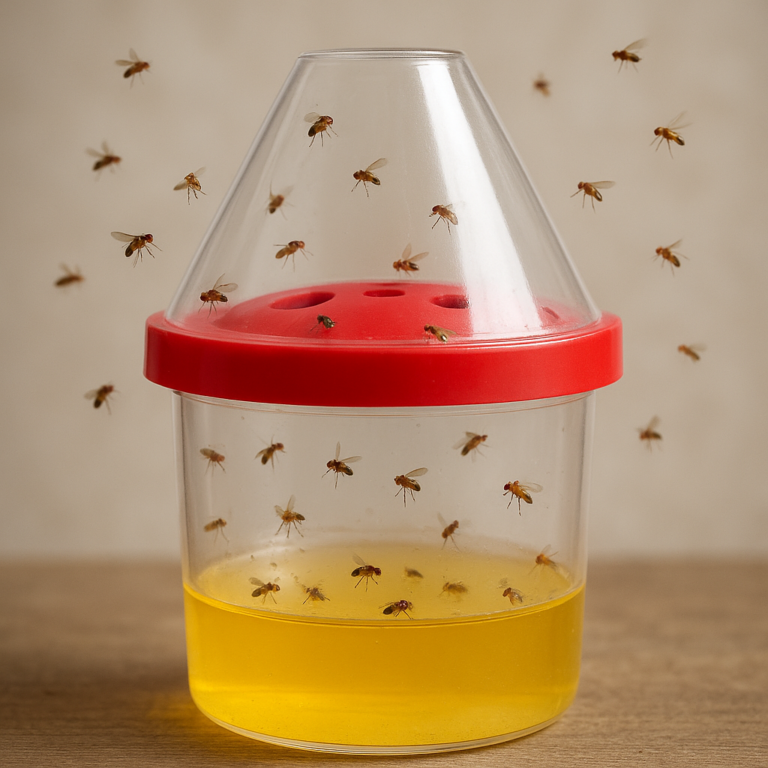
- Paper Cone Method: Roll a piece of paper into a cone shape, making sure the narrow end has a small opening (again, about 1/8 inch).
Place the wide end of the cone into the mouth of the jar, sealing the edges with tape if necessary. The idea is a one-way street for those curious flies.
- Add the Fatal Finish (Optional but Recommended): If
you’re using the plastic wrap method, carefully add 1-2 drops of liquid dish soap (like Dawn Ultra Dishwashing Liquid) to the yeast mixture after you’ve covered it and poked the holes. The soap breaks
the surface tension of the liquid, ensuring that once the flies land, they sink and can’t escape. - Placement: Place your trap in areas where fruit flies are most active.
2. The Apple Cider Vinegar & Yeast Power-Up: A Double Whammy
! 💥
Why settle for one powerful attractant when you can have two? This trap combines the proven allure of apple cider vinegar with the fermenting power of yeast for an extra potent punch.
What you’ll need:
- Container: Small jar or plastic cup.
- Apple Cider Vinegar: ½ cup (e.g., Bragg Organic Apple Cider Vinegar or Heinz Apple Cider Vinegar).
- Yeast: ½
teaspoon of active dry yeast. - Sugar: 1 tablespoon of granulated sugar.
- Warm Water: ¼ cup of warm water.
- Lid/Cover: Plastic wrap or paper cone.
Poking Tool:** Toothpick or fork.
- Dish Soap: 1-2 drops (e.g., Palmolive Ultra Dish Liquid).
Step-by-step instructions:
- **
Mix the Base:** In your container, combine the apple cider vinegar, sugar, and warm water. Stir well. - Add the Yeast: Sprinkle the yeast into the mixture and stir gently.
- Cover
and Poke: Cover the container tightly with plastic wrap and poke several small holes, or use the paper cone method as described above. - Add Soap: Add 1-2 drops of dish soap through one of the holes (if using plastic wrap) or directly into the mixture (if using a cone).
- Deploy: Place your super-powered trap where fruit flies congregate.
3. The Fruit Scraps & Yeast Concoction: Zero Waste, Maximum Lure 🍌
This method is fantastic
for utilizing those overripe fruit scraps that are already attracting flies, turning them into a weapon against their kin! It’s a truly zero-waste approach to pest control.
What you’ll need:
- Container: A
small jar or bowl. - Overripe Fruit Scraps: A few pieces of banana peel, apple core, peach pit, or other very ripe fruit.
- Yeast: ½ teaspoon of active dry yeast.
Sugar: 1 teaspoon of granulated sugar.
- Warm Water: ¼ cup of warm water.
- Lid/Cover: Plastic wrap or paper cone.
- Poking Tool: Toothpick or fork
. - Dish Soap: 1-2 drops.
Step-by-step instructions:
- Place Fruit: Put the overripe fruit scraps at the bottom of your container.
- Prepare
Yeast Mixture: In a separate small cup, combine the warm water and sugar, then sprinkle in the yeast. Let it bloom for a few minutes. - Combine: Pour the activated yeast mixture over the fruit scraps in the
main container. - Cover and Poke: Cover the container tightly with plastic wrap and poke several small holes, or use the paper cone method.
- Add Soap: Add 1-2 drops of dish
soap. - Set the Trap: Position the trap in a high-traffic fruit fly area.
4. The Beer/Wine Dregs & Yeast Combo: Repurposing for Pest Control 🍷
Got a little leftover beer or wine that’s gone flat? Don’t pour it down
the drain! These fermented beverages are already a fruit fly magnet, and adding yeast just supercharges their appeal. This is repurposing at its finest!
What you’ll need:
- Container: A small jar or glass
. - Leftover Beer or Wine: ½ cup (the flatter, the better!).
- Yeast: ¼ teaspoon of active dry yeast.
- Sugar (Optional): 1 teaspoon, if your
beverage isn’t very sweet. - Lid/Cover: Plastic wrap or paper cone.
- Poking Tool: Toothpick or fork.
- Dish Soap: 1-2 drops.
Step-by-step instructions:
-
Pour Beverage: Pour the leftover beer or wine into your container.
-
Add Yeast & Sugar: Sprinkle in the yeast and optional sugar. Stir gently to combine
. -
Cover and Poke: Cover the container tightly with plastic wrap and poke several small holes, or use the paper cone method.
-
Add Soap: Add 1-2 drops of dish soap.
-
Place Strategically: Set the trap near where you’ve seen fruit flies buzzing around your beverages.
### 5. The Dish Soap Twist: The Fatal Finish Line 🧼
While not a bait in itself, dish soap is the crucial element that turns a mere attractant into a truly effective trap. Without it, fruit flies might land
on your delicious brew, take a sip, and then simply fly away, perhaps even more energized!
Why it works: The surface tension of water is surprisingly strong, strong enough to support the tiny weight of a fruit fly. When
a fruit fly lands on plain water or a sugary solution, it can often walk on the surface or easily take off again. Adding just a drop or two of dish soap (any brand will do, but we often reach for Dawn or Palmolive) breaks this surface tension. Once the surface tension is gone, the flies can’t stand on the liquid, they get wet, and they quickly sink and drown. It’s a simple, yet incredibly effective, addition
to any liquid-based fruit fly trap.
How to incorporate: Simply add 1-2 drops of liquid dish soap to your yeast mixture after you’ve prepared the bait and covered the container. If using plastic wrap, you can
gently lift a corner or poke a hole to add the soap. If using a paper cone, just drop it right in. Don’t stir vigorously, as you want to avoid too many suds.
✨ Beyond the Brew: Optimizing Your Yeast Trap’s Performance for Peak Pest Control
Making the perfect
yeast brew is just half the battle. To truly dominate the fruit fly population in your home, you need to think like a pest control expert (which, by the way, you’re becoming!). This means optimizing every aspect of your trap
, from where you put it to how you maintain it.
Placement is Key: Where to
Put Your Traps for Maximum Impact 📍
Imagine you’re a fruit fly, drawn by the intoxicating scent of fermentation. Where would you go? Probably where the ripest fruit is, or where food scraps might be lingering. That
‘s exactly where your traps need to be!
- Near Fruit Bowls: This is a no-brainer. If you have fresh fruit on the counter, a trap nearby is essential.
- By the Sink/
Drain: Fruit flies love the moist, organic matter that can accumulate in drains. Placing a trap here can intercept them. - Near Trash Cans/Compost Bins: These are prime breeding grounds. A trap acts as a first
line of defense. - Under Cabinets/Pantry: Sometimes, a forgotten potato or onion can be the source.
- Don’t Hide Them: While you might not want them as a centerpiece, don
‘t tuck your traps away where the flies won’t find them. They need to be in the open, in the flight path of the fruit flies. - Multiple Locations: For a widespread infestation, don’t rely
on just one trap. Deploy several in different problem areas for a multi-pronged attack.
The Perfect Container: Size, Shape
, and Opening Matters! 🏺
The container isn’t just a vessel; it’s part of the trap’s engineering!
- Size: Small to medium-sized containers (like a jam jar, plastic cup, or small bowl) work best. Too large, and the scent might dissipate too much; too small, and it won’t hold enough bait or flies.
- Shape: Jars with a wider base and a narrower opening are ideal
. This makes it harder for flies to find their way out once they’re inside. - The Opening: This is critical!
- Small Holes (Plastic Wrap Method): The holes you poke in plastic
wrap should be just large enough for a fruit fly to squeeze through (around 1/8 inch). If they’re too big, the flies will easily escape. - Paper Cone: The tip of your paper cone should also
have a small opening. The funnel shape naturally guides them down but makes it disorienting to fly back up and out. - Transparency: Clear containers allow you to easily monitor your progress and see how many flies you’ve caught
– a satisfying sight, we promise!
Maintenance & Refresh: Keeping Your Trap Potent and Productive 💪
A stagnant
trap is a useless trap! The effectiveness of your yeast brew diminishes over time as the fermentation slows down and the attractive aromas fade.
- Regular Replacement: We recommend replacing your yeast trap mixture every 3-5 days. The Facebook group
Comox Valley Zero Waste also advises replacing the bait regularly for continued effectiveness. In warmer environments, you might need to refresh it even sooner. - Cleanliness: When you replace the bait, give
the container a quick rinse. This prevents any lingering odors from previous batches that might deter new flies. - Observe and Adjust: If you notice your trap isn’t catching as many flies as it used to, even after a refresh
, it might be time to try a slightly different recipe or adjust its placement.
Troubleshooting Your Trap:
When Things Go Awry and Flies Persist 🤷 ♀️
So, you’ve set your traps, followed our advice, and still, those tiny terrors are buzzing about? Don’t despair! Even the pros at
Fruit Fly Traps™ encounter stubborn infestations. Here are some common issues and how to tackle them:
- “My trap isn’t catching anything!”
- Is the yeast active? Ensure your water
was warm, not hot, and that you saw some foam/bubbles. Old yeast might be inactive. - Is there enough sugar? Yeast needs fuel!
- Is the dish soap present?
Without it, flies might just visit and leave. - Is the opening too big? Flies are clever; make their escape route difficult.
- Is it in the right spot? Move the trap closer
to where you see the most activity. - Is there a stronger attractant nearby? A forgotten overripe banana on the counter will always win over your trap. Eliminate competing food sources!
- “I
‘m catching some, but they’re still everywhere!” - Multiple sources? You might have more than one breeding ground. Check drains, garbage disposals, forgotten produce, and even damp sponges.
More traps! One trap might not be enough for a larger infestation.
- Time: It takes time to significantly reduce a population, especially if new eggs are hatching. Be patient and persistent.
- “The
flies are getting in but flying right back out!” - This is almost always a surface tension issue (no dish soap) or the holes/cone opening are too large. Double-check these elements.
If you’re
still battling a persistent fruit fly problem, it might be time to explore more advanced strategies. Our section on Dealing with Persistent Fruit Flies offers deeper insights and solutions.
📊 Yeast
Traps in Action: What to Expect and When to Call the Pros
You’ve brewed your bait, set your traps, and now you’re waiting. What’s the timeline for a fly-free zone? And when do
you know it’s time to bring in the big guns? Let’s manage expectations and understand the limits of DIY.
How Quickly Do Yeast Traps Work? The Timeline to a Fly-Free Zone ⏱️
The good news? Yeast traps can start working almost immediately! Within a few hours of
setting a fresh, active trap, you should begin to see fruit flies congregating around and, hopefully, inside. We’ve often seen a noticeable reduction in visible fruit flies within 24-48 hours.
However, achieving
a completely fly-free home takes a bit more patience and persistence. Remember, fruit flies have a rapid life cycle. Even if you catch all the adults, new eggs might be hatching. Expect to run your traps and maintain your sanitation efforts for at
least a week to ten days to break the breeding cycle and truly get the upper hand. The YouTube video by “Daisy Creek Farms with Jag Singh” demonstrates the effectiveness of a DIY PVC pipe trap, showing it full of captured fruit
flies, indicating that these traps can indeed work quickly and effectively when properly constructed and baited.
Pros and Cons of Yeast-Based Solutions: A Balanced Perspective ✅❌
Like any pest control method, yeast traps have their strengths and weaknesses. It’s important to understand both sides to make the best decision for your
home.
| Feature | Pros ✅
When DIY Isn’t Enough: Recognizing a Bigger Infestation and Seeking Expert Help
🚨
While yeast traps are incredibly effective for managing minor to moderate fruit fly problems, there are times when you might need to call in the cavalry. How do you know when your DIY efforts aren’t cutting it?
- Persistent
Presence: If you’ve diligently applied all the tips above – multiple traps, excellent sanitation, source control – and still see a significant number of fruit flies after a week or two, you might have a more entrenched issue.
Unidentified Source: You’ve checked every piece of fruit, every drain, every forgotten corner, and you simply cannot find the breeding source. This could indicate a hidden problem, perhaps in a wall void or a more complex plumbing issue.
*
Beyond the Kitchen: If fruit flies are appearing in other parts of your house, far from typical food sources, it suggests a larger, more mobile infestation.
- Commercial Solutions: Sometimes, the sheer volume of flies warrants a stronger
, faster approach. This is when commercial fruit fly traps, often utilizing potent chemical lures or sticky surfaces, become necessary. For a comprehensive look at these options, explore our Commercial Fruit Fly Traps section.
At Fruit Fly Traps™, we pride ourselves on empowering homeowners, but we also know our limits. If you’re feeling overwhelmed, don’t hesitate to
contact a professional pest control service. They have access to industrial-grade treatments and diagnostic tools to pinpoint and eradicate even the most stubborn infestations.
🌍 The Bigger Picture: Holistic Fruit Fly Management & Prevention Strategies
Traps are fantastic for catching existing fruit flies, but true victory lies in preventing them from ever becoming a problem. Think of it
as a multi-layered defense system. We’re not just about swatting; we’re about smart, sustainable pest management.
Source Control: Eliminating the Root of the Problem, Not Just the Symptoms 🌱
This is the golden rule of fruit fly control. Traps only catch the adults; they don’
t stop new ones from hatching. Fruit flies breed in moist, fermenting organic matter. If you eliminate their breeding grounds, you eliminate the problem.
-
Ripe & Decaying Produce: This is the most common culprit.
-
Refrigerate: Store ripe fruits and vegetables (like bananas, tomatoes, potatoes, onions) in the refrigerator.
-
Eat or Dispose: Don’t let fruit sit out on counters for too long.
If it’s overripe, eat it, compost it properly, or discard it in a sealed outdoor trash can. -
Inspect: Always inspect produce when you bring it home. Fruit fly eggs can be microscopic and already
present. -
Drains & Disposals: Food particles and moisture accumulate here, creating a perfect nursery.
-
Clean Regularly: Pour boiling water down drains, especially the kitchen sink and garbage disposal, regularly.
Baking Soda & Vinegar: A mixture of baking soda followed by white vinegar can help break down organic matter and kill eggs. Let it sit for 30 minutes before flushing with hot water.
-
Drain Covers: Use
drain covers to prevent access. -
Trash Cans & Recycling Bins:
-
Empty Frequently: Don’t let food waste linger. Empty kitchen trash daily, especially if it contains fruit or vegetable scraps.
-
Lids: Use trash cans with tight-fitting lids.
-
Rinse: Rinse out recycling containers (cans, bottles) before placing them in the bin.
-
Spills & Crumbs
: Even small spills of juice, soda, or wine can attract fruit flies. Clean them up immediately and thoroughly. -
Damp Sponges & Mops: These can harbor organic matter and moisture, making them attractive breeding sites
. Wring them out and let them dry completely.
Sanitation Superpowers: Keeping Your Kitchen a No
-Fly Zone 🧹
A clean kitchen is a fruit fly-free kitchen! This goes hand-in-hand with source control.
- Wipe Down Surfaces: Regularly wipe down countertops, tables, and stovetops with an
all-purpose cleaner. - Clean Under Appliances: Don’t forget to clean under and behind your refrigerator, stove, and dishwasher, where food particles can accumulate.
- Dishwasher Duty: Run your dishwasher regularly
. Don’t leave dirty dishes sitting in the sink for extended periods. - Floor Care: Mop floors regularly, paying attention to sticky spots or spills.
Beyond Traps: Other Effective Fruit Fly Deterrents & Killers 🚫
While yeast traps are our specialty, we know there’s a whole arsenal of tools out there. Sometimes
, a multi-pronged attack is the most effective.
Sticky Traps & Zappers: Commercial Solutions for
Persistent Pests ⚡
When DIY isn’t quite cutting it, or you’re dealing with a particularly stubborn infestation, commercial solutions can offer a powerful boost.
- Sticky Traps: These are simple, non-toxic,
and highly effective. Brands like Catchmaster and Tanglefoot offer sticky traps designed for flying insects. They come in various forms, from small squares you can place near fruit bowls to decorative options that blend into your decor. The
bright yellow color is often particularly attractive to fruit flies. - 👉 CHECK PRICE on:
- Catchmaster Sticky Traps: Amazon | Walmart
- Tanglefoot Sticky Traps: Amazon
- Electric Fly Swatters/Zappers: For those satisfying “zap!” moments, an electric fly swatter can be a fun (and effective) way
to deal with individual flies. For larger areas, indoor insect zappers (like those from Flowtron or Black Flag) use UV light to attract insects and an electrified grid to eliminate them. While often more for general flying insects, they can
catch fruit flies too. - 👉 Shop Electric Fly Swatters on: Amazon | Walmart
- 👉 Shop Indoor Insect Zappers on: Amazon |
Walmart
Essential Oils & Natural Repellents: Aromatic Armor Against Annoyances 🌿
Some natural scents that are pleasant to us are highly offensive to fruit flies. These can act as deterrents, helping to keep them
away from certain areas.
- Peppermint Oil: Fruit flies reportedly dislike the strong scent of peppermint. Mix a few drops of NOW Foods Peppermint Essential Oil with water in a spray bottle and mist around problem areas (avoiding direct contact with food).
- Eucalyptus Oil: Similar to peppermint, eucalyptus oil (e.g., Artizen Eucalyptus Essential Oil) can be a deterrent.
- Clove Oil: Another strong, aromatic oil that
fruit flies tend to avoid. - Herbs: Fresh basil, mint, or lavender plants near windows or fruit bowls can also help.
Remember, these are generally repellents, not killers. They help keep flies away but
won’t eliminate an existing infestation. Use them in conjunction with your traps and sanitation efforts for the best results.
🧑 🔬 Our “Fruit Fly Traps™” Expert Insights: Real-World Anecdotes & Pro Tips from the Trenches
Here at Fruit Fly Tra
ps™, we’re not just reading articles; we’re living the fruit fly fight every day. Our team has seen it all, from minor annoyances to full-blown kitchen takeovers. These are the stories, the lessons,
and the hard-won wisdom we’ve gathered from countless battles.
A Tale of Two Kitchens: Our Team’s Yeast Trap Adventures and Lessons Learned 🧑 🔬
Let me tell you about two recent “missions” our team undertook.
Mission 1: The Overripe Banana Bl
under. Our colleague, Mark, a seasoned pest control veteran, usually has an immaculate kitchen. But even the best of us slip up! He’d left a bunch of bananas on the counter for a few days too long, and *
bam* – fruit fly explosion. He quickly whipped up a classic yeast and sugar trap in a mason jar, covered with plastic wrap and poked holes. He placed it right next to the fruit bowl (after discarding the offending bananas, of course!).
Within an hour, he saw a few brave (or foolish) flies enter. By the next morning, the trap was a veritable fruit fly graveyard. Lesson learned: Even a small oversight can lead to a big problem, but a well
-placed, fresh yeast trap can turn the tide incredibly fast. The key was immediate action and source removal.
Mission 2: The Mysterious Drain Dwellers. Another team member, Sarah, was facing a more
insidious problem. She had no visible fruit, her kitchen was spotless, yet fruit flies persisted, particularly around her sink. She tried a yeast trap, but the results were minimal. We suspected a drain issue. Following our own advice, she poured
boiling water down the drain, followed by baking soda and vinegar, letting it sit overnight. The next day, she set a fresh yeast trap right by the drain. The catch rate skyrocketed. Lesson learned: Sometimes, the source isn
‘t obvious. While yeast traps are powerful attractants, they can also act as diagnostic tools. If a trap near a drain suddenly becomes very effective after drain treatment, you’ve likely found your breeding ground!
These experiences reinforce
what the YouTube video on DIY fruit fly traps for Queensland and Mediterranean fruit flies also emphasizes: simple, homemade baits based on research can be highly effective for monitoring and reducing fruit fly activity. It’s about understanding
the flies’ behavior and using that knowledge against them.
Common Misconceptions Deb
unked: What NOT to Do When Battling Fruit Flies! 🚫
We’ve heard (and sometimes even tried, in our early days!) some truly wild ideas for fruit fly control. Let’s clear up some common myths and
save you some frustration.
- ❌ “Just spray them with bug spray!” While it might kill a few on contact, bug spray is a temporary fix at best. It doesn’t address the breeding source, and you
‘re introducing chemicals into your kitchen. Plus, fruit flies are so small and fast, you’ll likely miss most of them. - ❌ “A bowl of wine will work just as well!” While wine can
attract them, especially if it’s gone a bit sour, it’s often not as effective as a specifically formulated yeast trap with dish soap. The surface tension of wine is still too high for many flies to drown easily. You need that
dish soap! - ❌ “If I don’t see them, they’re gone.” Oh, if only! Fruit flies have a short adult lifespan, but their eggs and larvae are often hidden. Just because you don’
t see adults doesn’t mean the next generation isn’t waiting to hatch. Persistence in source control and trapping is crucial. - ❌ “My store-bought trap isn’t working, so nothing will.” The
first YouTube video we reviewed highlighted this exact frustration, showing a “flimsy” and “disappointing” store-bought trap that caught nothing, while a DIY PVC pipe trap was overflowing with flies. Not
all commercial traps are created equal, and sometimes, a fresh, homemade yeast trap is simply more potent and appealing. Don’t give up on trapping just because one product failed! - ❌ “They come from dirty places,
so my clean kitchen can’t be the source.” This is a big one! Fruit flies are attracted to fermenting organic matter, which can be found in even the cleanest kitchens – a forgotten piece of fruit, a damp
sponge, or a tiny bit of food residue in a drain. It’s not about being “dirty” in the traditional sense; it’s about providing them with a breeding ground.