Support our educational content for free when you purchase through links on our site. Learn more
🍷 DIY Fruit Fly Trap with Wine and Dish Soap: Does It Work?

A DIY fruit fly trap with wine and dish soap is easy to make: add 1–2 drops of dish soap to a shallow pool of wine, then place the trap near where the flies gather. It can catch adult fruit flies, but you’ll get better results by removing the ripe produce, food scraps, or sticky residue attracting them in the first place.
We’ve seen a “mysterious” kitchen swarm trace back to one forgotten piece of fruit hiding behind the toaster. The trap helped catch the adults; tossing the overipe fruit stopped the kitchen from becoming their all-you-can-eat buffet.
Key Takeaways
- Use a little wine and just 1–2 drops of dish soap. A shallow pool is enough; there’s no need to make a foamy concoction.
- Put the trap near the flies’ hangout. Try the fruit bowl, sink, recycling, or trash area, while keeping it away from food and out of reach of children and pets.
- Remove the breeding source. Discard overipe produce, rinse beverage containers, clean sticky spills, and empty food waste regularly.
- Refresh the bait as needed. Replace it if it dries out, becomes dirty, or stops attracting flies.
- Identify the pest before doubling down. Fungus gnats near houseplants and drain flies near sinks may need different source-control steps.
Table of Contents
- ⚡️ Quick Tips and Facts
- 🍷 Why Wine and Dish Soap Atract Fruit Flies
- What Fruit Flies Find Iresistible
- How Dish Soap Helps Trap Them
- 🧪 How the Wine-and-Dish-Soap Fruit Fly Trap Works
- 🛠️ How to Make a DIY Fruit Fly Trap with Wine and Dish Soap
- What You’ll Need
- Step-by-Step Setup
- How Much Wine and Dish Soap to Use
- Where to Place the Trap
- 🪤 Five DIY Fruit Fly Trap Designs to Try
- 1. Open-Bowl Wine and Soap Trap
- 2. Plastic-Wrap Wine Trap
- 3. Paper-Funnel Wine Bottle Trap
- 4. Soapy Wine-Bubble Trap
- 5. Wine-Bottle Residue Trap
- 🏆 Which Wine Fruit Fly Trap Works Best?
- Open Bowl vs. Covered Trap
- Wine vs. Apple Cider Vinegar
- Dish Soap vs. No Soap
- 🔍 Why Your Wine and Soap Trap May Not Be Catching Flies
- Common Setup Mistakes
- When to Refresh the Bait
- How to Tell Fruit Flies from Drain Flies and Fungus Gnats
- 🧹 Find and Remove the Fruit Fly Breding Source
- Check Produce, Trash, and Recycling
- Clean Drains and Hidden Spills
- Inspect Houseplants and Other Damp Spots
- 🛡️ Prevent Fruit Flies from Coming Back
- Store Fruit and Food Properly
- Keep Kitchen Bins and Counters Clean
- Maintain Drains and Compost Containers
- ⚠️ Safety, Cleanup, and Pet Considerations
- 🌿 Wine Trap Alternatives for Persistent Fruit Flies
- 📚 Background: Why Fruit Flies Invade Kitchens
- 💡 Quick Tips for Faster Fruit Fly Control
- ✅ Conclusion
- 🔗 Recommended Links
- ❓ FAQ
- Does red wine or white wine work better for fruit flies?
- Can I use any kind of dish soap?
- How long does a homemade wine fruit fly trap take to work?
- Should I cover the trap or leave it open?
- Can wine and dish soap get rid of all fruit flies?
- What can I use if I don’t have wine?
- Why are fruit flies still appearing after I set a trap?
- 📖 Reference Links
⚡️ Quick Tips and Facts
For a wider comparison of homemade baits, see our guide to what is the best homemade fruit fly trap.
- Quick recipe: Put a little wine in a small glass or bowl, add 1–2 drops of dish soap, and gently swirl. Start with about ½ cup of wine for a small bowl; you don’t need to fill the container.
- Best placement: Set the trap near the fruit bowl, sink, recycling, or trash—where you see flies—not beside clean food you want to protect.
- Best results require two approaches: The trap catches adult flies; removing overipe produce, sticky spills, and other breeding sources helps stop the next generation. The University of Minnesota Extension recommends locating and eliminating breeding material rather than relying on traps alone.
- Use fresh bait: Replace it when it looks dirty, dries out, or stops attracting flies. If you’re using plastic wrap, secure it tightly and poke a few small holes.
- Not every tiny kitchen fly is a fruit fly. Fruit flies often gather around fermenting food; fungus gnats are commonly associated with damp poting soil. Our fruit fly facts can help you tell them apart. 🪰
| Quick fact | What to know |
|---|---|
| Bait | Wine’s fermenting, fruity odor can attract adult fruit flies |
| Soap | A small drop helps wet the liquid surface so flies are less likely to remain afloat |
| Trap’s job | Catch some adults; it does not remove eggs or larvae at their source |
| Key prevention step | Remove food residue and other breeding material |
| Best mindset | Think of the trap as a catcher, not a kitchen cleanup crew |
One small caveat: An open wine-and-soap bowl is easy to make, but it is also easy to spill. Keep it away from children and pets, or use a securely covered version.
🍷 Why Wine and Dish Soap Atract Fruit Flies
What Fruit Flies Find Iresistible
Fruit flies are drawn to ripe and fermenting organic material. That’s why a forgotten peach can turn a quiet kitchen into a tiny airport. Wine’s fermented-fruit aroma can serve as a lure, though success varies with the wine, the competing smells nearby, and how many flies are present. The University of Kentucky Entomology Department describes fruit flies as pests associated with fermenting materials, including ripened fruit and beverage residues.
Our field note: We’ve seen people blame a trap for “not working” while a banana peel sits uncovered in the bin beside it. The flies weren’t being stubborn; they simply had a closer buffet.
How Dish Soap Helps Trap Them
A tiny amount of dish soap changes how water behaves at the liquid’s surface. Fruit flies may land on untreated liquid and remain on top; soap helps the surface wet them, making escape less likely. The U.S. Geological Survey’s explanation of surface tension describes the physical property that lets small objects and insects rest on water under certain conditions.
This is a simple trapping aid, not a pesticide. Use just a drop or two. More soap doesn’t make the bait more attractive, and a foamy mixture can obscure what’s happening.
| Ingredient | Role | Practical note |
|---|---|---|
| Wine | Fermented, fruity lure | Use a small amount; leftover wine is fine |
| Dish soap | Helps disrupt the liquid surface | One or two drops is a sensible starting point |
| Container | Holds the bait | A small, stable glass or bowl is easiest to monitor |
🧪 How the Wine-and-Dish-Soap Fruit Fly Trap Works
The trap combines atraction and capture:
- The wine gives off an odor that may attract adult fruit flies.
- Flies approach and land on or enter the bait.
- The soap helps prevent them from staying afloat on the liquid.
- The container holds the bait and trapped flies in one place.
That last point is more important than it sounds. A bowl of wine may attract flies but won’t reliably keep them from leaving. Adding soap improves the odds of capture; covering the bowl can reduce escape routes, though it may also reduce how freely the bait’s odor spreads.
The first video’s approach, linked at #featured-video, uses roughly half a cup of red wine and 1–2 drops of soap, with placement near the fruit bowl, sink, or trash. It also recommends multiple traps during a heavier infestation. That’s a useful practical perspective, but we’d pair it with source removal: the National Pesticide Information Center likewise emphasizes sanitation and removing attractants as part of fruit fly management.
🛠️ How to Make a DIY Fruit Fly Trap with Wine and Dish Soap
What You’ll Need
- A small, stable glass, jar, or bowl
- A little red or white wine
- 1–2 drops of dish soap
- A spoon for gentle mixing
- Optional: plastic wrap and a rubber band
- Optional: a toothpick or skewer to make small entry holes
A mild, everyday dishwashing liquid such as Dawn dish soap or Seventh Generation dish soap can be used. You don’t need a specialty “fruit fly” detergent; this is a basic kitchen trap, not a chemical cocktail. Follow product labels and keep the mixture away from children and pets.
Step-by-Step Setup
- Choose a container. Use a clean, small vessel that won’t tip easily. A clear container makes it easier to see whether flies are being caught.
- Add wine. Pour in enough to cover the bottom by about a centimeter or two, or use roughly ½ cup for a small bowl.
- Add soap. Start with 1–2 drops. The goal is to alter the surface, not create a bubble bath.
- Swirl gently. Mix without making a thick layer of foam.
- Pick a design. Leave it open for simplicity, or cover it with plastic wrap and make a few small holes.
- Place it strategically. Set it close to where flies gather, but away from food-preparation surfaces.
- Check it daily. Refresh the bait if it dries out, becomes dirty, or no longer attracts flies.
- Remove the source. Toss spoiled produce, rinse beverage containers, clean sticky spills, and empty the bin.
Want more simple trap variations? Browse our DIY fruit fly traps.
How Much Wine and Dish Soap to Use
Use enough wine to create a shallow pool; deep liquid isn’t necessary. For a small bowl, about ½ cup is a practical starting amount. Add only 1–2 drops of soap, then adjust if the surface still looks untreated.
| Container | Starting wine amount | Soap starting point |
|---|---|---|
| Small cup or jar | Enough to cover the bottom | 1 drop |
| Small bowl | About ½ cup | 1–2 drops |
| Larger bowl | A shallow pool, not a full bowl | A few drops, added sparingly |
There’s no need to chase an exact laboratory recipe. Container size, bait freshness, and the number of flies matter more than whether you use a precise measure.
Where to Place the Trap
Put the trap near the activity, not wherever it looks decorative:
- Beside—but not inside—the fruit storage area
- Near the sink or garbage disposal, if flies are seen there
- By a recycling container with beverage residue
- Near a compost caddy or kitchen bin
Avoid placing it where it could spill into food, where pets can drink from it, or where children can reach it. If flies gather in several areas, try more than one small trap rather than moving a single trap constantly.
🪤 Five DIY Fruit Fly Trap Designs to Try
1. Open-Bowl Wine and Soap Trap
Best for: Fast setup and easy monitoring.
Pour a shallow amount of wine into a bowl, add 1–2 drops of soap, and gently swirl. The wide opening releases the bait odor easily, but it also leaves a clear exit route. Keep the bowl somewhere stable and out of reach of pets and children.
Pros: Simple, easy to refresh, no extra materials.
Cons: More spill risk; some flies may leave before becoming trapped.
2. Plastic-Wrap Wine Trap
Best for: A covered setup that’s less exposed to accidental bumps.
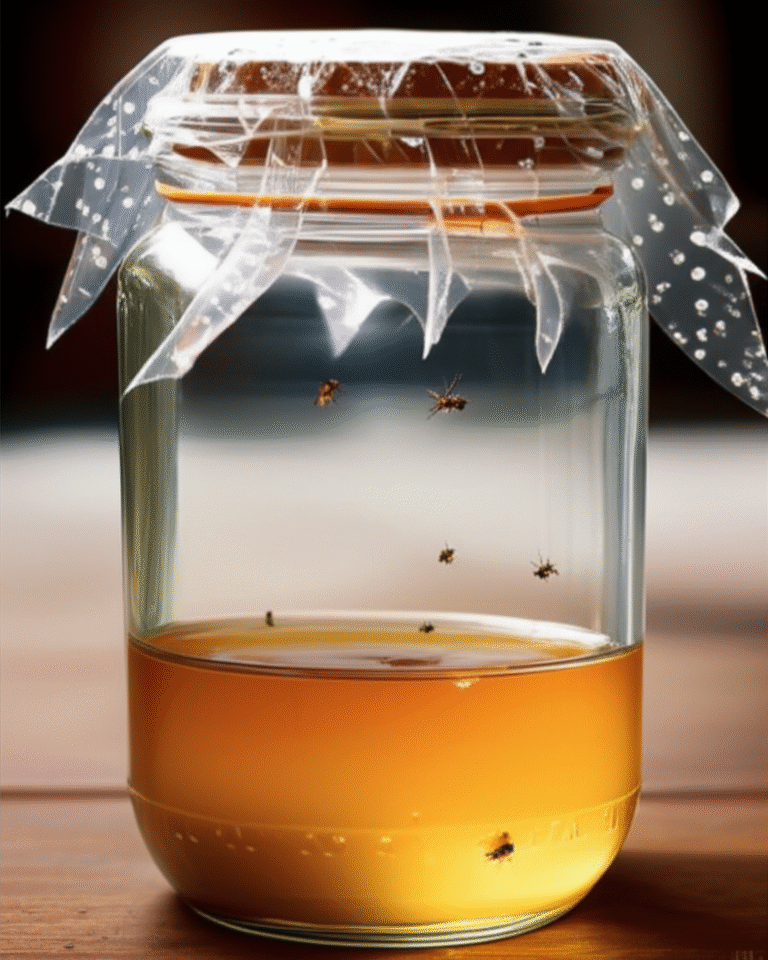
Add wine and soap to a cup or bowl, cover the top tightly with plastic wrap, and secure it with a rubber band. Make several small holes with a toothpick. The wrap helps limit access to the liquid, though it must be secured well and checked for tears.
Garden Therapy’s DIY fruit fly trap instructions also describe covering bait with plastic wrap and making entry holes. Its recipe offers wine, juice, or apple cider vinegar as possible bait choices, with a few drops of soap.
Pros: Helps contain splashes; simple household materials.
Cons: Large holes can make escape easier; tiny holes may not admit flies readily.
3. Paper-Funnel Wine Bottle Trap
Best for: A narrow-neck bottle when you want a contained bait setup.
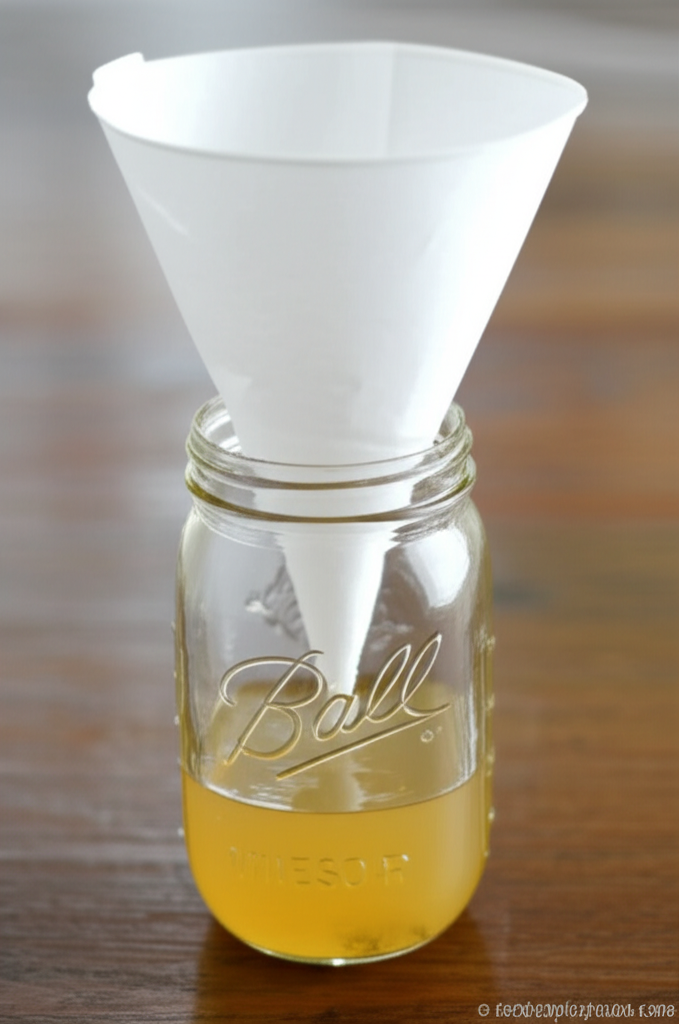
Put a small amount of wine and a drop of soap in a bottle, then make a paper funnel with a narrow opening at the bottom. Fit the funnel into the bottle without letting it touch the liquid.
Pros: Bottle is relatively stable; narrow opening can make exit less direct.
Cons: A poorly fitted funnel can fall in, and the trap is harder to inspect and clean.
4. Soapy Wine-Bubble Trap
Best for: People curious about an open bait surface and quick visual checks.
Mix wine and a drop of soap gently. If you’ve made a thick foam layer, let it settle before placing the trap. Foam is not the goal; too much bubbling can cover the liquid and make it harder to judge whether flies are reaching the bait.
5. Wine-Bottle Residue Trap
Best for: Using a nearly empty bottle rather than pouring fresh wine.
Leave a small amount of wine in the bottle, add a drop of soap, and place it upright near fly activity. The narrow neck may limit access and make the bottle less likely to spill than an open bowl. But a bottle with no soap may allow flies to land and leave, so add the soap if you’re using this as a drowning trap.
Pros: Reuses a bottle; small footprint.
Cons: Harder to monitor; residue may be too small or stale to attract flies.
🏆 Which Wine Fruit Fly Trap Works Best?
There isn’t one champion design for every kitchen. An open bowl is quick and releases odor well; a covered trap can be less exposed, but hole size and placement matter. Our practical pick: start with a shallow, open bowl in a safe location, then switch to a covered design if spills or curious pets are a concern.
Open Bowl vs. Covered Trap
| Feature | Open bowl | Plastic-wrap cover |
|---|---|---|
| Setup | Very easy | Requires wrap and holes |
| Bait odor | Spreads freely | May be somewhat restricted |
| Spill protection | Low | Better, if secured |
| Monitoring | Easy | Easy to check, but holes can complicate access |
| Best use | Stable, inaccessible spot | Where accidental contact is more likely |
Wine vs. Apple Cider Vinegar
Both can provide fermenting or fruity odors. Use whichever bait attracts flies in your kitchen and is convenient. Apple cider vinegar is a popular alternative, while wine can make good use of leftovers. Garden Therapy lists wine, juice, and apple cider vinegar among possible bait options; it also recommends adding a piece of fruit to strengthen the lure.
| Bait | Potential advantage | Potential drawback |
|---|---|---|
| Wine | Convenient if already open; fermented-fruit aroma | Some wines may attract less than expected |
| Apple cider vinegar | Common household alternative | May compete with other food odors |
| Juice | Handy and sweet-smelling | Sweet liquid alone may not match fermenting bait |
| Overipe fruit piece | Adds a strong fruit odor | Can become messy and needs frequent disposal |
Dish Soap vs. No Soap
Without soap, a fly may land on the liquid and remain at the surface. With soap, the liquid is more likely to wet the insect and make escape difficult. That does not mean every fly that approaches will be caught. Trap shape, bait strength, and competing food sources all affect results.
🔍 Why Your Wine and Soap Trap May Not Be Catching Flies
Common Setup Mistakes
- The bait is far from the flies. Place it where you actually see activity.
- The kitchen has a stronger lure. A sticky recycling bin or overipe fruit may outcompete the trap.
- There’s too much soap or foam. Start with 1–2 drops.
- The liquid has dried or become dirty. Refresh it.
- The fly is misidentified. Fungus gnats and drain flies need different source-control steps.
- The trap is treated as the whole solution. Adult traps don’t clean the breeding site.
For persistent activity, use our persistent fruit fly troubleshooting guide. The University of California Statewide Integrated Pest Management Program also recommends sanitation and source removal as central control measures.
When to Refresh the Bait
Check the trap every day. Replace it when the liquid is dirty, the odor has faded, the bait has evaporated, or the container has caught enough flies to make it unpleasant. Garden Therapy suggests replacing its trap after 1–2 days if needed and refreshing it when full. Conditions vary, so use the trap’s appearance and activity as your guide.
How to Tell Fruit Flies from Drain Flies and Fungus Gnats
| Pest | Common clue | Likely place to inspect |
|---|---|---|
| Fruit fly | Often seen around ripe produce, fermented drinks, or food residue | Fruit bowl, bins, recycling, spills |
| Fungus gnat | Tiny, delicate flies near houseplants | Damp poting mix and plant saucers |
| Drain fly | Small, fuzzy-looking fly that rests near sinks or drains | Drain slime and nearby damp areas |
This quick guide is not a formal identification key. If the insects keep appearing after you remove food sources, observe where they gather and compare them with the University of Minnesota Extension’s fruit fly guidance and University of California IPM’s drain fly information.
🧹 Find and Remove the Fruit Fly Breding Source
A trap can catch adults, but source removal is what makes the population stop replenishing. We’ve inspected plenty of “mysterious” outbreaks that turned out to be a forgotten onion, a sticky bottle, or a compost caddy hiding behind the bin. 🔎
Check Produce, Trash, and Recycling
- Discard overipe or decaying fruit and vegetables.
- Rinse cans, bottles, and jars before recycling.
- Clean the bottom and lid of the trash bin.
- Wash compost containers regularly and empty them frequently.
- Wipe up juice, wine, and syrup spills as soon as you spot them.
The National Pesticide Information Center advises reducing food sources and keeping food waste areas clean. That’s less dramatic than a trap full of flies, but much more useful over time.
Clean Drains and Hidden Spills
Inspect the drain opening, garbage disposal area, and the underside of sink strainers. Remove visible food debris and scrub surfaces with an appropriate brush and cleaner. Follow the product label and your plumbing manufacturer’s advice.
Don’t mix household cleaners. In particular, never combine bleach with ammonia or acidic cleaners. The U.S. Centers for Disease Control and Prevention warns that mixing bleach with certain products can produce dangerous gases. A fruit fly problem is not a reason to turn your sink into a chemistry experiment.
Inspect Houseplants and Other Damp Spots
If the insects hover around plants rather than produce, let the top layer of poting mix dry as appropriate for the plant, empty standing water from saucers, and avoid overwatering. For suspected drain flies, focus on organic buildup in drains rather than pouring a fruit-fly trap into the sink.
Not sure which source fits? Our best practices for fruit fly traps cover placement, maintenance, and troubleshooting.
🛡️ Prevent Fruit Flies from Coming Back
Store Fruit and Food Properly
- Refrigerate ripe fruit you won’t eat soon.
- Keep cut fruit covered and promptly refrigerate leftovers.
- Rinse produce as appropriate and dry it before storage.
- Don’t leave sweet drinks or food uncovered overnight.
Keep Kitchen Bins and Counters Clean
Rinse beverage containers, wipe counters, clean under small appliances, and take out food waste regularly. A clean kitchen won’t guarantee that fruit flies never arrive, but it removes the easy food sources that help them stick around.
Maintain Drains and Compost Containers
Use a drain brush and suitable cleaner to remove residue where recommended; empty and wash compost containers routinely. If the flies persist, keep checking for a hidden source rather than adding more and more bait. For broader control options, browse commercial fruit fly traps.
⚠️ Safety, Cleanup, and Pet Considerations
- Place traps out of reach of children and pets. Wine and dish soap are not safe for drinking.
- Choose a stable container and avoid placing it near food preparation.
- Use only a small amount of soap; follow its label.
- Empty the trap carefully, wash the container with hot soapy water, and wash your hands.
- Don’t pour a large quantity of soapy bait into a drain; dispose of it according to local guidance.
- Never mix cleaning products. Read labels before using drain or surface cleaners.
🌿 Wine Trap Alternatives for Persistent Fruit Flies
If wine isn’t attracting the flies, try a different bait rather than endlessly increasing the soap:
- Apple cider vinegar with a drop of dish soap
- A small piece of overipe fruit with a little liquid bait
- A purpose-made fruit fly trap, if you want a contained, ready-to-use option
A homemade trap is inexpensive and convenient, but it won’t fix a continuing breeding source. If the flies keep returning after cleanup, identify the insect and inspect drains, bins, produce, and houseplants. Our guide to dealing with persistent fruit flies walks through that detective work.