Support our educational content for free when you purchase through links on our site. Learn more
How Do You Make Homemade Fruit Fly Solution? 7 Killer Recipes 🍎 (2025)

If you’ve ever been trapped in a kitchen siege by those tiny, relentless fruit flies, you know the frustration all too well. These miniature invaders multiply faster than you can say “apple cider vinegar,” turning your fresh fruit bowl into a buzzing battleground. But fear not! We at Fruit Fly Traps™ have distilled years of pest-fighting wisdom into 7 battle-tested homemade fruit fly solutions that actually work—no expensive sprays or fancy gadgets required.
Did you know a single female fruit fly can lay up to 500 eggs in her lifetime, with eggs hatching in less than 48 hours? That’s why quick, effective action is crucial. In this guide, we’ll walk you through the science behind why these solutions work, reveal the secret ingredient that makes all the difference, and share real-life stories from the front lines of fruit fly warfare. Plus, we’ll help you avoid common mistakes that keep flies buzzing back for more. Ready to reclaim your kitchen? Let’s dive in!
Key Takeaways
- Apple cider vinegar + dish soap = the ultimate fruit fly trap—the soap breaks surface tension, ensuring flies drown.
- Seven proven DIY recipes include boozy baits, yeast fermentation traps, and sticky honey solutions.
- Sanitation is your secret weapon—removing breeding grounds is essential for lasting success.
- Don’t overlook hidden hotspots like drains, garbage disposals, and recycling bins.
- Patience pays off—fruit fly life cycles mean traps may take several days to clear an infestation.
For more expert DIY tips, check out our DIY Fruit Fly Traps and Fruit Fly Trap Ingredients categories!
Table of Contents
- ⚡️ Quick Tips and Facts: Your Fast Track to Fruit Fly Freedom
- 🔬 The Tiny Terrors: A Deep Dive into Fruit Fly Biology & Behavior
- 🧪 The Science of the Swat: How Homemade Solutions Really Work
- DIY Fruit Fly Solutions: Our Top 7 Battle-Tested Recipes!
- 🍎 The Classic Apple Cider Vinegar Trap: Sweet & Sour Success
- 🍷 The Boozy Bait: Wine or Beer Trap for Sophisticated Swatters
- 🧼 The Dish Soap Secret: Breaking Surface Tension for Total Take-Down
- 🍌 Nature’s Lure: The Overripe Fruit Trap
- 🥛 The Old-School Elixir: Milk, Sugar, and Pepper Trap
- 🍯 Sticky Sweet Success: Honey or Syrup Solutions
- 🍞 The Fermentation Fix: Yeast and Sugar Power
- 🚫 Beyond the Trap: Advanced Strategies for Total Fruit Fly Annihilation
- 🛡️ Preventing Future Invasions: Your Long-Term Defense Plan
- ❌ Common Missteps: What NOT to Do in Your Fruit Fly Fight
- 🧐 Who’s Who in the Tiny Pest World? Fruit Flies vs. Gnats vs. Drain Flies
- 📞 When to Call in the Big Guns: Professional Pest Control Expertise
- 📖 Our “Fruit Fly Traps™” Field Notes: Real Stories from the Front Lines
- Conclusion: Reclaiming Your Kitchen, One Fly at a Time
- 🔗 Recommended Links: Dive Deeper into Pest Control
- ❓ FAQ: Your Most Pressing Fruit Fly Questions Answered
- 📚 Reference Links: Our Sources & Further Reading
Here is the main body content for your blog post, crafted by the expert team at “Fruit Fly Traps™”.
⚡️ Quick Tips and Facts: Your Fast Track to Fruit Fly Freedom
Don’t have time to read the whole saga of our war against these tiny tyrants? We get it. You’ve got flies to fight. Here’s the intel you need, right now:
- The Enemy: The common fruit fly, or Drosophila melanogaster, is a tiny, red-eyed menace drawn to fermenting goodies.
- Rapid Reinforcements: A single female can lay up to 500 eggs in her short life, and those eggs hatch in as little as 24-30 hours. As Orkin puts it, “What they lack in size, they make up in numbers.”
- The Ultimate Lure: Apple Cider Vinegar (ACV) is your best friend. Its scent mimics the smell of rotting fruit, which is basically a five-star review on Yelp for a fruit fly.
- The Secret Weapon: A single drop of dish soap is non-negotiable. It breaks the surface tension of your liquid bait, ensuring the flies sink and drown instead of just having a little drink and flying off to tell their friends.
- Prevention is Paramount: The best trap is a clean kitchen. Store ripe fruit in the fridge, take out the trash and recycling daily, and wipe up spills immediately.
- Check Your Drains: Don’t forget the gunk in your kitchen sink drain and garbage disposal. It’s a fruit fly’s favorite nursery.
🔬 The Tiny Terrors: A Deep Dive into Fruit Fly Biology & Behavior
Ever feel like you’re being watched, only to find a cloud of tiny specks hovering over your banana? You’re not going crazy. You’ve just met the uninvited guest that never wants to leave. To defeat your enemy, you must know your enemy.
🔍 Fruit Flies 101: Unmasking Drosophila melanogaster
Let’s get up close and personal. The common fruit fly is a marvel of evolution, perfectly designed to annoy you.
| Feature | Description |
|---|---|
| Scientific Name | Drosophila melanogaster |
| Size | A minuscule 3-4 millimeters long. |
| Appearance | Brownish-yellow body, and those signature creepy red eyes. |
| Lifespan | About 40-50 days of pure, unadulterated chaos. |
| Reproduction | A female lays eggs “every single day, about 50 of them,” as noted in the video guide on fruit fly traps. This is why one fly yesterday is fifty flies tomorrow. |
These aren’t just random bugs; they are highly efficient breeding machines. They lay their eggs on or near the surface of fermenting food, which means that piece of fruit you brought home from the store could have been a Trojan horse. For more fascinating tidbits, check out our Fruit Fly Facts category.
🏡 Why Your Home is a Fruit Fly Five-Star Resort: Understanding Infestation Triggers
Why did they choose your kitchen for their family reunion? It’s simple: you’re offering an all-inclusive package.
- Gourmet Dining 🍓: That bowl of ripening peaches on your counter? It’s a Michelin-star restaurant. Spilled juice behind the toaster? A trendy pop-up bar. They are drawn to the yeast in ripening and rotting produce.
- Cozy Nurseries 🗑️: Fruit flies need a moist, fermenting surface to lay their eggs. Prime real estate includes:
- Overripe fruit and vegetables left out.
- The bottom of your garbage can or recycling bin.
- Gooey residue in your sink drain or garbage disposal.
- Even a damp sponge or mop can become a breeding ground.
- The Open Bar 🍷: A splash of spilled wine, a sticky beer bottle in the recycling, or that forgotten can of soda are all irresistible invitations.
Essentially, if it’s sweet, sticky, or starting to ferment, it’s a magnet for these pests.
🧪 The Science of the Swat: How Homemade Solutions Really Work
Before we dive into our top-secret recipes, let’s talk about the elegant, simple science behind a good homemade fruit fly solution. Every effective trap, including the popular water bottle fruit fly trap, operates on two basic principles:
- Attraction (The Lure): You need something that smells absolutely divine to a fruit fly. Think fermentation. The sharp, sweet scent of vinegar (especially apple cider vinegar) or the aroma of rotting fruit releases volatile organic compounds that scream “Come on in, the food’s great!”
- Entrapment (The Takedown): Getting them to the party is only half the battle. You need to make sure they can’t leave. This is usually achieved in one of two ways:
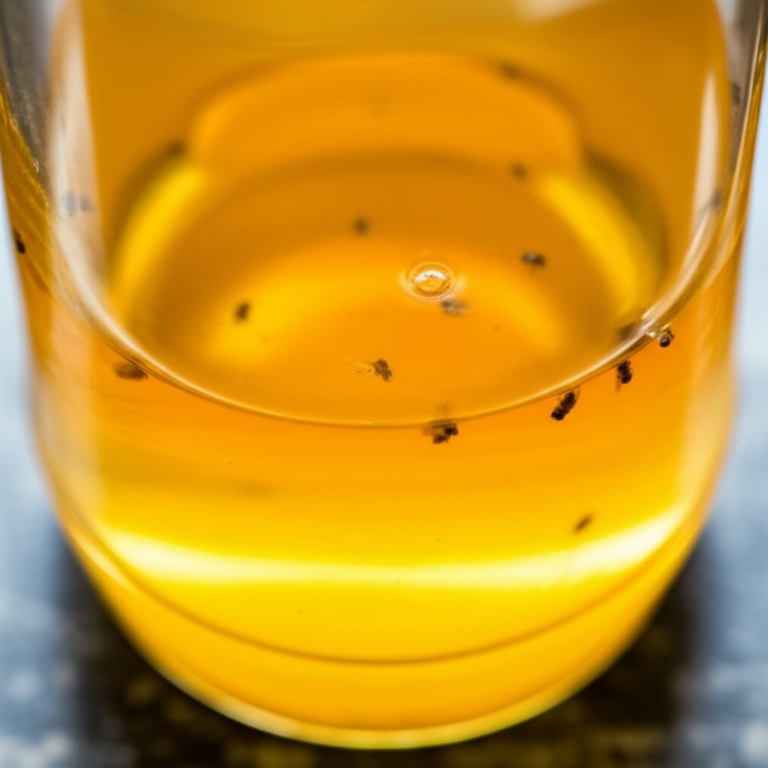
- Drowning: This is where the magic of dish soap comes in. Liquids have something called surface tension, which is strong enough for a lightweight fly to stand on. A drop of soap breaks that tension, causing any fly that lands for a sip to immediately sink. Game over.
- Physical Barrier: This involves a funnel or small holes (made with plastic wrap or a jar lid) that make it easy for the fly to get in but nearly impossible for its tiny brain to figure out how to get out.
Combine a great lure with a deadly takedown, and you’ve got yourself a fruit fly graveyard.
DIY Fruit Fly Solutions: Our Top 7 Battle-Tested Recipes!
Alright, team, this is where the rubber meets the road. We’ve seen it all, and we’ve tested it all. While there are dozens of concoctions out there, these are the seven homemade fruit fly solutions that have proven their worth in the trenches. Explore all our DIY Fruit Fly Traps for even more ideas!
1. 🍎 The Classic Apple Cider Vinegar Trap: Sweet & Sour Success
This is the undisputed champion for a reason. It’s simple, cheap, and brutally effective.
- What You’ll Need:
- A small jar or bowl
- Apple Cider Vinegar (ACV)
- Liquid dish soap (we find Dawn works wonders)
- Plastic wrap and a rubber band (optional, but recommended)
- Step-by-Step Instructions:
- Pour about an inch of ACV into your jar.
- Crucial Step: Add 1-2 drops of dish soap. Don’t skip this!
- Give it a gentle swirl.
- (Optional) Cover the jar with plastic wrap and secure it with a rubber band.
- (Optional) Poke a few small holes in the plastic wrap with a toothpick. This creates that physical barrier we talked about.
- Expert Insight: The folks at Taste of Home did a test and found that raw, unfiltered apple cider vinegar (like Bragg) was more effective than the clear, filtered stuff. We wholeheartedly agree! Those little bits of “mother” in the vinegar likely give it a more potent, fermented scent.
2. 🍷 The Boozy Bait: Wine or Beer Trap for Sophisticated Swatters
Got a bit of leftover red wine or stale beer? Don’t toss it! Fruit flies are tiny lushes and can’t resist the smell of old booze.
- What You’ll Need:
- A jar or bottle
- A small amount of red wine or beer
- Dish soap
- Step-by-Step Instructions:
- Leave about an inch of wine or beer in the bottom of the bottle or pour it into a jar.
- Add a drop of dish soap and swirl.
- The narrow neck of a beer or wine bottle naturally acts as a funnel, but for a wide-mouthed jar, you can add a paper funnel as suggested by Good Housekeeping.
- Anecdote: One of our technicians, Dave, swears by this method. He once cleared out an infestation at a client’s wine bar using nothing but dregs from a few Merlot bottles and a squirt of soap. The flies checked in, but they didn’t check out.
3. 🧼 The Dish Soap Secret: Breaking Surface Tension for Total Take-Down
We’ve mentioned it twice already, but this is so important it deserves its own section. Dish soap is the MVP of homemade fruit fly solutions. Without it, you’re just setting up a watering hole for the enemy. The soap acts as a surfactant, breaking the surface tension of the liquid. When the fly lands for a drink, it falls right in and drowns. It’s the difference between a minor inconvenience and a major victory.
4. 🍌 Nature’s Lure: The Overripe Fruit Trap
Sometimes you have to fight fire with fire. Using the very thing that attracted them in the first place can be an effective strategy.
- What You’ll Need:
- A jar
- A piece of very ripe or rotting fruit (banana is fantastic)
- Plastic wrap or a paper funnel
- Step-by-Step Instructions:
- Place the piece of fruit in the bottom of the jar. Mash it up a bit to release the scent.
- Cover the jar with plastic wrap and poke holes, or insert a paper cone.
- A Word of Caution: While this method, recommended by sources like Orkin, does work, the Taste of Home test found it captured zero flies on its own. Our pro tip: Add a splash of vinegar and a drop of dish soap to the fruit mash to make it a truly inescapable death pit.
5. 🥛 The Old-School Elixir: Milk, Sugar, and Pepper Trap
This is an old farmer’s almanac-style recipe that you’ll see floating around the internet. Does it work? Well…
- The Recipe: Gently heat 1/2 cup of milk, 2 tsp of sugar, and some ground pepper in a saucepan. Pour it into a shallow dish.
- The Verdict: The Taste of Home experiment captured a measly 3 flies with this method, and they had trouble telling them apart from the pepper flakes.
- Our Take: ❌ We’d file this one under “interesting but ineffective.” Stick to the vinegar-based solutions. There are better uses for your milk and sugar.
6. 🍯 Sticky Sweet Success: Honey or Syrup Solutions
If you’d rather trap them like, well, flies on flypaper, a sticky solution can work.
- Method 1 (Drowning): Mix honey or corn syrup with vinegar in a jar and add dish soap. The extra sweetness can be a powerful attractant.
- Method 2 (Sticky Trap): Smear a thin layer of honey on a yellow index card or piece of cardboard. The color yellow can also attract some flying pests.
- Drawback: This can be a messy option, and less effective for a large infestation than a drowning trap.
7. 🍞 The Fermentation Fix: Yeast and Sugar Power
Want to create a fresh fermentation factory? Yeast is the answer.
- What You’ll Need:
- A tall glass or jar
- A packet of active dry yeast
- A teaspoon of sugar
- Warm water
- Step-by-Step Instructions:
- Fill the glass about halfway with warm water.
- Stir in the sugar until it dissolves.
- Sprinkle the yeast on top. It will activate and start to bubble.
- Add a drop of dish soap. The CO2 released by the yeast is a powerful attractant.
🚫 Beyond the Trap: Advanced Strategies for Total Fruit Fly Annihilation
Traps are fantastic for capturing the adult flies that are currently buzzing around your head. But to win the war, you have to think like a general. You need to cut off their supply lines and destroy their breeding grounds.
🧹 Source Elimination: Your First Line of Defense Against Fruit Fly Breeding
This is the single most important thing you can do. You cannot trap your way out of an infestation if you don’t remove the source.
- The Fruit Bowl: Inspect all fruit and vegetables. Anything that is overripe, bruised, or starting to ooze needs to be eaten, refrigerated, or composted immediately.
- The Trash Can: Take out the trash and recycling daily. Tie the bag tightly. A single sticky bottle or piece of fruit peel can sustain a population.
- The Sink: This is a sneaky one. Scrub your sink and garbage disposal thoroughly. Pouring boiling water down the drain can help, but for a real clean-out, use a dedicated drain cleaner.
- Spills & Crumbs: Wipe down counters, clean under appliances, and check for any sticky residue from juice, wine, or other sweet liquids.
🌬️ Environmental Control: Making Your Home Less Hospitable
Fruit flies thrive in warm, moist, and still environments. Make your kitchen less inviting:
- Airflow: A small fan directed over your fruit bowl can create enough of a breeze to deter flies from landing and laying eggs.
- Humidity: Fix any leaky faucets or pipes. Dry out damp sponges and dishcloths completely between uses.
🛒 Commercial Allies: When Store-Bought Solutions Lend a Hand
While we’re huge fans of DIY, sometimes you want a pre-made, set-it-and-forget-it solution. Many commercial traps work on the same principles as our homemade versions but are often designed to be more discreet or longer-lasting. Check out our Fruit Fly Trap Reviews for in-depth analysis.
Here are a couple of brands we’ve seen work well in the field:
- TERRO Fruit Fly Traps: These are little apple-shaped traps that use a liquid lure. They’re discreet and very popular.
- Aunt Fannie’s FlyPunch: This brand uses a non-toxic formula that is quite effective. The “Just Add Vinegar” aspect of some products is also convenient.
👉 Shop Top-Rated Fruit Fly Traps on:
- TERRO Fruit Fly Trap: Amazon | Walmart
- Aunt Fannie’s FlyPunch: Amazon | Thrive Market | Aunt Fannie’s Official Website
🛡️ Preventing Future Invasions: Your Long-Term Defense Plan
You’ve won the battle. The buzzing has ceased. Now, how do you make sure the peace treaty holds? It’s all about creating a fortress that fruit flies can’t breach.
✅ The Ultimate Kitchen Hygiene Checklist: Starve Them Out!
- Daily Duties:
- Wipe down all countertops and your stovetop.
- Sweep the floor for crumbs.
- Rinse all dishes or place them directly in the dishwasher.
- Take out the trash, compost, and recycling.
- Rinse any bottles or cans before recycling.
- Weekly Warfare:
- Wipe down the inside of your trash cans.
- Clean your sink drain and garbage disposal. A mix of baking soda and vinegar followed by boiling water works well for maintenance.
- Check for and clean up any spills in your pantry or fridge.
- Mop the kitchen floor.
🍎 Produce Management Mastery: Keep Your Fruits Fly-Free
- Wash It: As soon as you bring produce home, give it a good wash. This can remove any eggs that may already be on the surface.
- Refrigerate It: Once fruit (like bananas, peaches, and tomatoes) ripens, move it to the refrigerator. This dramatically slows down the ripening process and halts the fruit fly life cycle.
- Contain It: If you must keep fruit on the counter, consider a fruit bowl with a mesh cover.
💧 Drain Maintenance Deep Dive: Eliminating Hidden Breeding Grounds
We can’t stress this enough: your drain is a dark, damp paradise filled with organic gunk. It’s a fruit fly’s dream home.
- Mechanical Clean: Use a stiff drain brush to physically scrub the inside of the pipe and the underside of your garbage disposal’s rubber flange.
- Enzymatic Cleaners: Use a product with enzymes that specifically break down organic matter. These are safer for your pipes than harsh chemical drain openers.
- The Boiling Water Flush: A regular flush with boiling water can help keep things clear.
❌ Common Missteps: What NOT to Do in Your Fruit Fly Fight
We’ve seen some real blunders in our day. Avoid these common mistakes to make your efforts more effective.
- Forgetting the Soap: We’ll say it one last time. Vinegar alone is just a snack bar. Vinegar with soap is a death trap.
- Making Holes Too Big: If you’re using the plastic wrap method, the holes only need to be big enough for a fly to crawl through. If they’re too big, the flies can find their way back out.
- Ignoring the Source: Setting out a dozen traps in a dirty kitchen is like trying to bail out a sinking boat with a teaspoon. You’re fighting the symptom, not the cause.
- Giving Up Too Soon: You’ve cleaned everything and set your traps. The next day, you see a few more flies. Don’t despair! These could be newly hatched adults. It can take a few days to a week to completely break the life cycle. Stay vigilant!
🧐 Who’s Who in the Tiny Pest World? Fruit Flies vs. Gnats vs. Drain Flies
Are you sure you’re even fighting fruit flies? Misidentifying your foe can lead you to use the wrong tactics. Here’s a quick field guide to tell these tiny terrors apart.
| Pest | Appearance | Hangout Spot | Best Trap/Solution |
|---|---|---|---|
| Fruit Fly | Tan/brown body, stout, red eyes. | Around ripening fruit, trash cans, recycling bins. | Apple Cider Vinegar traps. |
| Fungus Gnat | Dark body, long legs (looks like a tiny mosquito). | Hovering around houseplants and soil. | Yellow sticky traps; letting soil dry out. |
| Drain Fly | Fuzzy, moth-like appearance, dark body. | On walls near sinks, showers, and drains. | Cleaning drains thoroughly with a brush and enzyme cleaner. |
If your traps aren’t working, take a closer look at the pest. You might be fighting a gnat problem with a fruit fly solution.
📞 When to Call in the Big Guns: Professional Pest Control Expertise
We’re all for the satisfaction of a good DIY solution. But sometimes, an infestation is just too overwhelming. If you’ve followed all the steps—cleaned obsessively, removed all sources, and set multiple traps—and you’re still living in a fly-nado after a week or two, it might be time to call for backup. A professional can help identify a hidden breeding source you may have missed, like a spill under a heavy appliance or a plumbing issue. For more on this, see our advice on Dealing with Persistent Fruit Flies.
📖 Our “Fruit Fly Traps™” Field Notes: Real Stories from the Front Lines
Let me tell you about the Great Juice Bar Invasion of ’22. We got a call from a frantic business owner. Her trendy new juice bar was overrun. Customers were complaining, and she was at her wit’s end. We arrived to find a cloud of fruit flies that would make a horror movie director jealous.
She had set out a few bowls of vinegar, but she’d forgotten the soap. The flies were having a pool party. The real culprit, though, was hidden. A crate of organic mangoes in the back storeroom had a few rotten ones at the bottom, leaking sticky juice onto the floor. It had created a massive, hidden breeding ground.
We deployed a two-pronged attack: a deep clean of the source (the mango massacre) and the strategic placement of large, commercial-grade vinegar traps (with plenty of soap!). Within 48 hours, the bar was back to being a peaceful, fly-free oasis. It was a textbook reminder: traps manage the adults, but sanitation wins the war.
Conclusion: Reclaiming Your Kitchen, One Fly at a Time

There you have it—a comprehensive, no-nonsense guide to making homemade fruit fly solutions that actually work. From the classic apple cider vinegar trap to the yeast-powered fermentation fix, we’ve armed you with the knowledge and recipes to wage war on these tiny invaders. Remember, the secret sauce is always the dish soap—without it, your trap is just a fancy fruit salad.
But traps alone won’t win the battle. As our field notes from the Great Juice Bar Invasion of ’22 remind us, sanitation is king. Remove the breeding grounds, keep your kitchen spotless, and maintain vigilance. Fruit flies may be small, but their breeding speed is nothing short of legendary. Patience and persistence are your allies.
If you’re tempted by commercial options, brands like TERRO and Aunt Fannie’s FlyPunch offer effective, ready-made traps that complement your DIY efforts. For stubborn infestations, don’t hesitate to call in professional pest control experts who can uncover hidden sources.
So, are you ready to say goodbye to those buzzing nuisances? With these homemade solutions and expert tips, your kitchen will soon be a fruit fly-free zone. 🍎🧼🚫
🔗 Recommended Links: Dive Deeper into Pest Control
Ready to gear up? Check out these trusted products and resources to keep your home fruit fly-free:
-
Apple Cider Vinegar (Bragg Raw Unfiltered):
Amazon | Bragg Official Website -
Aunt Fannie’s FlyPunch:
Amazon | Aunt Fannie’s Official Website -
Active Dry Yeast (Fleischmann’s):
Amazon -
Books on Pest Control and DIY Traps:
“The Organic Gardener’s Handbook of Natural Pest and Disease Control” by Fern Marshall Bradley & Barbara W. Ellis
Amazon“The Complete Guide to Pest Control and Prevention” by Gerard M. Keirns
Amazon
❓ FAQ: Your Most Pressing Fruit Fly Questions Answered

What ingredients are needed for a homemade fruit fly trap solution?
The core ingredients are apple cider vinegar (preferably raw and unfiltered), liquid dish soap, and optionally, overripe fruit or yeast and sugar for fermentation traps. The vinegar acts as the attractant, mimicking the smell of fermenting fruit, while the dish soap breaks the surface tension of the liquid, causing flies to drown. Overripe fruit or yeast mixtures add additional scent profiles to lure flies.
Read more about “Fruit Fly Infestation: 12 Expert Hacks to Crush the Swarm (2025) 🪰”
How effective is apple cider vinegar for trapping fruit flies?
Apple cider vinegar is highly effective because it closely mimics the aroma of fermenting fruit, which fruit flies find irresistible. Studies and field tests, including those by Taste of Home, have shown that raw, unfiltered apple cider vinegar traps capture significantly more fruit flies than other baits. Its accessibility and safety make it the go-to ingredient for DIY traps.
Read more about “7 Non-Toxic Fruit Fly Elimination Techniques That Actually Work 🪰 (2025)”
Can dish soap improve the fruit fly solution’s trapping ability?
Absolutely! Dish soap is the game-changer in homemade traps. Without it, fruit flies can land on the liquid surface and fly away unharmed. Dish soap reduces the surface tension, causing flies to sink and drown. Even a single drop is enough to turn your vinegar into a lethal trap.
How do you set up a fruit fly trap using homemade solution?
- Pour about an inch of apple cider vinegar into a small jar or bowl.
- Add 1-2 drops of liquid dish soap and gently swirl.
- Cover the container with plastic wrap and secure it with a rubber band.
- Poke small holes in the plastic wrap just big enough for flies to enter.
- Place the trap near fruit fly hotspots like fruit bowls, trash cans, or sinks.
Alternatively, use a soda bottle trap by cutting the bottle and inverting the top half to form a funnel.
How often should you replace the homemade fruit fly trap solution?
Replace the solution every 3-5 days or sooner if it becomes cloudy or full of drowned flies. Fresh bait ensures the scent remains potent and the trap stays effective. Regular replacement also prevents mold or bacterial growth.
Read more about “… How to Make a Fruit Fly Trap with a Water Bottle: The Ultimate Guide”
Are there natural alternatives to chemical fruit fly sprays?
Yes! Homemade traps using vinegar, yeast, and dish soap are natural and non-toxic. Additionally, maintaining cleanliness, storing produce properly, and using essential oils like lavender or lemongrass can deter fruit flies. Commercial natural products like Aunt Fannie’s FlyPunch use plant-based ingredients to safely trap flies without harsh chemicals.
What are common mistakes to avoid when making fruit fly traps at home?
- Skipping the dish soap: Without it, flies won’t drown.
- Making holes too large: Flies can escape if holes are too big.
- Ignoring breeding sources: Traps won’t solve infestations if overripe fruit or dirty drains remain.
- Not replacing bait regularly: Old bait loses effectiveness.
- Misidentifying pests: Gnats and drain flies require different treatments.
Read more about “Indoor Fruit Fly Control: 7 Proven Tricks to Banish Flies Fast 🪰 (2025)”
📚 Reference Links: Our Sources & Further Reading
- Orkin: Apple Cider Vinegar Fruit Fly Traps
- Good Housekeeping: Best Homemade Fly Trap
- Taste of Home: Found a Homemade Fruit Fly Trap That Actually Works
- Bragg Apple Cider Vinegar Official Site
- Aunt Fannie’s Official Website
- Dawn Dish Soap on Amazon
- Fleischmann’s Active Dry Yeast
For more DIY tips and expert advice, visit our Fruit Fly Trap Ingredients and Dealing with Persistent Fruit Flies categories.
With these insights and tools, you’re more than ready to outsmart and outtrap those pesky fruit flies. Happy trapping! 🍎🧼🐝