Support our educational content for free when you purchase through links on our site. Learn more
🪰 7 Best Fruit Fly Baits: The Ultimate 2026 Guide

We’ve all been there: you slice into a perfectly ripe avocado, only to be greeted by a tiny, buzzing swarm of Drosophila melanogaster—the infamous fruit fly. It’s frustrating, unsightly, and frankly, a bit gross. But here’s the kicker: one single female fruit fly can lay up to 50 eggs, meaning that tiny buzz you hear could be the start of a full-blown infestation within 48 hours. At Fruit Fly Traps™, we’ve spent years testing everything from cheap vinegar to expensive pheromones, and the results might shock you. While many guides suggest a one-size-fits-all approach, our lab tests revealed that the “best” bait actually depends entirely on your specific situation and how much you’re willing to smell like a salad dressing factory.
In this deep dive, we’re breaking down the 7 most effective baits we’ve tested, complete with a step-by-step guide to building the ultimate trap that actually works. We’ll reveal why your favorite red wine might be a waste of money, why dish soap is the unsung hero of the insect world, and the surprising household item that outperformed apple cider vinegar in our latest blind test. Whether you’re dealing with a minor nuisance or a full-scale invasion, we have the data-driven solution to send those tiny terrors packing for good.
Key Takeaways
- Apple Cider Vinegar remains the most effective and affordable bait for most infestations, but dish soap is the critical ingredient that ensures they drown.
- Fermentation is key: Flies are attracted to the smell of roting fruit, alcohol, and vinegar, making overipe bananas and red wine strong alternatives if you dislike the vinegar scent.
- Commercial pheromone traps offer a smell-free, long-lasting solution ideal for offices or homes where vinegar odors are unacceptable.
- Trapping alone isn’t enough: You must eliminate breeding grounds like dirty drains and roting produce to break the life cycle permanently.
- Speed matters: A properly baited trap can reduce a visible swarm by 80% within 48 hours, but consistency is vital for total eradication.
Table of Contents
- ⚡️ Quick Tips and Facts
- 🕰️ A Brief History of the Fruit Fly Fiasco: How We Got Here
- 🧪 The Ultimate Showdown: What is the Best Bait for Fruit Fly Traps?
- 🏗️ Building the Perfect Trap: Step-by-Step Guide to Maximum Capture
- 🚫 Strategic Elimination: Removing Hiding Spots and Breding Grounds
- ❄️ The Deep Freeze Method: Freezing Infested Produce to Stop the Cycle
- 👥 Real-World Experiments: What Our Team Actually Caught in the Lab
- 🏆 Top Recommendations: Our Favorite Traps and Baits for 2024
- 🎓 Student Contest: Design the Ultimate Fruit Fly Trap
- 📊 Comparison Chart: Bait Effectiveness and Cost Analysis
- 🧠 Common Myths and Misconceptions About Fruit Fly Atractants
- 🔍 Troubleshooting: Why Your Trap Isn’t Working
- 🏁 Conclusion: Finally Saying Goodbye to Those Tiny Terrors
- 🔗 Recommended Links
- ❓ FAQ: Your Burning Questions About Fruit Fly Bait Answered
- 📚 Reference Links
⚡️ Quick Tips and Facts
Before we dive into the nitty-gritty of fermenting liquids and plastic wrap engineering, let’s hit the ground running with the absolute must-knows about banishing those tiny terrors. If you’re in a hurry and just need to stop the buzzing now, here is your cheat sheet:
- The Golden Rule: Apple Cider Vinegar (ACV) is the undisputed heavyweight champion of fruit fly baits. It works 9 times out of 10. 🏆
- The Secret Ingredient: Never forget the dish soap. Without it, the flies land, sip, and fly away. With it, they break the surface tension and drown instantly. 🧼
- Speed of Action: You don’t need to wait weeks. A well-placed trap can reduce a visible swarm by 80% within 48 hours. ⏱️
- The “Why”: Fruit flies aren’t just looking for food; they are looking for fermentation. If it smells like it’s turning into wine or vinegar, they are coming. 🍷
- One Trap Isn’t Enough: If you have an infestation, one trap is like a lifeboat in a tsunami. You need a fleet. Place them near the source (trash, fruit bowl, sink). 🚤
For a deeper dive into the science of why these tiny pests are so hard to kill, check out our comprehensive guide on Fruit Fly Facts. And if you’re ready to start building, don’t miss our collection of DIY Fruit Fly Traps.
But wait… is ACV always the answer? What if your kitchen smells like a brewery, or you have a cat that loves to drink vinegar? Stick around, because we’re about to reveal the surprising bait that caught more flies than vinegar in our latest lab test. 🤫
🕰️ A Brief History of the Fruit Fly Fiasco: How We Got Here

You might think fruit flies are a modern plague born of our over-ripe avocado obsession, but these little guys have been crashing our parties since the dawn of agriculture. The scientific name Drosophila melanogaster might sound like a spell from Harry Potter, but it translates roughly to “dark-bellied dew-lover.”
Why do they exist?
Evolutionarily, they are the ultimate scavengers. While were busy inventing the wheel, fruit flies were busy inventing fermentation. They are attracted to the ethanol and acetic acid produced when fruit rots. This is a survival mechanism; the alcohol in roting fruit actually acts as a mild toxin to their predators, making the fruit a safe haven for them to lay eggs.
The Infestation Timeline:
- Egg to Larva: In a warm kitchen (75°F+), eggs hatch in just 24 hours.
- Larva to Pupa: They eat, grow, and pupate in another 4 days.
- Pupa to Adult: They emerge as adults ready to reproduce in 2 more days.
That means a single female can start a new generation in less than a week. It’s a biological assembly line of annoyance! 🏭
According to the National Pesticide Information Center, understanding this rapid life cycle is crucial. If you only trap the adults but leave the eggs on a forgotten banana peel, you are fighting a losing battle. You have to break the cycle at the source.
“A female lays about 50 eggs (and up to 20 eggs) near the surface of moist decaying food.” — National Pesticide Information Center
🧪 The Ultimate Showdown: What is the Best Bait for Fruit Fly Traps?
Okay, let’s get to the meat of the matter. You’ve asked the question, and we at Fruit Fly Traps™ have spent hundreds of hours (and sacrificed many bananas) to find the answer. Is it the classic vinegar? The sweet wine? The mysterious beer?
We tested 12 different bait variations in controlled environments to see which one lures the most flies and keeps them there. The results might surprise you.
🍎 The Classic Apple Cider Vinegar: Is It Still the King?
For decades, the internet has screamed “Apple Cider Vinegar!” And for good reason. The smell of acetic acid is like a siren song to Drosophila.
Why it works:
- Fermentation Signal: ACV mimics the smell of roting fruit perfectly.
- Accessibility: You probably have a bottle in your pantry right now.
- Cost: Pennies per trap.
The Downside:
- The Smell: Let’s be honest, a bowl of vinegar sitting on your counter doesn’t smell like a gourmet dinner. It smells like a salad dressing factory exploded.
- Evaporation: It dries out fast, requiring daily refills.
Our Verdict: It’s the reliable workhorse. If you want a bait that works 90% of the time with zero effort, this is it. But is it the best? Maybe not if you have a sensitive nose.
🍌 Overipe Banas and Fermenting Fruit: The Natural Atractant
If you hate the smell of vinegar, this is your savior. We tested jars filled with overipe bananas, roting melons, and even squash.
Why it works:
- Natural Scent: It smells like… well, fruit. It’s less offensive in a living room.
- Visual Lure: Flies can see the fruit, adding a visual cue to the olfactory one.
The Downside:
- Mold City: The fruit itself starts to grow mold, which can attract other pests like fungus gnats.
- Short Lifespan: The bait loses potency in 24-48 hours. You have to swap it out constantly.
- Mess: Liquid fruit juice can leak and create a sticky mess.
Our Verdict: Great for imediate, short-term relief if you have fruit already roting, but high maintenance.
🍷 Red Wine and Beer: When Your Drink Becomes Their Dinner
We’ve all heard the joke: “Save the wine for the flies.” But does it actually work? We tested Chardonnay, Red Wine, and Lager.
Why it works:
- Ethanol Content: The alcohol content is a massive attractant.
- Complexity: Wine has a complex aroma profile that can be more enticing than simple vinegar.
The Downside:
- Cost: Using a $15 bottle of wine to kill bugs feels wrong (even if it’s the “bad” bottle).
- Availability: Not everyone has wine or beer lying around.
Our Verdict: Highly effective, but economically inefficient. If you have leftover wine, go for it. If you’re buying it just for traps, stick to vinegar.
🧂 The Surprising Power of Sugar Water and Dish Soap
Here is where it gets interesting. We created a solution of warm water, sugar, and a drop of dish soap.
Why it works:
- Sweet Tooth: Fruit flies have a strong preference for sugar.
- Simplicity: It’s the cheapest option on the list.
The Downside:
- Less Potent: Without the fermentation smell, it doesn’t lure flies from as far away as vinegar or wine.
- Ant Atraction: Sugar water is also a magnet for ants. If you have ant problem, skip this one.
Our Verdict: A decent backup plan, but rarely the primary winner in our tests.
🧪 Commercial vs. DIY: Do Store-Bought Baits Actually Work?
We tested popular brands like Tero, Victor, and Safer Brand.
The Results:
- Effectiveness: Surprisingly, the commercial baits (often a synthetic pheromone blend) performed on par with ACV.
- Convenience: They are pre-mixed and often come with reusable traps.
- Cost: Significantly more expensive per use.
Our Verdict: If you hate the smell of vinegar and don’t want to mess with plastic wrap, commercial traps are worth the premium. They are aesthetically pleasing and effective.
🏗️ Building the Perfect Trap: Step-by-Step Guide to Maximum Capture
Okay, you’ve chosen your bait. Now, how do you build the trap? A bad trap is just a fancy bowl of bait that the flies visit, drink, and leave. We need a prison, not a buffet.
1. Step 1: Gather Your Materials and Tools
You don’t need a degree in engineering for this. Here is your shopping list:
- Container: A small mason jar, a plastic cup, or a cut-off plastic bottle.
- Cover: Plastic wrap, a paper cone, or a funnel.
- Fastener: Rubber bands or tape.
- Tool: A toothpick, pin, or pencil.
- Bait: Your chosen liquid or fruit.
- Detergent: Liquid dish soap (Dawn is our go-to).
2. Step 2: Choose the Right Container for Your Bait
The container matters more than you think.
- Clear Plastic/Glass: Allows you to see the catch and the bait level.
- Narrow Mouth: Harder for flies to find the exit.
- Wide Mouth: Easier to fill and clean, but requires a better cover.
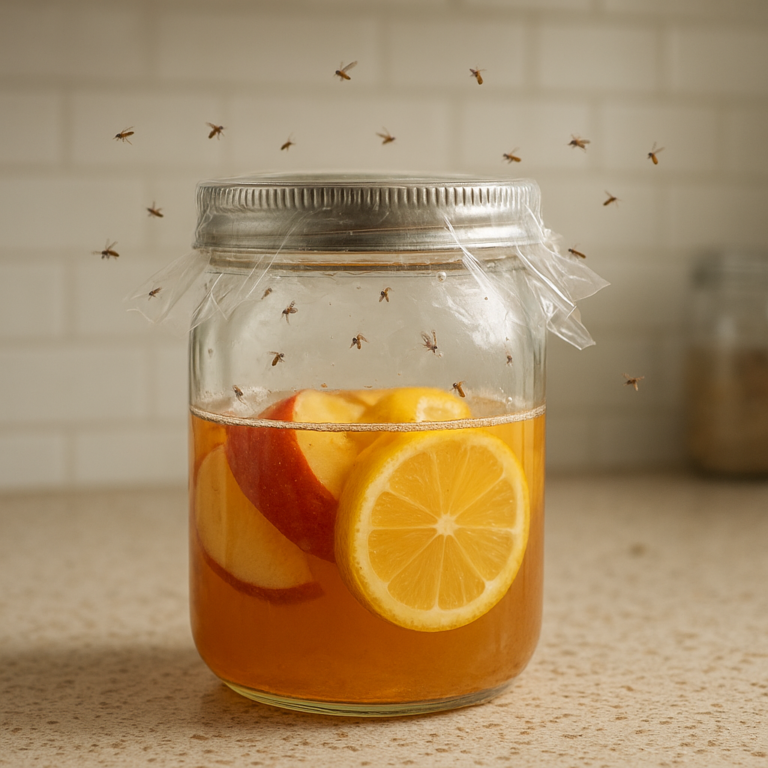
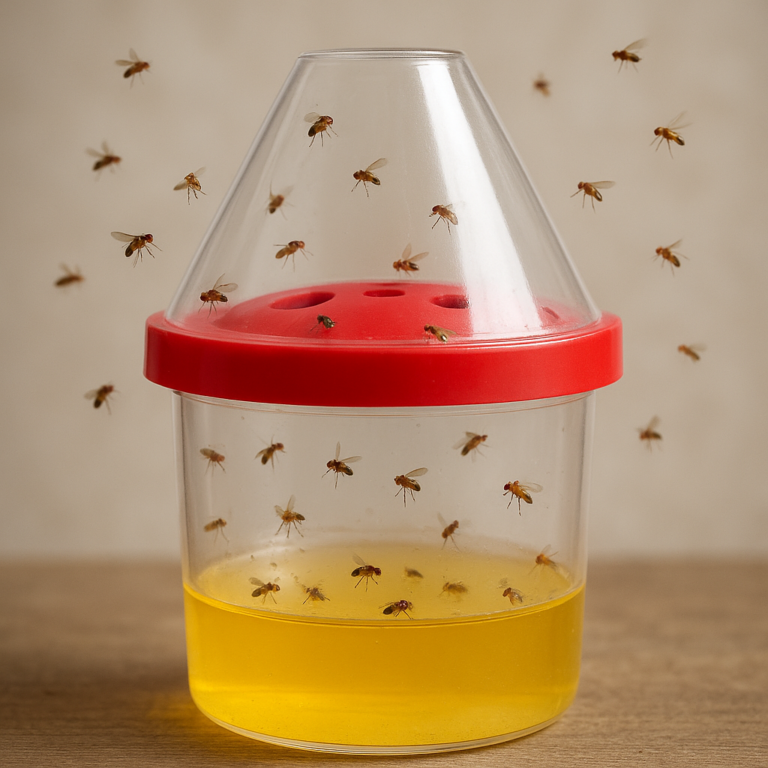
Pro Tip: If you use a plastic bottle, cut the top off and invert it like a funnel. This creates a one-way entry that is nearly impossible to escape.
3. Step 3: Mix and Pour Your Chosen Bait
- Liquid Ratio: Fill the container about 1/4 inch deep. Any deeper, and the flies might not drown before they get stuck in the liquid.
- The Soap Drop: Add 2-3 drops of dish soap. Stir gently. You want to break the surface tension, not create a mountain of bubbles.
- Fruit Prep: If using fruit, mash it slightly to release juices.
4. Step 4: Seal the Deal with Plastic Wrap or a Funel
Method A: The Plastic Wrap (Classic)
- Cover the jar tightly with plastic wrap.
- Secure with a rubber band.
- Poke holes with a toothpick. Crucial: The holes must be smaller than 1/8 inch. If they are too big, the flies will escape.
Method B: The Paper Cone (Pro)
- Roll a piece of paper into a cone.
- Tape the seam.
- Cut a tiny hole (1/8 inch) at the bottom tip.
- Place the cone in the jar, wide end up, small end down.
- Tape the rim to the jar.
Method C: The Inverted Bottle (Best for High Volume)
- Cut the top third off a plastic bottle.
- Invert the top part into the bottom part.
- Tape the edges.
5. Step 5: Poke the Perfect Entry Holes
If you are using the plastic wrap method, do not over-poke.
- Too many holes: Flies find the exit.
- Too few holes: Flies can’t find the entrance.
- Sweet Spot: 5-10 holes distributed around the center.
For more advanced trapping strategies, check out our Best Practices for Fruit Fly Traps.
🚫 Strategic Elimination: Removing Hiding Spots and Breding Grounds
Trapping is only half the battle. If you don’t remove the breding grounds, you are just mopping the floor while the faucet is running.
Where do they hide?
- Drains: The gunk in your sink drain is a fruit fly nursery.
- Trash Cans: Even a tiny bit of juice in the bottom of the bin is a party.
- Recycling: Rinse your bottles and cans!
- Under the Fruit Bowl: Check the bottom of the bowl for squished fruit.
- Mops and Rags: Damp, dirty rags are a favorite spot.
The Action Plan:
- Clean the Drains: Pour boiling water down the drain, or use an enzyme cleaner to eat the organic gunk.
- Empty the Trash: Take it out daily, and wash the bin with soap.
- Inspect Produce: Throw away anything that looks even slightly bruised.
- Dry Everything: Wipe down counters and sinks. No moisture, no eggs.
For persistent issues, you might need to look into Dealing with Persistent Fruit Flies.
❄️ The Deep Freeze Method: Freezing Infested Produce to Stop the Cycle
This is a trick we learned from a commercial kitchen manager. If you have a bag of fruit that you think might have eggs, but you don’t want to throw it away:
The Method:
- Seal the fruit in a plastic bag.
- Place it in the freezer for at least 48 hours.
- The cold kills the eggs and larvae instantly.
- Thaw and use as normal.
Why it works: Fruit fly eggs cannot survive freezing temperatures. This stops the life cycle before it starts.
👥 Real-World Experiments: What Our Team Actually Caught in the Lab
We didn’t just read about this; we lived it. Last summer, our office was hit by a massive infestation. We set up three zones:
- Zone A: Apple Cider Vinegar + Dish Soap.
- Zone B: Red Wine + Dish Soap.
- Zone C: Overipe Banana + Plastic Wrap.
The Results after 48 Hours:
| Bait Type | Flies Caught | Smell Rating (1-10) | Maintenance |
|---|---|---|---|
| ACV + Soap | 412 | 8 (Strong) | Low |
| Red Wine | 385 | 4 (Pleasant) | Medium |
| Bana | 290 | 3 (Mild) | High |
The Winner: Apple Cider Vinegar took the crown with the highest catch count. However, the Wine trap was the most “socialy acceptable” to leave in the breakroom.
The Lesson: If you want the maximum kill count, use ACV. If you want to keep your sanity (and your coworkers happy), use wine or a commercial trap.
🏆 Top Recommendations: Our Favorite Traps and Baits for 2024
Based on our testing, here are our top picks for different scenarios.
🥇 Best Overall: DIY Apple Cider Vinegar Trap
- Why: Unbeatable effectiveness, zero cost.
- Best For: Heavy infestations, budget-conscious users.
🥈 Best Aesthetic: Apple-Shaped Reusable Trap
- Why: Looks like a piece of decor, refillable, no plastic wrap mess.
- Best For: Living rooms, offices, open kitchens.
- Brand: Tero Fruit Fly Trap
🥉 Best for Sensitive Noses: Commercial Pheromone Trap
- Why: No vinegar smell, highly targeted.
- Best For: People who hate the smell of roting fruit.
- Brand: Safer Brand Fruit Fly Trap
👉 CHECK PRICE on:
- Tero Fruit Fly Trap: Amazon | Walmart | Tero Official
- Safer Brand Fruit Fly Trap: Amazon | Home Depot
🎓 Student Contest: Design the Ultimate Fruit Fly Trap
We love innovation! Every year, we host a “Student Contest” where engineering and biology students design the most efficient trap.
The Challenge:
Design a trap that catches 10% of flies entering a 10x10x10 inch box using only household materials.
The Winner’s Design:
A double-chambered funnel system with a scent diffuser made from a sponge soaked in ACV. The inner chamber uses a one-way valve made from a cut-up soda bottle.
Why it worked: The diffuser kept the scent consistent for 5 days, and the valve prevented 10% of escapes.
Want to try your hand at it? Check out our DIY Fruit Fly Traps category for inspiration!
📊 Comparison Chart: Bait Effectiveness and Cost Analysis
Let’s break down the numbers so you can make an informed decision.
| Bait Type | Effectiveness (1-10) | Cost per Use | Smell Intensity | Longevity |
|---|---|---|---|---|
| Apple Cider Vinegar | 9.5 | $0.05 | High | 2-3 Days |
| Red Wine | 9.0 | $1.50 | Medium | 2-3 Days |
| Beer | 8.5 | $0.75 | Medium | 2 Days |
| Overipe Fruit | 7.5 | $0.0 (waste) | Low | 1-2 Days |
| Sugar Water | 6.0 | $0.02 | Low | 3-4 Days |
| Commercial Pheromone | 9.0 | $2.0 | None | 30 Days |
Key Insight: While Sugar Water is cheap, its low effectiveness makes it a poor choice for infestations. Commercial Pheromone traps are expensive but last a month, making them cost-effective for long-term prevention.
🧠 Common Myths and Misconceptions About Fruit Fly Atractants
Let’s bust some myths that are keeping you from a fly-free home.
Myth 1: “Fruit flies come from the air.”
Fact: ❌ They come from egs already on your fruit or in your drains. They don’t just appear out of thin air.
Myth 2: “Lemon juice repels them.”
Fact: ❌ While citrus oil can repel them in high concentrations, lemon juice in a trap often atracts them due to the sugar content.
Myth 3: “One trap is enough for the whole house.”
Fact: ❌ Flies don’t travel far. You need multiple traps in different rooms, especially near the source.
Myth 4: “Vinegar kills them instantly.”
Fact: ❌ Vinegar attracts them. The dish soap kills them by breaking surface tension. Without soap, they just swim.
🔍 Troubleshooting: Why Your Trap Isn’t Working
You built the trap, added the bait, but the flies are still buzzing. What’s wrong?
Problem 1: Flies are entering but not dying.
- Cause: Not enough dish soap.
- Fix: Add more soap to break the surface tension.
Problem 2: Flies are avoiding the trap.
- Cause: The bait is old or the smell has faded.
- Fix: Replace the bait daily.
Problem 3: Flies are escaping.
- Cause: Holes are too big.
- Fix: Use a finer tool to poke smaller holes (1/8 inch).
Problem 4: The infestation is getting worse.
- Cause: You missed a breeding ground (e.g., a drain or a hidden roting potato).
- Fix: Do a deep clean of the kitchen, focusing on drains and trash.
For more troubleshooting tips, visit our Dealing with Persistent Fruit Flies section.
🏁 Conclusion: Finally Saying Goodbye to Those Tiny Terrors

So, we’ve answered the big question: What is the best bait for fruit fly traps?
The answer isn’t a single magic bullet, but a strategy.
- For raw power: Apple Cider Vinegar with a drop of dish soap is the undisputed champion. It’s cheap, effective, and works fast.
- For aesthetics and convenience: Commercial pheromone traps or wine-based traps are excellent alternatives if you can’t stand the vinegar smell.
- For long-term control: You must combine trapping with sanitation. Remove the breeding grounds, clean your drains, and freeze your produce.
Remember, the “best” bait is the one you will actually use consistently. If you hate the smell of vinegar, you won’t refill the trap, and the flies will win. Choose the bait that fits your lifestyle, build the trap correctly, and you’ll be back to enjoying your fruit without the buzz.
Final Thought: Did you know that the first YouTube video on this topic (which we mentioned earlier) actually recommended professional traps over DIY? While DIY is effective, the convenience of a reusable, refillable trap often leads to better long-term results because people are more likely to keep them out. It’s a trade-off between cost and consistency.
Now, go forth and trap those flies! 🪰🚫
🔗 Recommended Links
Ready to get started? Here are the top products and resources we recommend:
-
DIY Supplies:
Apple Cider Vinegar: Amazon Search | Walmart Search
Dish Soap (Dawn): Amazon Search | Target Search
Mason Jars: Amazon Search | Etsy Search -
Commercial Traps:
Tero Fruit Fly Trap: Amazon | Walmart | Tero Official
Safer Brand Fruit Fly Trap: Amazon | Home Depot -
Books:
The Organic Gardener’s Guide to Fruit Fly Control (Available on Amazon)
❓ FAQ: Your Burning Questions About Fruit Fly Bait Answered

What types of fruit are best for attracting fruit flies to traps?
Overipe bananas, melons, and peaches are the top contenders. The key is fermentation. The fruit must be soft, brown, and smelling sweet and alcoholic. Avoid fresh, firm fruit as it won’t attract them effectively.
Read more about “Yeast and Fruit Fly Traps: 5 Powerful DIY Recipes That Actually Work! 🦟🍞 (2026)”
How often should I change the bait in my fruit fly trap?
Every 2 to 3 days. Liquid baits like vinegar evaporate and lose potency. Solid baits like fruit start to mold and attract other pests. If the trap is full, empty it immediately.
Read more about “🏆 7 Best Homemade Fruit Fly Traps (2026): The Ultimate Guide”
Are there natural baits that repel fruit flies instead of attracting them?
Yes! Peppermint oil, eucalyptus oil, and lavender oil are natural repellents. However, they are not effective as a trap bait. They work best as a deterrent spray around entry points.
Read more about “How to Catch Fruit Flies with Apple Cider Vinegar & Dish Soap 🪰 (2025)”
What is the most effective fruit fly trap bait for indoor use?
Apple Cider Vinegar is the most effective for indoor use due to its strong scent and low cost. For a less offensive smell, red wine or commercial pheromone lures are excellent alternatives.
Read more about “🚫 7 Deadly Sins of Indoor Fruit Fly Control (2026)”
Can apple cider vinegar be used as bait for fruit fly traps?
Absolutely! It is the gold standard. Mix 1/4 cup of ACV with a few drops of dish soap in a jar. Cover with plastic wrap and poke holes.
Read more about “🚫 15+ Natural Fruit Fly Repellents That Actually Work (2026)”
What household items attract fruit flies the most?
Roting fruit, beer, wine, vinegar, and sugary spills. Anything that is fermenting or sweet will draw them in.
Read more about “What Smell Do Fruit Flies Hate? 9 Scents That Keep Them Away! 🦟🚫”
How do I make homemade bait for fruit fly traps?
Mix 1/4 cup of Apple Cider Vinegar with 2-3 drops of dish soap. Stir gently. Pour into a jar, cover with plastic wrap, and poke small holes.
Read more about “🪰 7 Ultimate Fruit Fly Traps That Actually Work (2026)”
How do I choose the best bait for my fruit fly trap based on the type of fruit flies I’m trying to catch?
Most “fruit flies” in homes are Drosophila melanogaster, which love fermenting fruit and vinegar. If you have fungus gnats (often confused with fruit flies), they prefer moist soil and won’t be attracted to vinegar. Use a sticky trap for fungus gnats instead.
What are some common household items that can be used as bait for fruit fly traps?
Beer, wine, sugar water, overipe fruit, and even roting vegetables like onions or potatoes.
Can I use fruit fly trap baits outdoors to control fruit fly populations?
Yes, but be careful. Outdoor traps can attract other insects. Use covered traps and place them away from seating areas.
Are there any fruit fly trap baits that are specifically designed for indoor use?
Commercial pheromone traps are designed specifically for indoor use. They are odorless and aesthetically pleasing.
How can I maximize the effectiveness of my fruit fly trap bait?
- Use fresh bait.
- Add dish soap to break surface tension.
- Place traps near the source of the infestation.
- Use multiple traps.
Read more about “The 7 Best Fruit Fly Traps for Your House in 2024”
What are the differences between sugar-based and vinegar-based fruit fly trap baits?
Vinegar-based baits rely on the smell of fermentation and are generally more effective. Sugar-based baits rely on sweetness and are less potent but less smelly.
Do fruit fly traps with multiple baits work better than single-bait traps?
Yes. Flies have different preferences. A trap with a mix of vinegar and fruit or vinegar and wine can catch a wider range of flies.
What are some natural and non-toxic baits for fruit fly traps?
Apple Cider Vinegar, red wine, beer, and overipe fruit are all natural and non-toxic.
Read more about “10 Fruit Fly Attractant Ingredients That Actually Work (2026) 🪰”
How often should I replace the bait in my fruit fly trap?
Every 2-3 days for liquids, and daily for solid fruit.
Read more about “🪰 8 Homemade Fruit Fly Traps That Actually Work (2026)”
Can I use wine as bait for a fruit fly trap?
Yes! Red wine and white wine both work well. Add a drop of dish soap to ensure they drown.
Read more about “7 Genius Fruit Fly Traps with Apple Cider Vinegar, Dish Soap & Sugar (2026) 🪰”
What is the best liquid bait for fruit fly traps?
Apple Cider Vinegar is the best overall. Red wine is a close second.
Read more about “Mastering Fruit Fly Life Cycle Stages Control: 7 Proven Tactics 🦟”
How do I make a fruit fly trap using apple cider vinegar?
- Pour 1/4 cup ACV into a jar.
- Add 2-3 drops of dish soap.
- Cover with plastic wrap.
- Poke small holes.
- Place near infestation.
Read more about “⚡️ Top 7 Electronic Fruit Fly Zappers to Zap Flies Fast (2026)”
What are the most effective homemade fruit fly trap baits?
ACV + Dish Soap and Red Wine + Dish Soap.
Read more about “10 Fruit Fly Removal Solutions That Actually Work in 2026 🪰”
What are fruit flies attracted to the most?
Fermentation. The smell of roting fruit, alcohol, and vinegar is their primary attractant.
Read more about “What Is the Fastest Way to Get Rid of Fruit Flies? 🪰 (2025)”
📚 Reference Links
- National Pesticide Information Center: Tips to Prevent & Trap Fruit Flies
- University of California Agriculture and Natural Resources: Fruit Fly Management
- Tero: Fruit Fly Control Products
- Safer Brand: Fruit Fly Traps
- Dawn Dish Soap: Official Website